Barts and the London Medical School, Garrod Building, Turner St, Whitechapel, London, UK.
Waters Corporation, Stamford Avenue, Wilmslow, SK9 4AX, UK.
Sci Rep. 2021 Mar 11;11(1):5801. doi: 10.1038/s41598-021-85190-w.
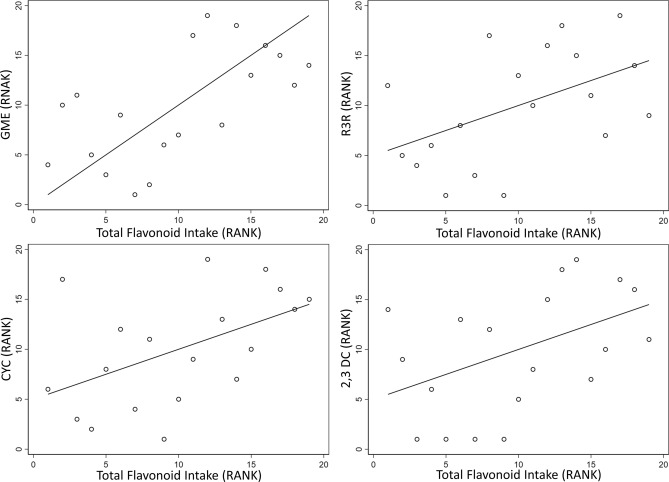
Robust biological markers of dietary exposure are essential in improving the understanding of the link between diet and health outcomes. Polyphenolic compounds, including flavonoids, have been proposed to mitigate the risk of chronic diseases where oxidative stress and inflammation play a central role. Biomarkers can provide objective measurement of the levels of polyphenolic compounds. In this study, we provide methodology to identify potential candidate markers of polyphenol intake in human serum. Seventeen participants from the UK arm of the Global Allergy and Asthma Network of Excellence (GALEN) had their dietary intake estimated using a validated food frequency questionnaire, and serum samples were assessed using mass spectrometry to identify potential candidate markers. 144 features were assigned identities, of these we identified four biologically relevant compounds (rhamnazin 3-rutinoside, 2-galloyl-1,4-galactarolactone methyl ester, 2″,32″-di-O-p-coumaroylafzelin and cyclocommunin), which were significantly increased in the serum of participants with high predicted level of fruit and vegetable intake. 2-galloyl-1,4-galactarolactone methyl ester was strongly correlated with total flavonoids (r = 0.62; P = 0.005), flavan-3-ols (r = 0.67; P = 0.002) as well as with other four subclasses. Rhamnazin 3-rutinoside showed strong correlation with pro-anthocyanidins (r = 0.68; P = 0.001), flavones (r = 0.62; P = 0.005). Our results suggest that serum profiling for these compounds might be an effective way of establishing the relative intake of flavonoids and could contribute to improve the accuracy of epidemiological methods to ascertain flavonoid intake.
用于改善饮食与健康结果之间关系的理解的强有力的饮食暴露生物标志物是必不可少的。多酚化合物,包括类黄酮,已被提议用于减轻氧化应激和炎症起核心作用的慢性疾病的风险。生物标志物可以提供多酚化合物水平的客观测量。在这项研究中,我们提供了一种在人血清中鉴定多酚摄入的潜在候选标志物的方法。来自全球过敏和哮喘卓越网络(GALEN)英国分部的 17 名参与者使用经过验证的食物频率问卷估计他们的饮食摄入量,并用质谱法评估血清样本以鉴定潜在的候选标志物。144 个特征被分配了身份,在这些特征中,我们鉴定了四种具有生物学相关性的化合物(鼠李亭 3-芸香糖苷、2-没食子酰基-1,4-半乳糖内酯甲酯、2″,32″-二-O-对香豆酰-afzelin 和环构菌素),这些化合物在预测水果和蔬菜摄入量高的参与者的血清中显著增加。2-没食子酰基-1,4-半乳糖内酯甲酯与总类黄酮(r = 0.62;P = 0.005)、黄烷-3-醇(r = 0.67;P = 0.002)以及其他四个亚类呈强相关。鼠李亭 3-芸香糖苷与原花青素(r = 0.68;P = 0.001)、黄酮(r = 0.62;P = 0.005)具有很强的相关性。我们的结果表明,这些化合物的血清分析可能是建立类黄酮相对摄入量的有效方法,并有助于提高确定类黄酮摄入量的流行病学方法的准确性。