Department of Biomedical Sciences of Cells and Systems, Section of Molecular Cell Biology, University of Groningen, University Medical Center Groningen, Groningen 9713 GZ, the Netherlands; Department of Radiation Oncology, University of Groningen, University Medical Center Groningen, Groningen 9713 GZ, the Netherlands.
Department of Biomedical Sciences of Cells and Systems, Section of Molecular Cell Biology, University of Groningen, University Medical Center Groningen, Groningen 9713 GZ, the Netherlands; Department of Surgical Oncology, University of Groningen, University Medical Center Groningen, Groningen 9713 GZ, the Netherlands.
Stem Cell Reports. 2021 Apr 13;16(4):913-925. doi: 10.1016/j.stemcr.2021.02.011. Epub 2021 Mar 11.
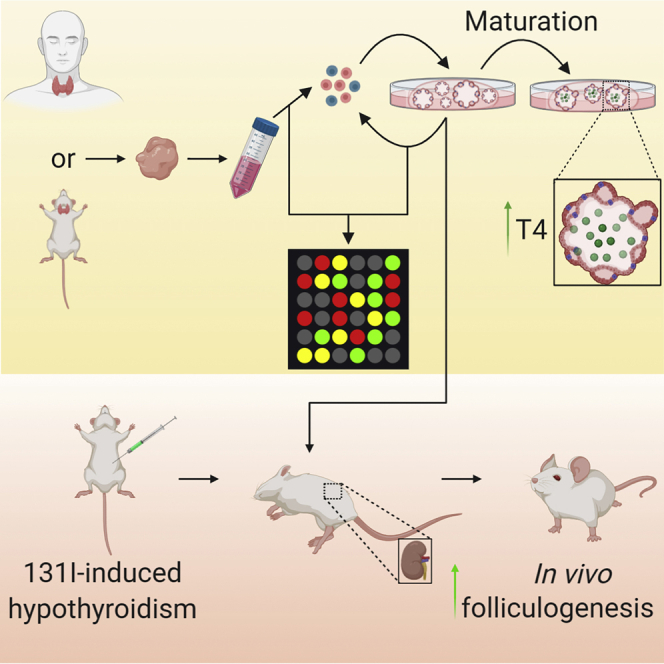
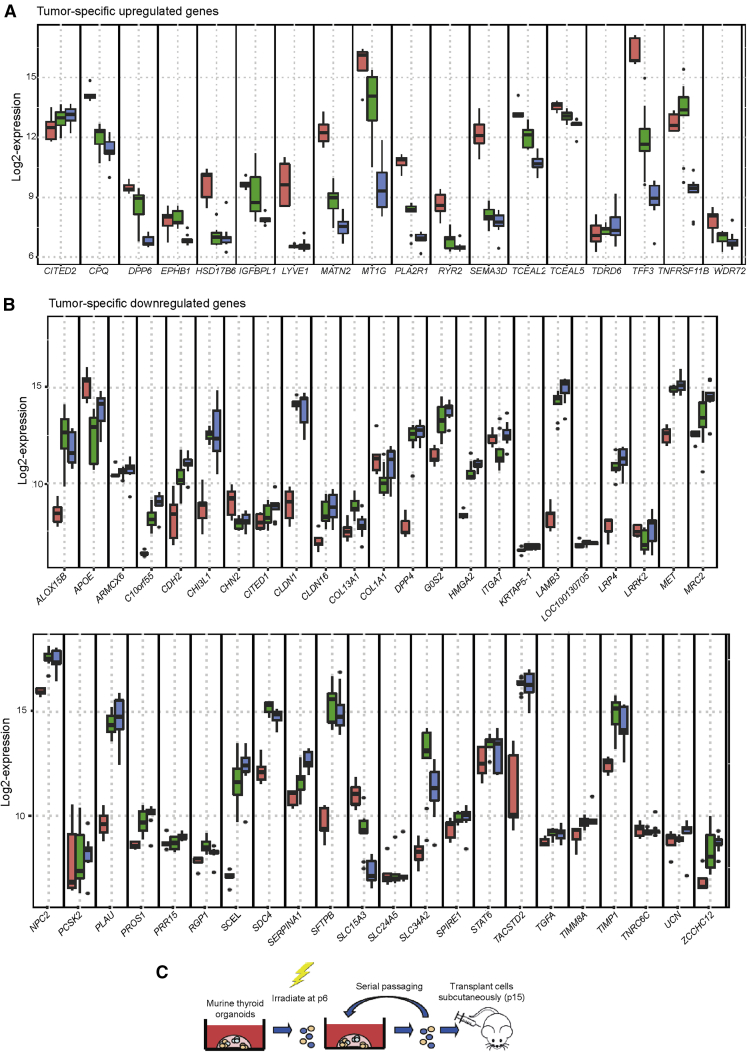
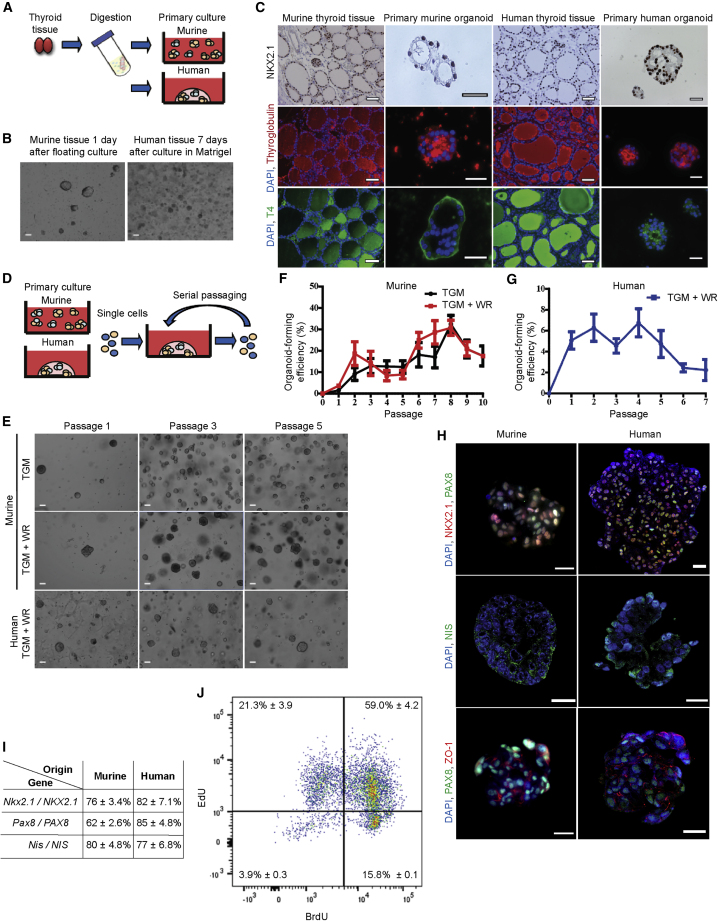
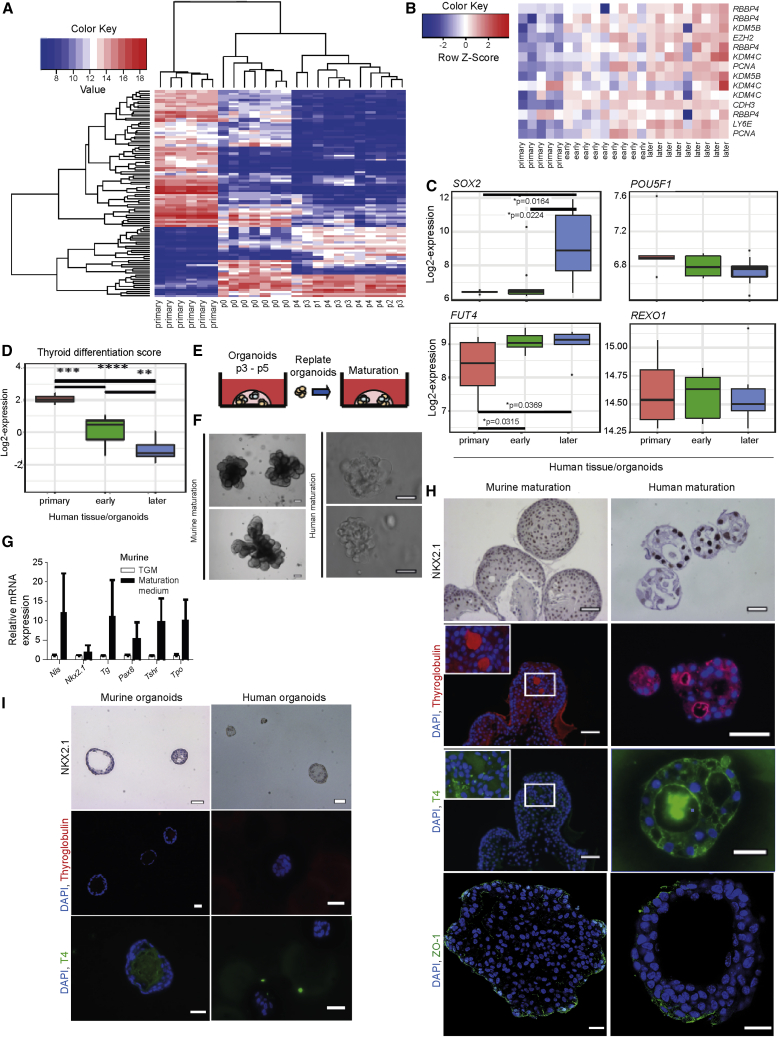
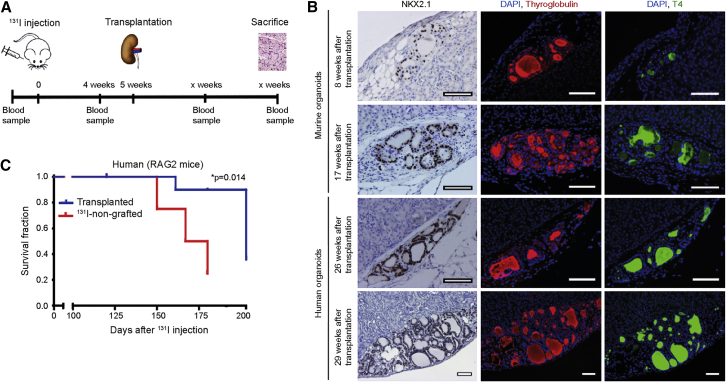
Total thyroidectomy as part of thyroid cancer treatment results in hypothyroidism requiring lifelong daily thyroid hormone replacement. Unbalanced hormone levels result in persistent complaints such as fatigue, constipation, and weight increase. Therefore, we aimed to investigate a patient-derived thyroid organoid model with the potential to regenerate the thyroid gland. Murine and human thyroid-derived cells were cultured as organoids capable of self-renewal and which expressed proliferation and putative stem cell and thyroid characteristics, without a change in the expression of thyroid tumor-related genes. These organoids formed thyroid-tissue-resembling structures in culture. (Xeno-)transplantation of 600,000 dispersed organoid cells underneath the kidney capsule of a hypothyroid mouse model resulted in the generation of hormone-producing thyroid-resembling follicles. This study provides evidence that thyroid-lineage-specific cells can form organoids that are able to self-renew and differentiate into functional thyroid tissue. Subsequent (xeno-)transplantation of these thyroid organoids demonstrates a proof of principle for functional miniature gland formation.
甲状腺癌治疗中的甲状腺全切除术导致甲状腺功能减退,需要终身每日补充甲状腺激素。激素水平失衡会导致持续的疲劳、便秘和体重增加等不适。因此,我们旨在研究一种具有潜在再生甲状腺功能的患者来源的甲状腺类器官模型。将鼠和人甲状腺来源的细胞培养为能够自我更新的类器官,并且表达增殖和潜在的干细胞和甲状腺特征,而甲状腺肿瘤相关基因的表达没有改变。这些类器官在培养中形成类似于甲状腺组织的结构。将 60 万个分散的类器官细胞异种移植到甲状腺功能减退的小鼠模型的肾包膜下,导致产生产生激素的类似甲状腺滤泡。本研究提供了证据,证明甲状腺谱系特异性细胞可以形成能够自我更新并分化为功能性甲状腺组织的类器官。随后对这些甲状腺类器官的异种移植证明了功能性微型腺体形成的原理验证。