Department of Neurology, Medical Faculty, Heinrich-Heine-University Düsseldorf, 40225, Germany.
Department of Neurology and Neurosurgery, Montreal Neurological Institute, McGill University, Montreal, QC H4A 3K9, Canada.
EBioMedicine. 2021 Mar;65:103276. doi: 10.1016/j.ebiom.2021.103276. Epub 2021 Mar 10.
In multiple sclerosis loss of myelin and oligodendrocytes impairs saltatory signal transduction and leads to neuronal loss and functional deficits. Limited capacity of oligodendroglial precursor cells to differentiate into mature cells is the main reason for inefficient myelin repair in the central nervous system. Drug repurposing constitutes a powerful approach for identification of pharmacological compounds promoting this process.
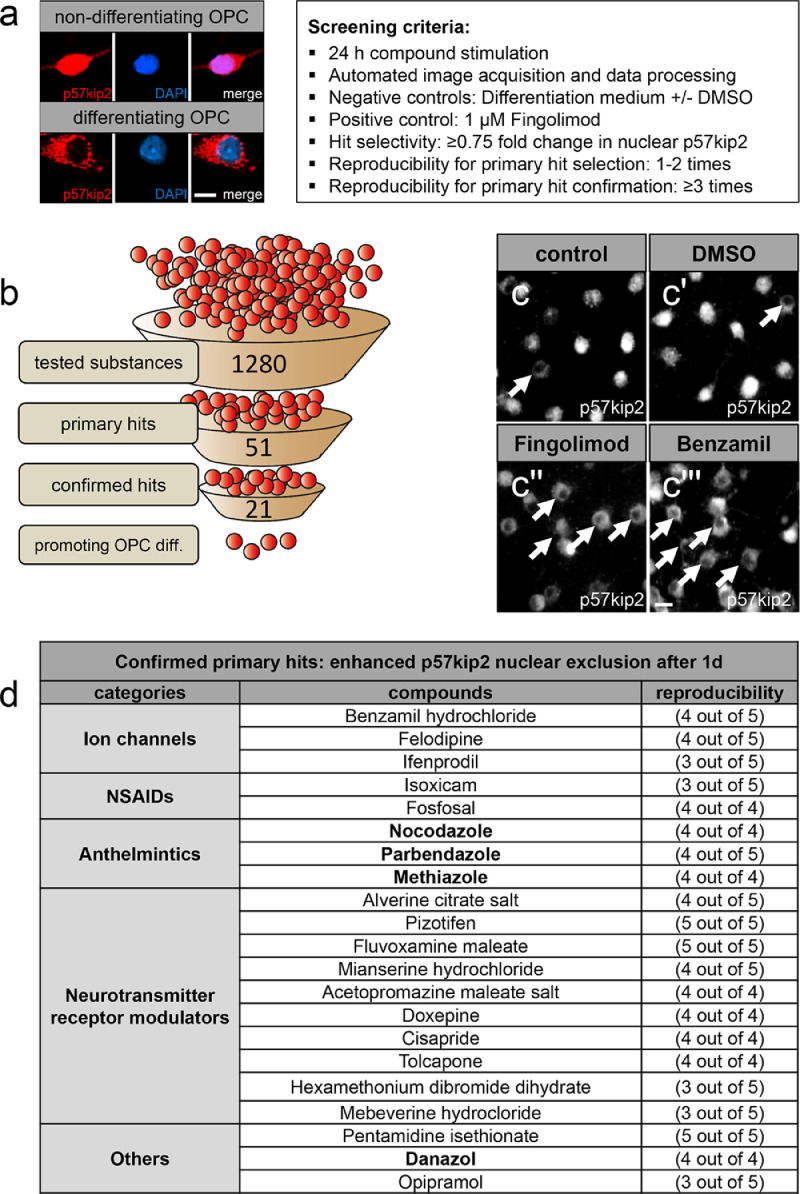
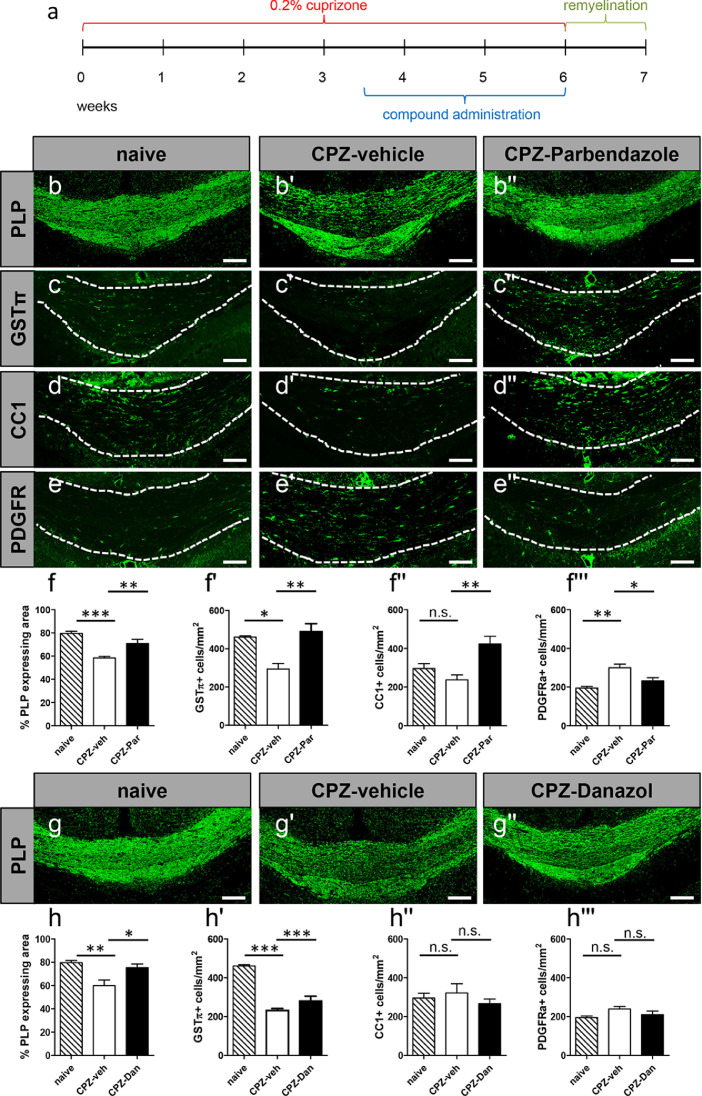
A phenotypic compound screening using the subcellular distribution of a potent inhibitor of oligodendroglial cell differentiation, namely p57kip2, as differentiation competence marker was conducted. Hit compounds were validated in terms of their impact on developmental cell differentiation and myelination using both rat and human primary cell cultures and organotypic cerebellar slice cultures, respectively. Their effect on spontaneous remyelination was then investigated following cuprizone-mediated demyelination of the corpus callosum.
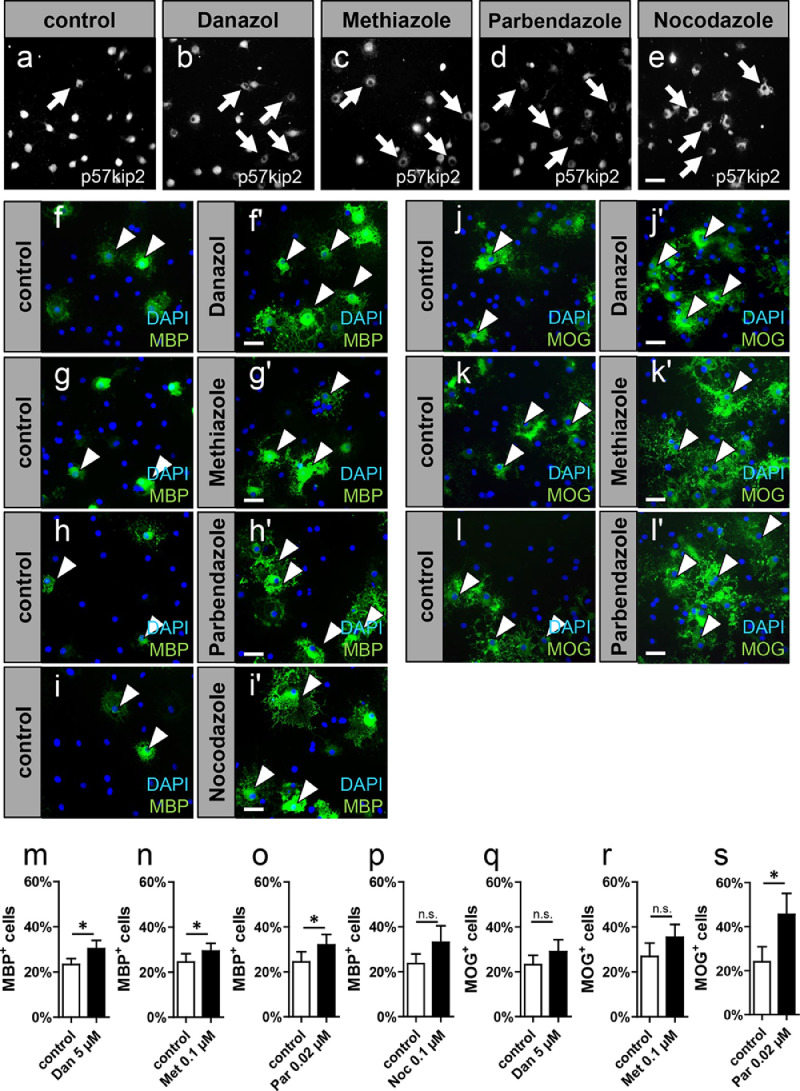
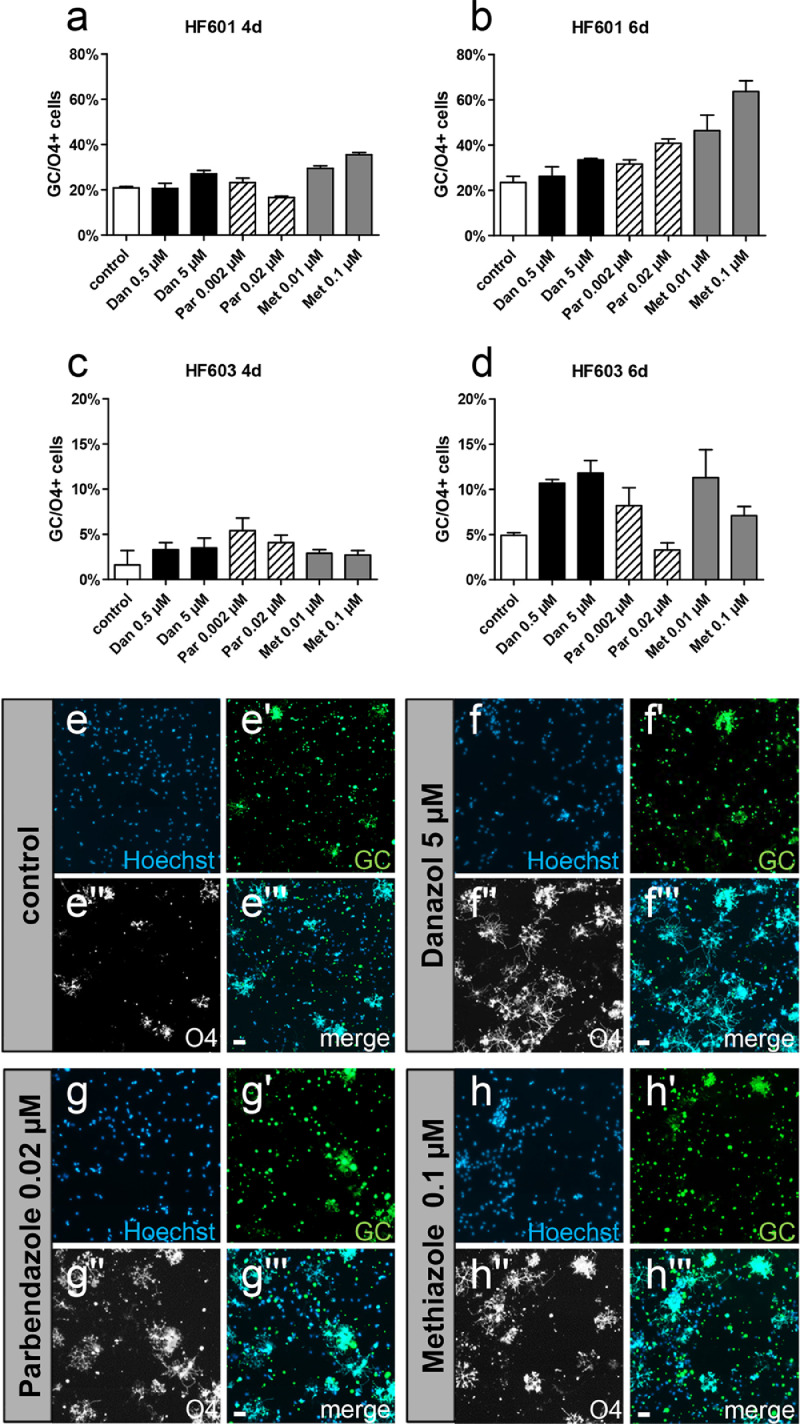
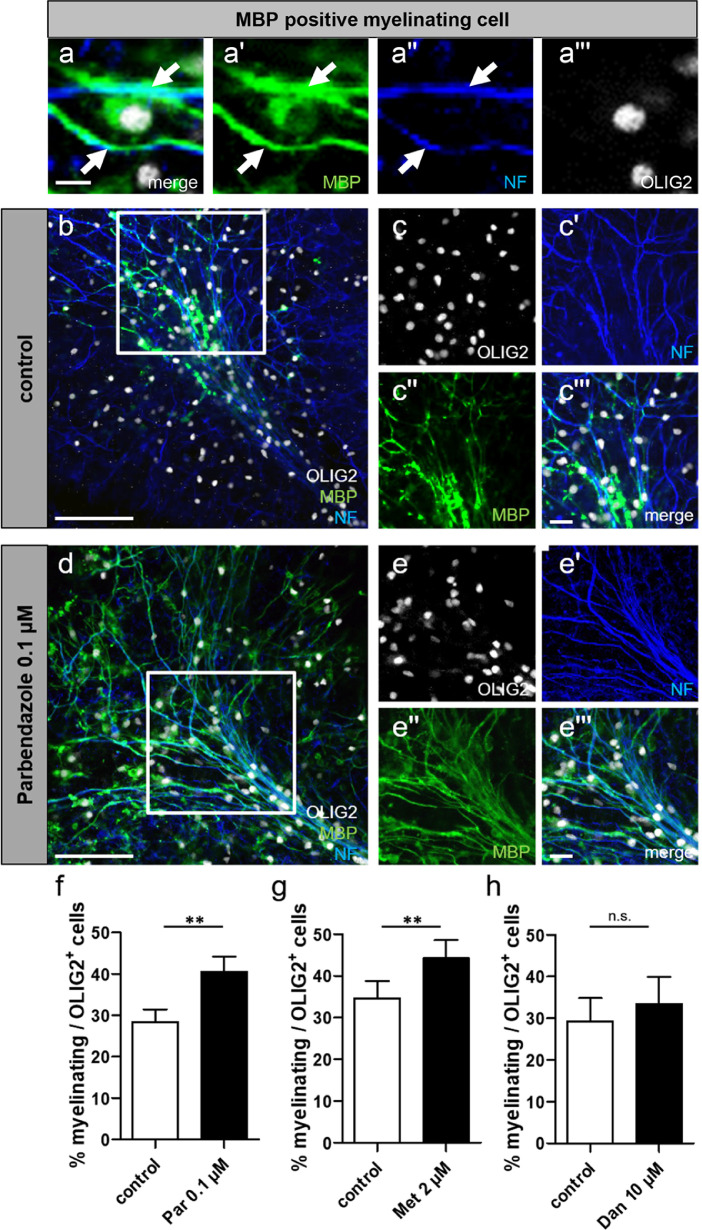
A number of novel small molecules able to promote oligodendroglial cell differentiation were identified and a subset was found to foster human oligodendrogenesis as well as myelination ex vivo. Among them the steroid danazol and the anthelminthic parbendazole were found to increase myelin repair.
We provide evidence that early cellular processes involved in differentiation decisions are applicable for the identification of regeneration promoting drugs and we suggest danazol and parbendazole as potent therapeutic candidates for demyelinating diseases.
This work was supported by the Jürgen Manchot Foundation, Düsseldorf; Research Commission of the Medical Faculty of Heinrich-Heine-University Düsseldorf; Christiane and Claudia Hempel Foundation; Stifterverband/Novartisstiftung; James and Elisabeth Cloppenburg, Peek and Cloppenburg Düsseldorf Stiftung and International Progressive MS Alliance (BRAVEinMS).
在多发性硬化症中,髓磷脂和少突胶质细胞的丧失会损害跳跃信号转导,导致神经元丢失和功能缺陷。少突胶质前体细胞分化为成熟细胞的能力有限,是中枢神经系统髓鞘修复效率低下的主要原因。药物再利用是鉴定促进这一过程的药理化合物的有力方法。
使用一种有效的少突胶质细胞分化抑制剂 p57kip2 的亚细胞分布作为分化能力标志物,进行表型化合物筛选。使用大鼠和人原代细胞培养物以及器官型小脑切片培养物,分别验证候选化合物对发育性细胞分化和髓鞘形成的影响。然后,在对胼胝体进行铜诱导脱髓鞘后,研究它们对自发性髓鞘修复的影响。
鉴定出了许多能够促进少突胶质细胞分化的新型小分子,其中一部分能够促进人少突胶质细胞发生和体外髓鞘形成。其中,甾体达那唑和驱虫药苯并咪唑能够增加髓鞘修复。
我们提供的证据表明,分化决策中涉及的早期细胞过程可用于鉴定促进再生的药物,我们建议达那唑和苯并咪唑作为脱髓鞘疾病的有效治疗候选物。
这项工作得到了 Jürgen Manchot 基金会、杜塞尔多夫;海因里希-海涅大学杜塞尔多夫医学院研究委员会;Christiane 和 Claudia Hempel 基金会;Stifterverband/Novartisstiftung;James 和 Elisabeth Cloppenburg,Peek and Cloppenburg Düsseldorf Stiftung 和国际进行性多发性硬化症联盟(BRAVEinMS)的支持。