Marzoli Filippo, Bortolami Alessio, Pezzuto Alessandra, Mazzetto Eva, Piro Roberto, Terregino Calogero, Bonfante Francesco, Belluco Simone
Department of Food Safety, Istituto Zooprofilattico Sperimentale delle Venezie, Legnaro, Italy.
Division of Comparative Biomedical Sciences, Istituto Zooprofilattico Sperimentale delle Venezie, Legnaro, Italy.
Sci Total Environ. 2021 Jul 15;778:146191. doi: 10.1016/j.scitotenv.2021.146191. Epub 2021 Mar 3.
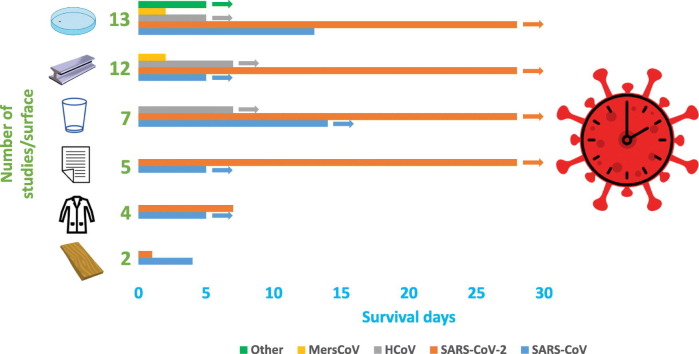
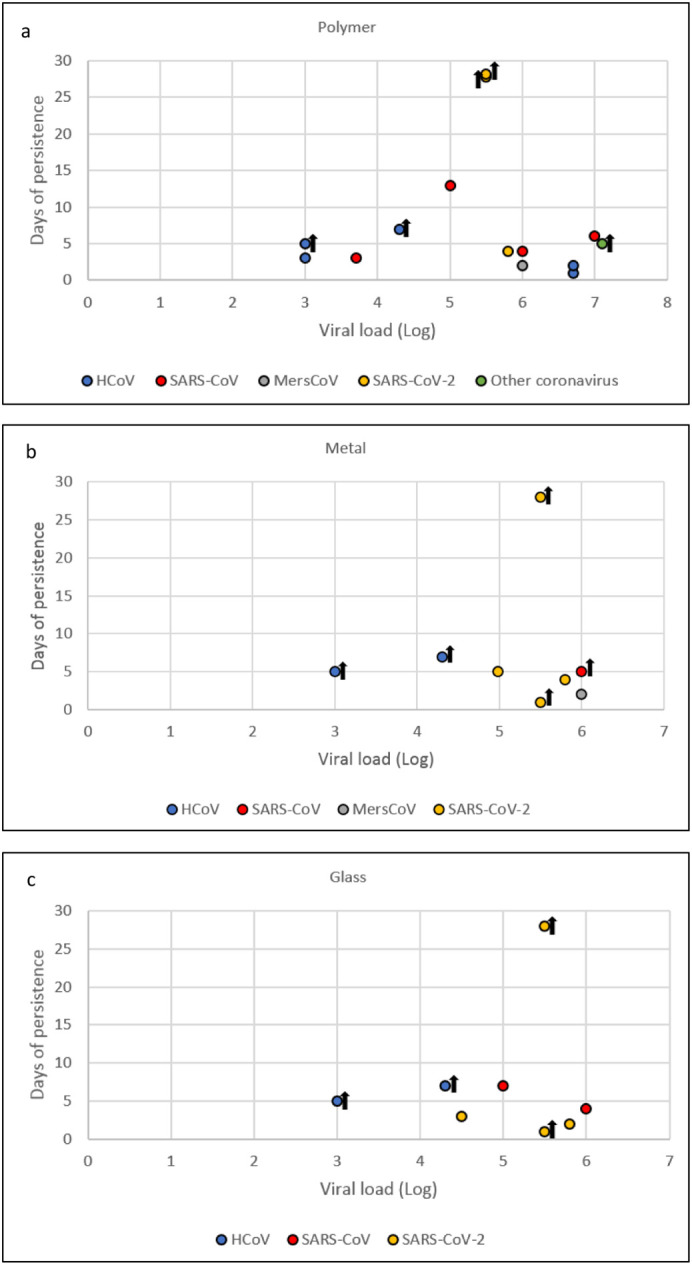
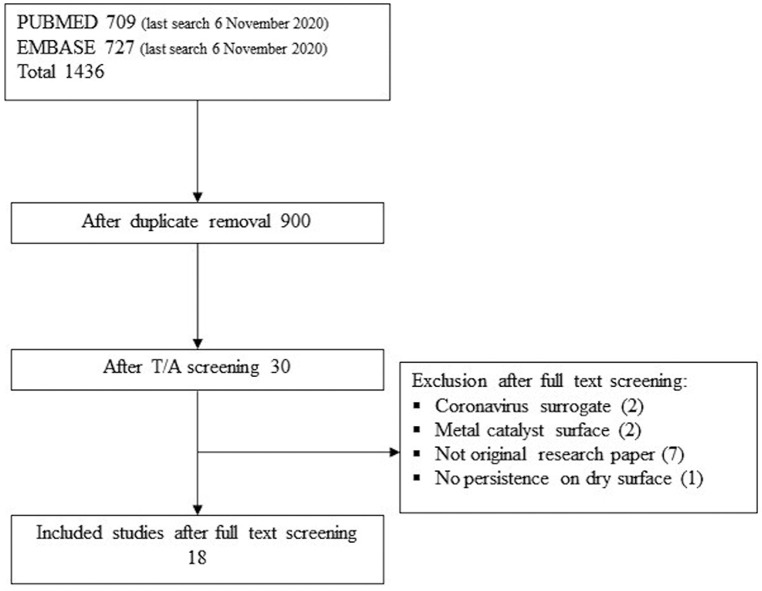
The current pandemic caused by Severe Acute Respiratory Syndrome Coronavirus 2 (SARS-CoV-2) has led people to implement preventive measures, including surface disinfection and use of alcohol-based hand gel, in order to avoid viral transmission via fomites. However, the role of surface transmission is still debated. The present systematic review aims to summarize all the evidence on surface survival of coronaviruses infecting humans. The analysis of 18 studies showed the longest coronavirus survival time is 28 days at room temperature (RT) on different surfaces: polymer banknotes, vinyl, steel, glass, and paper banknotes. Concerning SARS-CoV-2 human infection from contaminated surfaces, dangerous viral load on surfaces for up to 21 days was determined on polymer banknotes, steel, glass and paper banknotes. For viruses other than SARS-CoV-2, the longest period of survival was 14 days, recorded on glass. Environmental conditions can affect virus survival, and indeed, low temperatures and low humidity support prolonged survival of viruses on contaminated surfaces independently of surface type. Furthermore, it has been shown that exposure to sunlight significantly reduces the risk of surface transmission. Although studies are increasingly investigating the topic of coronavirus survival, it is difficult to compare them, given the methodology differences. For this reason, it is advisable to define a reference working protocol for virus survival trials, but, as an immediate measure, there is also a need for further investigations of coronavirus survival on surfaces.
由严重急性呼吸综合征冠状病毒2(SARS-CoV-2)引起的当前大流行已促使人们采取预防措施,包括表面消毒和使用酒精基洗手液,以避免病毒通过污染物传播。然而,表面传播的作用仍存在争议。本系统综述旨在总结关于感染人类的冠状病毒在表面存活的所有证据。对18项研究的分析表明,冠状病毒在室温下在不同表面(聚合物钞票、乙烯基、钢铁、玻璃和纸质钞票)上的最长存活时间为28天。关于从受污染表面感染SARS-CoV-2的人类,在聚合物钞票、钢铁、玻璃和纸质钞票上确定了长达21天的表面危险病毒载量。对于SARS-CoV-2以外的病毒,最长存活期为14天,记录在玻璃上。环境条件会影响病毒存活,事实上,低温和低湿度可独立于表面类型而支持病毒在受污染表面上的长期存活。此外,研究表明,暴露在阳光下可显著降低表面传播风险。尽管越来越多的研究在调查冠状病毒存活这一主题,但鉴于方法上的差异,很难对这些研究进行比较。因此,建议为病毒存活试验定义一个参考工作方案,但作为一项即时措施,也需要进一步研究冠状病毒在表面的存活情况。