Diabetes Research Center (DRC), Qatar Biomedical Research Institute (QBRI), Hamad Bin Khalifa University (HBKU), Qatar Foundation (QF), Doha, Qatar.
Academic Endocrinology, Diabetes and Metabolism, Hull York Medical School, Hull, United Kingdom.
Front Endocrinol (Lausanne). 2021 Feb 25;12:638621. doi: 10.3389/fendo.2021.638621. eCollection 2021.
Women with polycystic ovary syndrome (PCOS) often have vitamin D deficiency, a known risk factor for severe COVID-19 disease. Alveolar macrophage-derived cytokines contribute to the inflammation underlying pulmonary disease in COVID-19. We sought to determine if basal macrophage activation, as a risk factor for COVID-19 infection, was present in PCOS and, if so, was further enhanced by vitamin D deficiency.
A cross-sectional study in 99 PCOS and 68 control women who presented sequentially. Plasma levels of a macrophage-derived cytokine panel were determined by Slow Off-rate Modified Aptamer (SOMA)-scan plasma protein measurement. Vitamin D was measured by tandem mass spectroscopy.
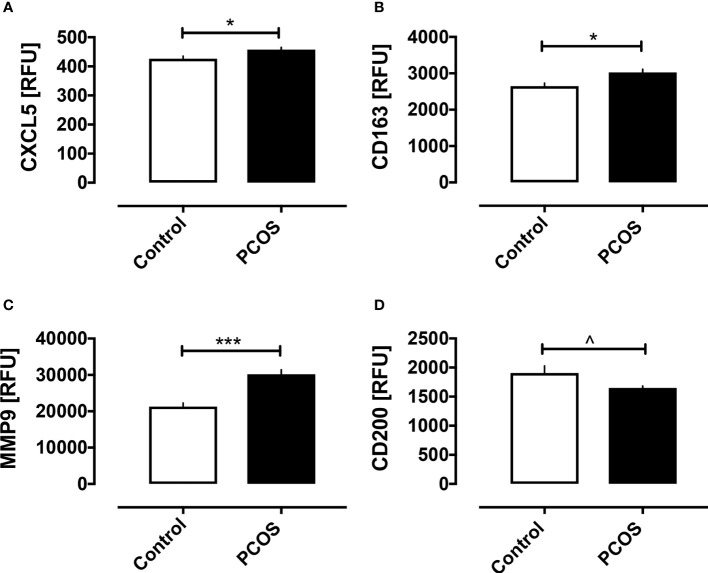
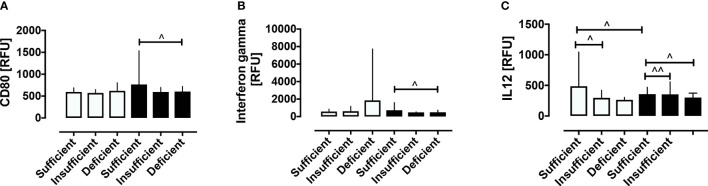
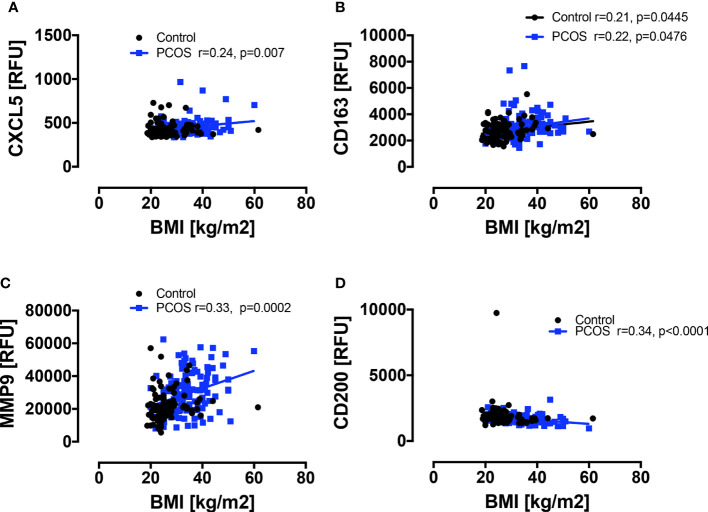
Vitamin D was lower in PCOS women (p<0.0001) and correlated negatively with body mass index (BMI) in PCOS (r=0.28, p=0.0046). Basal macrophage activation markers CXCL5, CD163 and MMP9 were elevated, whilst protective CD200 was decreased (p<0.05); changes in these variables were related to, and fully accounted for, by BMI. PCOS and control women were then stratified according to vitamin D concentration. Vitamin D deficiency was associated with decreased CD80 and IFN-γ in PCOS and IL-12 in both groups (p<0.05). These factors, important in initiating and maintaining the immune response, were again accounted for by BMI.
Basal macrophage activation was higher in PCOS with macrophage changes related with increased infection risk associating with vitamin D; all changes were BMI dependent, suggesting that obese PCOS with vitamin D deficiency may be at greater risk of more severe COVID-19 infection, but that it is obesity-related rather than an independent PCOS factor.
患有多囊卵巢综合征(PCOS)的女性通常存在维生素 D 缺乏,这是 COVID-19 疾病严重程度的已知危险因素。肺泡巨噬细胞衍生的细胞因子有助于 COVID-19 中肺病的炎症发生。我们试图确定基础巨噬细胞激活是否作为 COVID-19 感染的危险因素存在于 PCOS 中,如果存在,维生素 D 缺乏是否会进一步增强。
这是一项横断面研究,纳入了 99 名 PCOS 女性和 68 名对照女性。通过慢释放修饰适体(SOMA)扫描血浆蛋白测量法测定血浆中巨噬细胞衍生细胞因子谱的水平。采用串联质谱法测定维生素 D。
PCOS 女性的维生素 D 水平较低(p<0.0001),且与 PCOS 患者的体重指数(BMI)呈负相关(r=0.28,p=0.0046)。基础巨噬细胞激活标志物 CXCL5、CD163 和 MMP9 升高,而保护性 CD200 降低(p<0.05);这些变量的变化与 BMI 相关,并完全由 BMI 解释。然后根据维生素 D 浓度将 PCOS 和对照组女性分层。维生素 D 缺乏与 PCOS 中 CD80 和 IFN-γ的减少以及两组中 IL-12 的减少有关(p<0.05)。这些在启动和维持免疫反应中很重要的因素再次由 BMI 解释。
PCOS 中基础巨噬细胞激活更高,巨噬细胞变化与感染风险增加相关,与维生素 D 有关;所有变化均依赖于 BMI,这表明肥胖的 PCOS 伴维生素 D 缺乏可能有更大的风险发生更严重的 COVID-19 感染,但这是肥胖相关而非独立的 PCOS 因素。