Lahiri Dibyajit, Nag Moupriya, Sheikh Hassan I, Sarkar Tanmay, Edinur Hisham Atan, Pati Siddhartha, Ray Rina Rani
Department of Biotechnology, University of Engineering & Management, Kolkata, India.
Faculty of Fisheries and Food Science, Universiti Malaysia Terengganu, Kuala Nerus, Malaysia.
Front Microbiol. 2021 Feb 25;12:636588. doi: 10.3389/fmicb.2021.636588. eCollection 2021.
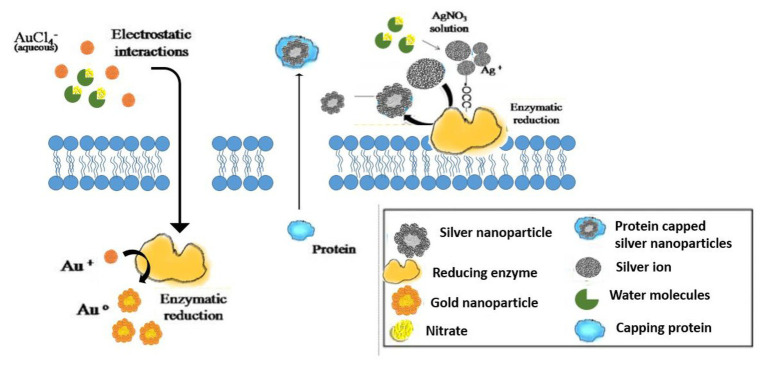
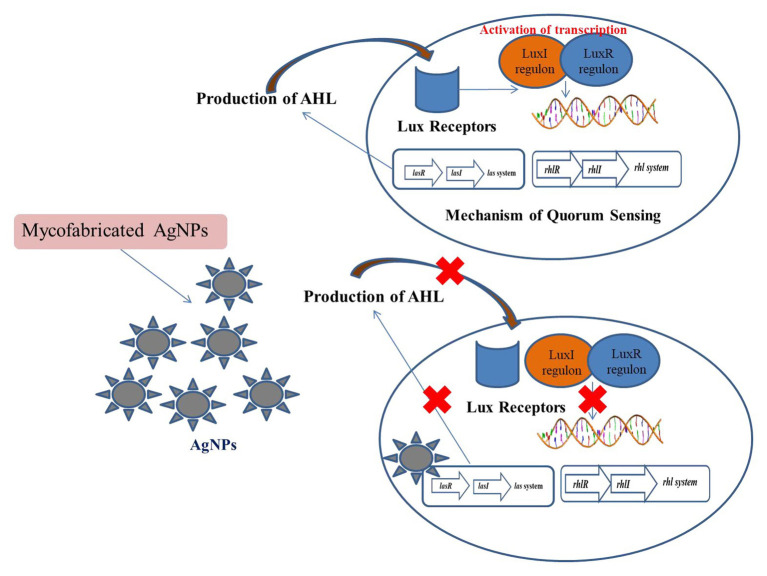
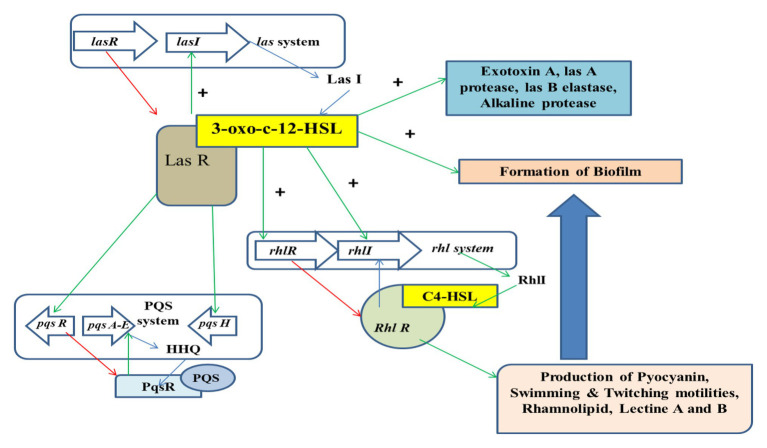
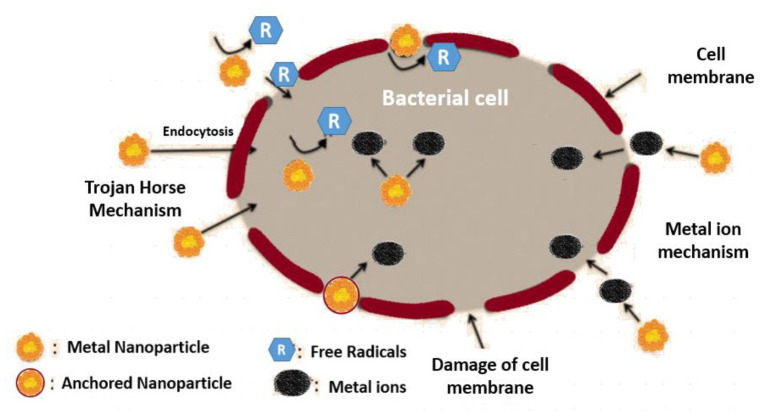
The emergence of bacterial resistance to antibiotics has led to the search for alternate antimicrobial treatment strategies. Engineered nanoparticles (NPs) for efficient penetration into a living system have become more common in the world of health and hygiene. The use of microbial enzymes/proteins as a potential reducing agent for synthesizing NPs has increased rapidly in comparison to physical and chemical methods. It is a fast, environmentally safe, and cost-effective approach. Among the biogenic sources, fungi and bacteria are preferred not only for their ability to produce a higher titer of reductase enzyme to convert the ionic forms into their nano forms, but also for their convenience in cultivating and regulating the size and morphology of the synthesized NPs, which can effectively reduce the cost for large-scale manufacturing. Effective penetration through exopolysaccharides of a biofilm matrix enables the NPs to inhibit the bacterial growth. Biofilm is the consortia of sessile groups of microbial cells that are able to adhere to biotic and abiotic surfaces with the help extracellular polymeric substances and glycocalyx. These biofilms cause various chronic diseases and lead to biofouling on medical devices and implants. The NPs penetrate the biofilm and affect the quorum-sensing gene cascades and thereby hamper the cell-to-cell communication mechanism, which inhibits biofilm synthesis. This review focuses on the microbial nano-techniques that were used to produce various metallic and non-metallic nanoparticles and their "signal jamming effects" to inhibit biofilm formation. Detailed analysis and discussion is given to their interactions with various types of signal molecules and the genes responsible for the development of biofilm.
细菌对抗生素产生耐药性促使人们寻找替代的抗菌治疗策略。能够有效渗透到生物系统中的工程纳米颗粒(NPs)在健康与卫生领域已变得更为常见。与物理和化学方法相比,利用微生物酶/蛋白质作为合成纳米颗粒的潜在还原剂的情况迅速增加。这是一种快速、环境安全且具有成本效益的方法。在生物源中,真菌和细菌之所以更受青睐,不仅是因为它们能够产生更高滴度的还原酶,将离子形式转化为纳米形式,还因为它们便于培养以及调控合成纳米颗粒的尺寸和形态,这能够有效降低大规模生产的成本。纳米颗粒通过生物膜基质的胞外多糖有效渗透,从而抑制细菌生长。生物膜是微生物细胞固着群体的聚集体,它们能够借助细胞外聚合物和糖萼附着在生物和非生物表面。这些生物膜会引发各种慢性疾病,并导致医疗器械和植入物上的生物污垢。纳米颗粒穿透生物膜并影响群体感应基因级联反应,进而阻碍细胞间通讯机制,抑制生物膜合成。本综述聚焦于用于制备各种金属和非金属纳米颗粒的微生物纳米技术及其抑制生物膜形成的“信号干扰效应”。对它们与各种类型信号分子以及负责生物膜形成的基因之间的相互作用进行了详细分析和讨论。