Szmolka Ama, Wami Haleluya, Dobrindt Ulrich
Institute for Veterinary Medical Research, Centre for Agricultural Research, Budapest, Hungary.
Institute of Hygiene, University of Münster, Münster, Germany.
Front Microbiol. 2021 Feb 25;12:642125. doi: 10.3389/fmicb.2021.642125. eCollection 2021.
Commensal and pathogenic strains of multidrug-resistant (MDR) and non-typhoid strains of represent a growing foodborne threat from foods of poultry origin. MDR strains of Infantis and are frequently isolated from broiler chicks and the simultaneous presence of these two enteric bacterial species would potentially allow the exchange of mobile resistance determinants.
In order to understand possible genomic relations and to obtain a first insight into the potential interplay of resistance genes between enteric bacteria, we compared genomic diversity and mobile resistomes of . Infantis and from broiler sources.
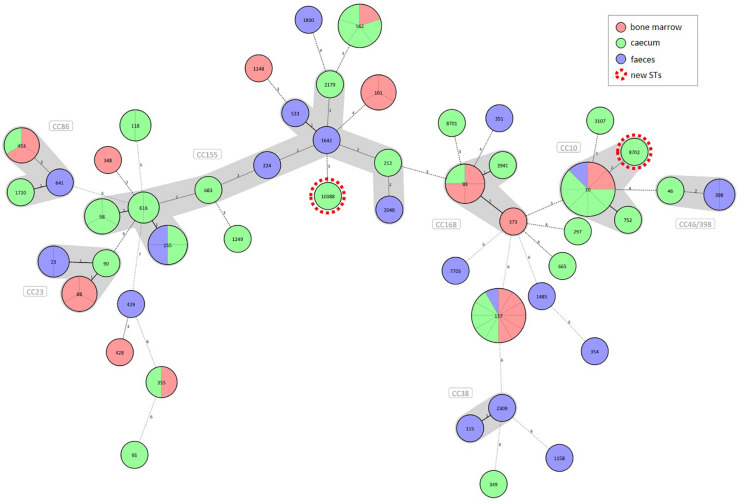
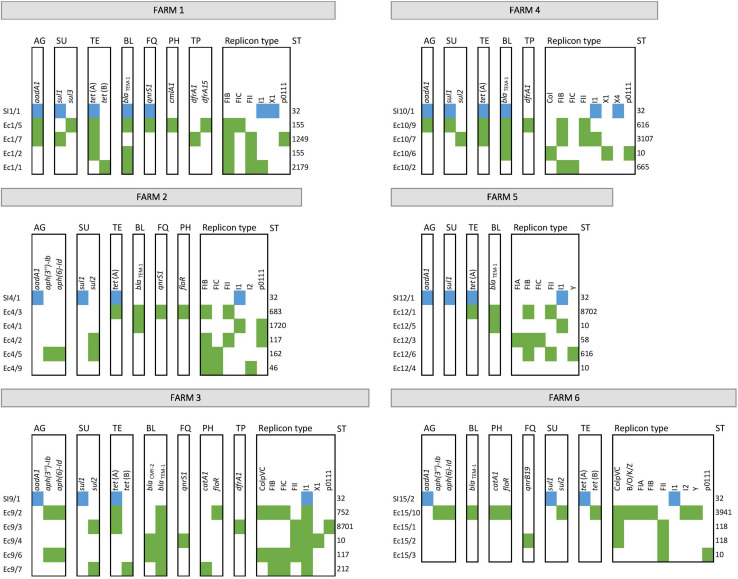
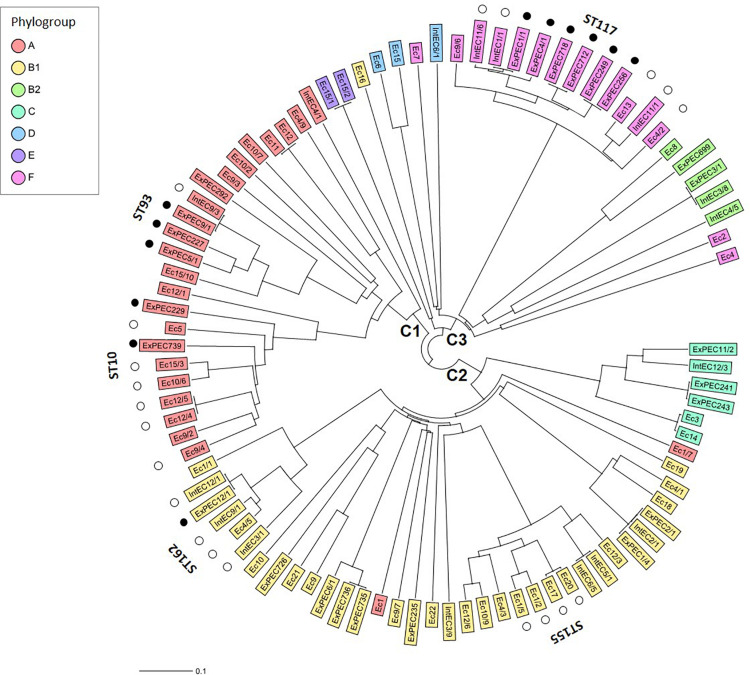
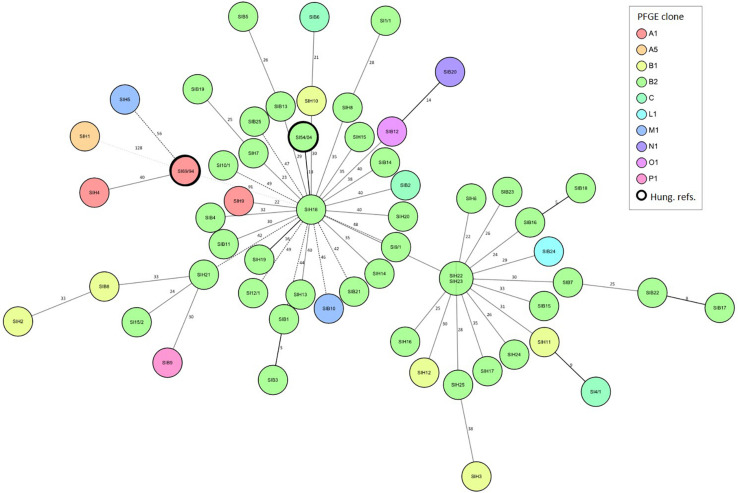
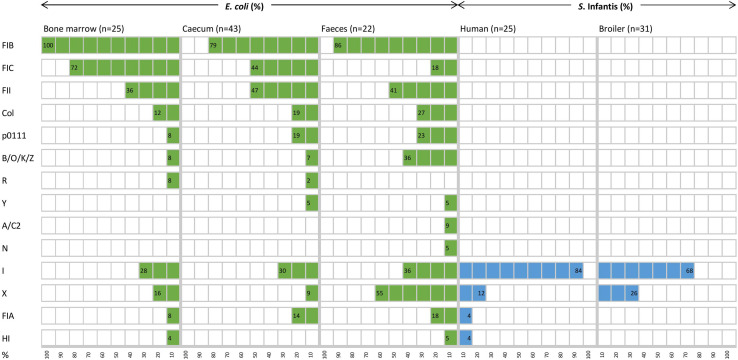
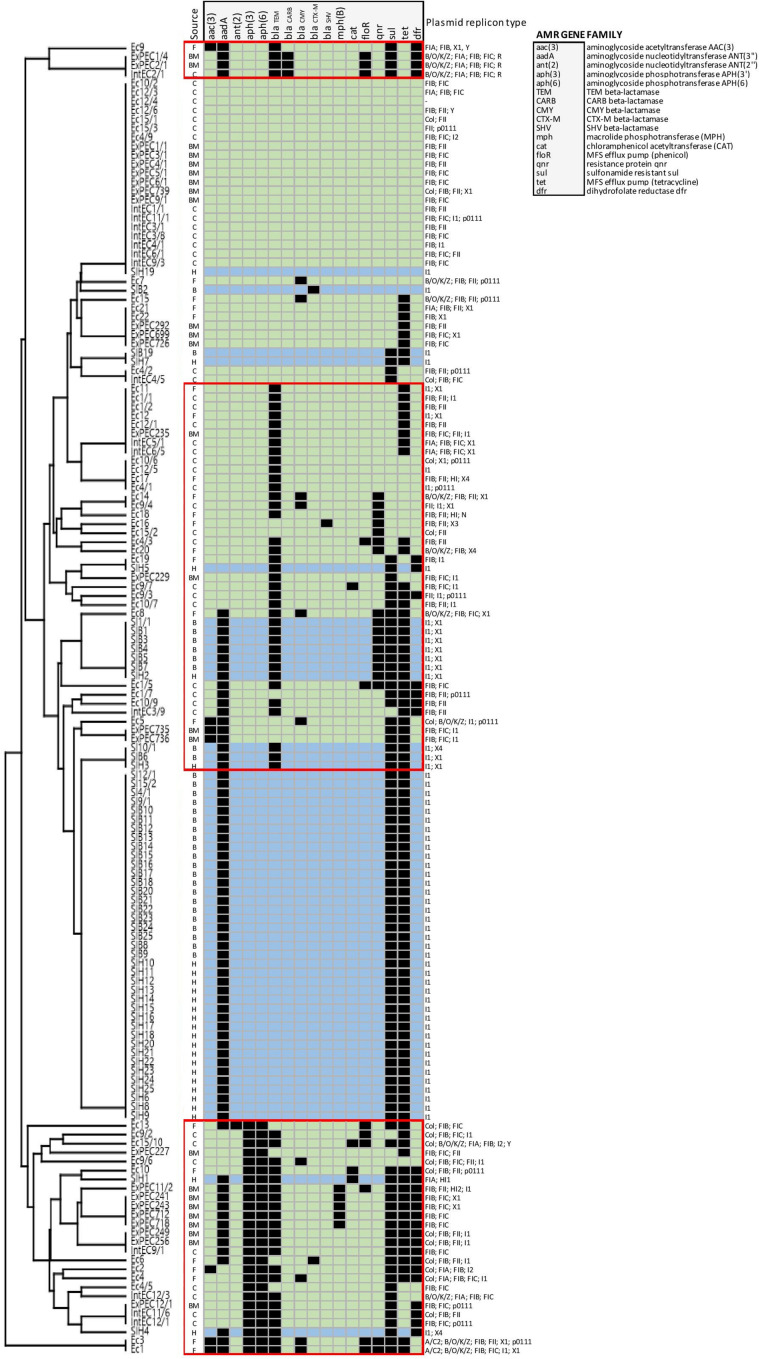
The core genome MLST analysis of 56 . Infantis and 90 contemporary strains revealed a high genomic heterogeneity of broiler It also allowed the first insight into the genomic diversity of the MDR clone B2 of . Infantis, which is endemic in Hungary. We also identified new MDR lineages for . Infantis (ST7081 and ST7082) and for (ST8702 and ST10088). Comparative analysis of antibiotic resistance genes and plasmid types revealed a relatively narrow interface between the mobile resistomes of and . Infantis. The mobile resistance genes , , and were identified at an overall high prevalence in both species. This gene association is characteristic to the plasmid pSI54/04 of the epidemic clone B2 of . Infantis. Simultaneous presence of these genes and of IncI plasmids of the same subtype in cohabitant caecal strains of and . Infantis suggests an important role of these plasmid families in a possible interplay of resistance genes between . Infantis and in broilers.
This is the first comparative genomic analysis of contemporary broiler strains of . Infantis and . The diversity of mobile resistomes suggests that commensal could be potential reservoirs of resistance for . Infantis, but so far only a few plasmid types and mobile resistance genes could be considered as potentially exchangeable between these two species. Among these, IncI1 plasmids could make the greatest contribution to the microevolution and genetic interaction between and . Infantis.
多重耐药(MDR)的共生菌和病原菌以及非伤寒菌菌株对源自家禽的食品构成了日益严重的食源性威胁。婴儿沙门氏菌和肠炎沙门氏菌的多重耐药菌株经常从肉鸡雏鸡中分离出来,这两种肠道细菌物种的同时存在可能会导致移动抗性决定簇的交换。
为了了解可能的基因组关系,并初步洞察肠道细菌之间抗性基因的潜在相互作用,我们比较了来自肉鸡源的婴儿沙门氏菌和肠炎沙门氏菌的基因组多样性和移动耐药基因组。
对56株婴儿沙门氏菌和90株当代肠炎沙门氏菌菌株进行的核心基因组多位点序列分型分析显示,肉鸡沙门氏菌具有高度的基因组异质性。这也使我们首次深入了解了在匈牙利流行的婴儿沙门氏菌多重耐药克隆B2的基因组多样性。我们还鉴定出了婴儿沙门氏菌(ST7081和ST7082)和肠炎沙门氏菌(ST8702和ST10088)的新多重耐药谱系。对抗生素抗性基因和质粒类型的比较分析显示,肠炎沙门氏菌和婴儿沙门氏菌的移动耐药基因组之间的界面相对较窄。移动抗性基因blaCTX-M、blaTEM和blaSHV在这两个物种中总体上具有较高的流行率。这种基因关联是婴儿沙门氏菌流行克隆B2的质粒pSI54/04的特征。在同居的盲肠菌株中,婴儿沙门氏菌和肠炎沙门氏菌同时存在这些基因和相同亚型的IncI质粒,这表明这些质粒家族在肉鸡中婴儿沙门氏菌和肠炎沙门氏菌之间抗性基因的可能相互作用中起着重要作用。
这是对当代肉鸡源婴儿沙门氏菌和肠炎沙门氏菌菌株的首次比较基因组分析。移动耐药基因组的多样性表明,共生的肠炎沙门氏菌可能是婴儿沙门氏菌抗性的潜在储存库,但到目前为止,只有少数质粒类型和移动抗性基因可被认为在这两个物种之间可能可交换。其中,IncI1质粒可能对肠炎沙门氏菌和婴儿沙门氏菌之间的微观进化和遗传相互作用贡献最大。