Department of Chemical Engineering, College of Engineering, Khalifa University, Abu Dhabi, United Arab Emirates.
Department of Epidemiology and Public Health, College of Medicine, Khalifa University, Abu Dhabi, United Arab Emirates.
PLoS One. 2021 Mar 15;16(3):e0248243. doi: 10.1371/journal.pone.0248243. eCollection 2021.
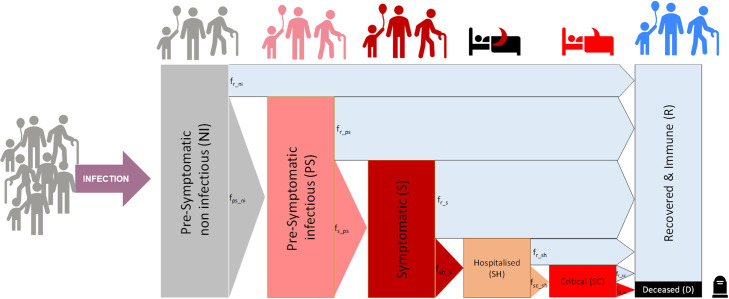
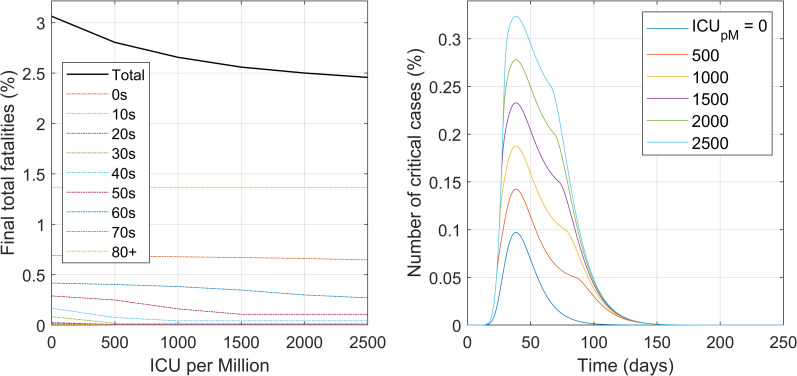
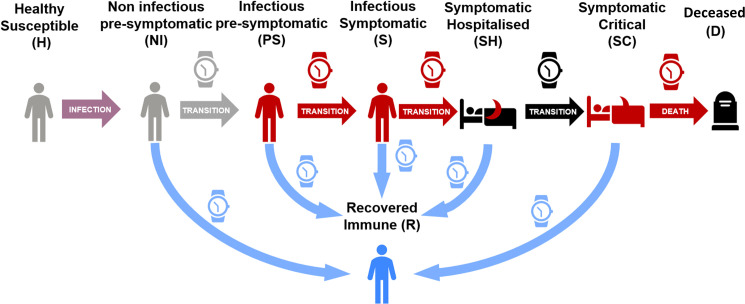
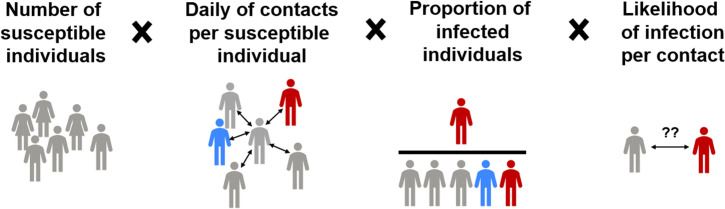
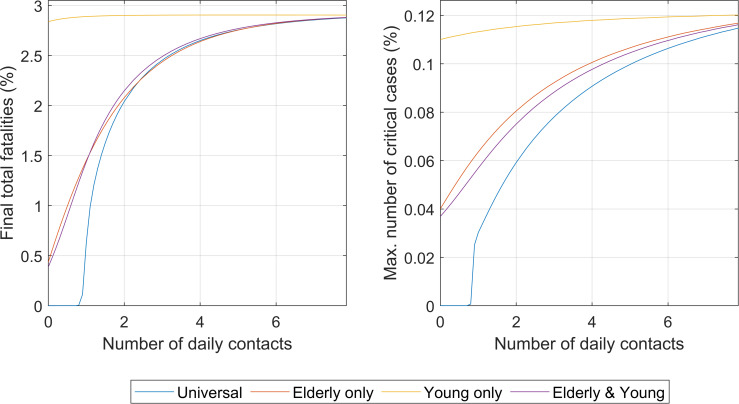
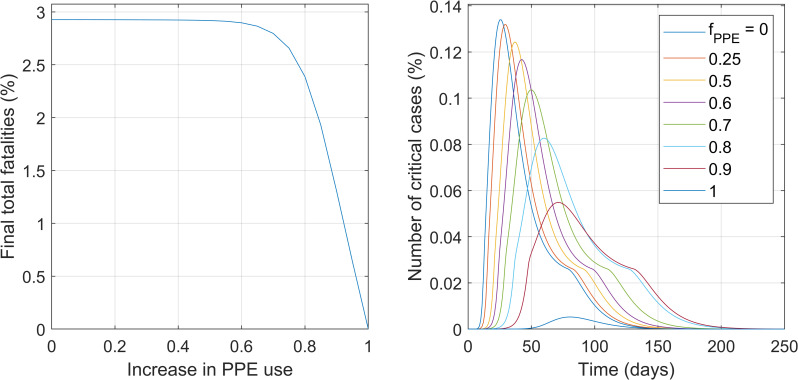
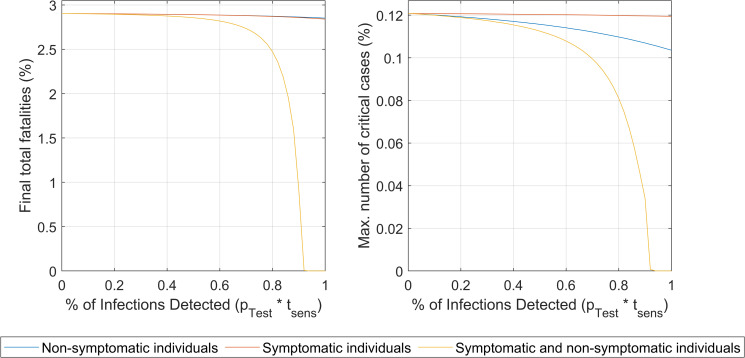
In this work, a SEIR-type mathematical model of the COVID-19 outbreak was developed that describes individuals in compartments by infection stage and age group. The model assumes a close well-mixed community with no migrations. Infection rates and clinical and epidemiological information govern the transitions between stages of the disease. The impact of specific interventions (including the availability of critical care) on the outbreak time course, the number of cases and the outcome of fatalities were evaluated. Data available from the COVID-19 outbreak from Spain as of mid-May 2020 was used. Key findings in our model simulation results indicate that (i) universal social isolation measures appear effective in reducing total fatalities only if they are strict and the number of daily interpersonal contacts is reduced to very low numbers; (ii) selective isolation of only the elderly (at higher fatality risk) appears almost as effective as universal isolation in reducing total fatalities but at a possible lower economic and social impact; (iii) an increase in the number of critical care capacity directly avoids fatalities; (iv) the use of personal protective equipment (PPE) appears to be effective to dramatically reduce total fatalities when adopted extensively and to a high degree; (v) extensive random testing of the population for more complete infection recognition (accompanied by subsequent self-isolation of infected aware individuals) can dramatically reduce the total fatalities only above a high percentage threshold that may not be practically feasible.
在这项工作中,我们开发了一种 COVID-19 爆发的 SEIR 型数学模型,该模型通过感染阶段和年龄组来描述个体。该模型假设一个紧密混合的社区,没有迁移。感染率以及临床和流行病学信息决定了疾病阶段之间的转变。评估了特定干预措施(包括重症监护的可用性)对疫情发展过程、病例数量和死亡人数的影响。我们的模型模拟结果的主要发现表明:(i)普遍的社会隔离措施只有在严格执行并且每天的人际接触次数减少到非常低的水平时,才会有效减少总死亡人数;(ii)仅对老年人(死亡风险更高)进行选择性隔离,在减少总死亡人数方面几乎与普遍隔离一样有效,但可能对经济和社会的影响较小;(iii)增加重症监护能力的数量可以直接避免死亡;(iv)当广泛采用并达到高度程度时,个人防护设备(PPE)的使用似乎可以有效地显著降低总死亡人数;(v)广泛对人群进行随机检测以更全面地识别感染(并伴随随后对有感染意识的个体进行自我隔离),只有在可能不切实际的高百分比阈值之上才能显著降低总死亡人数。