Social and Policy Sciences, University of Bath, Bath, UK
Center for Research on Environment, Health and Population Activities (CREHPA), Lalitpur, Nepal.
BMJ Open. 2021 Mar 16;11(3):e042542. doi: 10.1136/bmjopen-2020-042542.
These were to: (1) produce national and subnational estimates of the sex ratio at birth (SRB) and number of missing girl births in Nepal and (2) understand the socioeconomic correlates of these phenomena.
Observational secondary data analysis of (1) the 2011 population census of Nepal and (2) the Nepal Demographic and Health Survey (DHS) 2006, 2011 and 2016.
Nepal.
(1) 2 567 963 children age 0-4 in the 2011 population census and (2) 27 329 births recorded in DHSs.
We estimate the SRB, and number and proportion of missing girls in the year and 5 years before the census by district. We also calculate conditional sex ratios (the SRB dependant on parity and sex of previous children) by province, time, education and wealth.
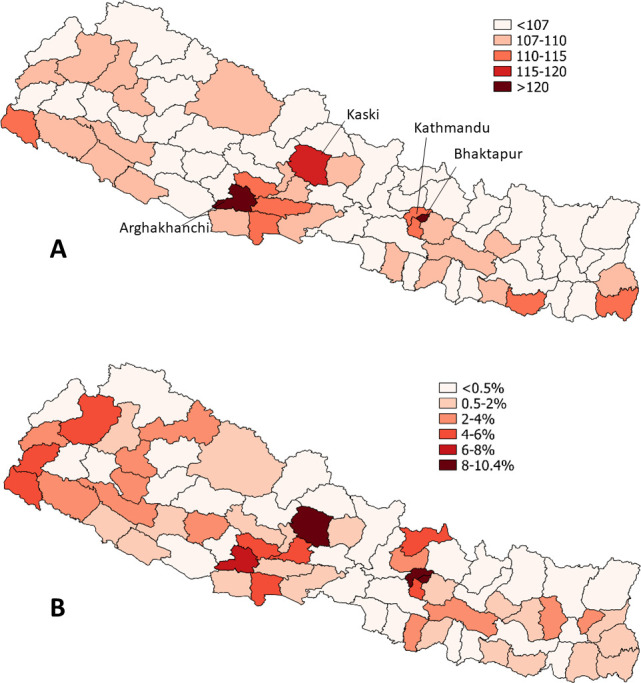
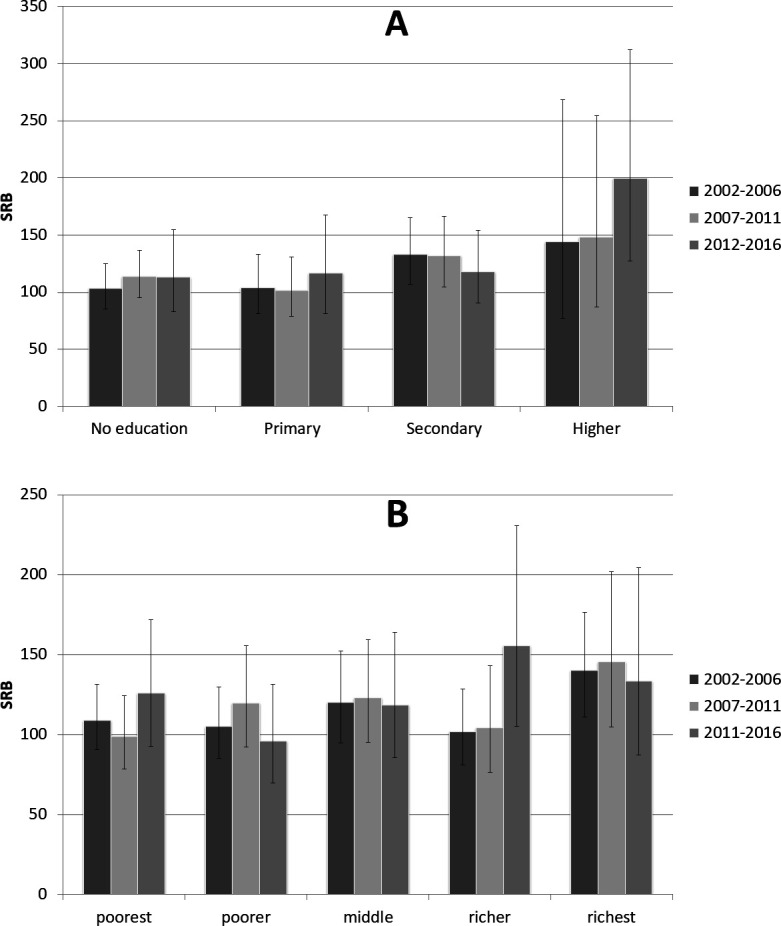
We find that 11 districts have significantly skewed sex ratios at birth in the 2011 population census, with the highest SRBs observed in Arghakhanchi (SRB=127) and Bhaktapur (SRB=123). 22 540 girl births were missing in the 5 years before the 2011 population census. Sex-selective abortion is geographically concentrated, especially in the Kathmandu Valley and Lumbini Province, with 53% of missing girls found in only 11 out of 75 districts.DHS data confirm this, with elevated conditional sex ratios observed in Bagmati and Lumbini Provinces; conditional sex ratios where previous births were all female also became more skewed over time. Skewed sex ratios are concentrated among wealthier more educated groups.
It is clear that sex selection will persist and develop in Nepal unless a coordinated effort is made to address both the demand for and supply of this service. Policies should be holistic and encompass economic and legal gender equity, and strengthen monitoring mechanisms to prevent technology misuse, without jeopardising the right to safe, free and legal abortion.
(1)生成尼泊尔全国和各地区的出生性别比(SRB)和失踪女婴出生人数的估计值;(2)了解这些现象的社会经济关联因素。
对(1)尼泊尔 2011 年人口普查和(2)尼泊尔 2006 年、2011 年和 2016 年人口与健康调查(DHS)的二次数据进行观察性分析。
尼泊尔。
(1)2011 年人口普查中 0-4 岁的 2567963 名儿童;(2)DHS 记录的 27329 例分娩。
我们按地区估计了出生性别比、当年和前 5 年的失踪女婴人数和比例。我们还按省份、时间、教育程度和财富计算了条件性别比(取决于前次生育的孩子的性别和胎次的性别比)。
我们发现,在 2011 年人口普查中有 11 个地区的出生性别比明显偏斜,其中最高的出生性别比出现在阿尔加汗查(SRB=127)和巴克塔普尔(SRB=123)。在 2011 年人口普查前的 5 年中,有 22540 名女婴失踪。性别选择性流产在地理上集中,特别是在加德满都谷地和蓝毗尼省,仅在 75 个区中的 11 个区就发现了 53%的失踪女孩。DHS 数据对此予以证实,在巴格马蒂省和蓝毗尼省观察到了升高的条件性别比;随着时间的推移,之前所有女性出生的条件性别比也变得更加偏斜。偏斜的性别比集中在较富裕、受教育程度较高的群体中。
显然,如果不共同努力解决这种服务的供求问题,那么在尼泊尔,性别选择将持续存在并发展。政策应该是全面的,包括经济和法律上的性别平等,并加强监测机制,防止技术滥用,同时又不损害安全、免费和合法堕胎的权利。