Choi Eunjeong, Kim Dongyun, Kang Donggu, Yang Gi Hoon, Jung Bongsu, Yeo MyungGu, Park Min-Jeong, An SangHyun, Lee KyoungHo, Kim Jun Sik, Kim Jong Chul, Jeong Woonhyeok, Yoo Hye Hyun, Jeon Hojun
Research Institute of Additive Manufacturing and Regenerative Medicine, Baobab Healthcare Inc, 55 Hanyangdaehak-Ro, Ansan, Gyeonggi-do 15588, South Korea.
Department of Mechanical Engineering, Korea Polytechnic University, Sangidaehak-ro, Siheung, Gyeonggi-do 15073, South Korea.
Regen Biomater. 2021 Mar 13;8(2):rbab001. doi: 10.1093/rb/rbab001. eCollection 2021 Mar.
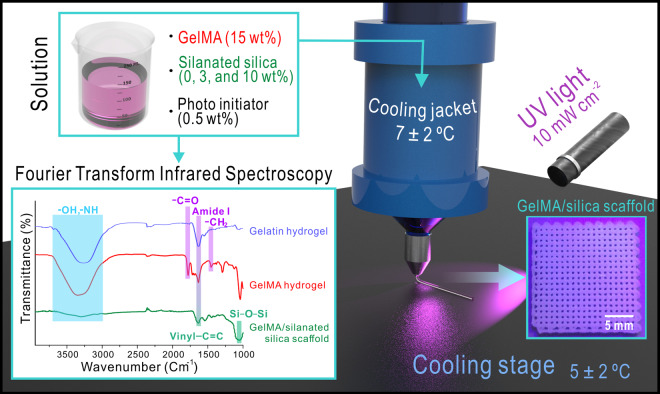
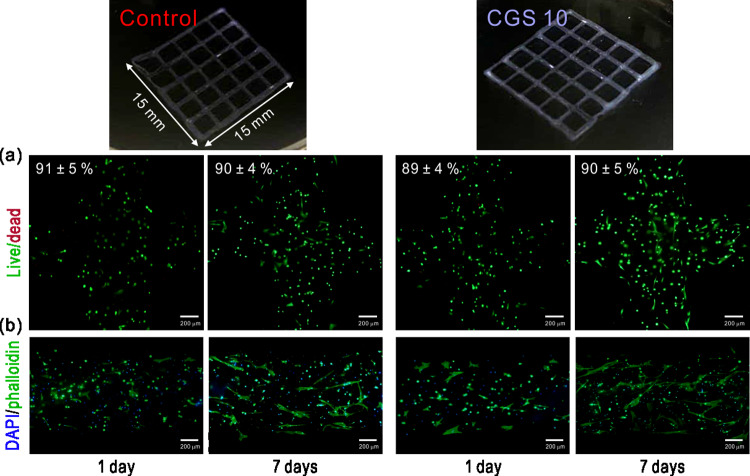
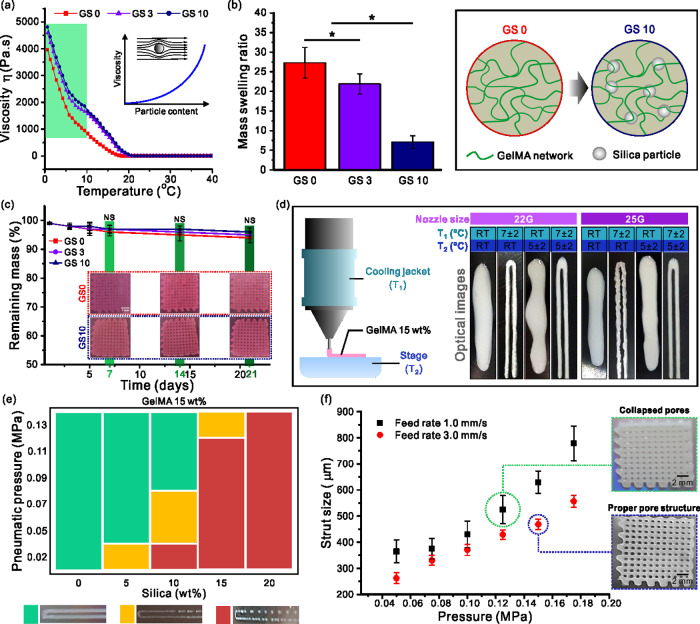
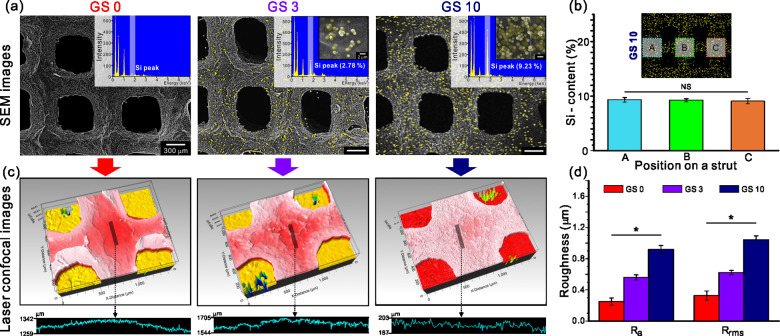
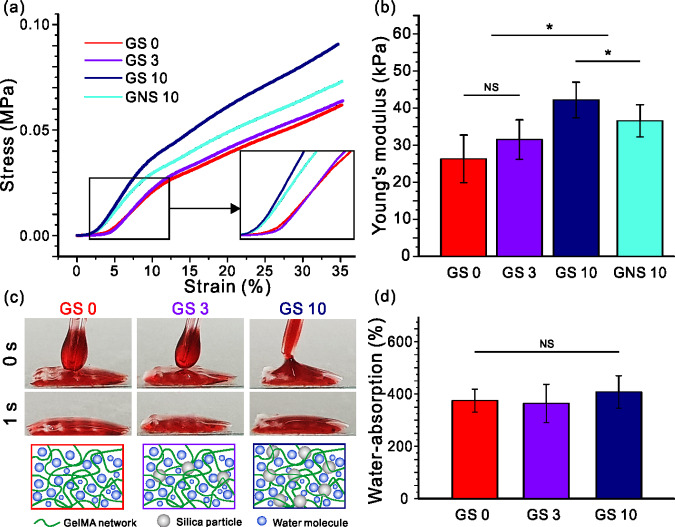
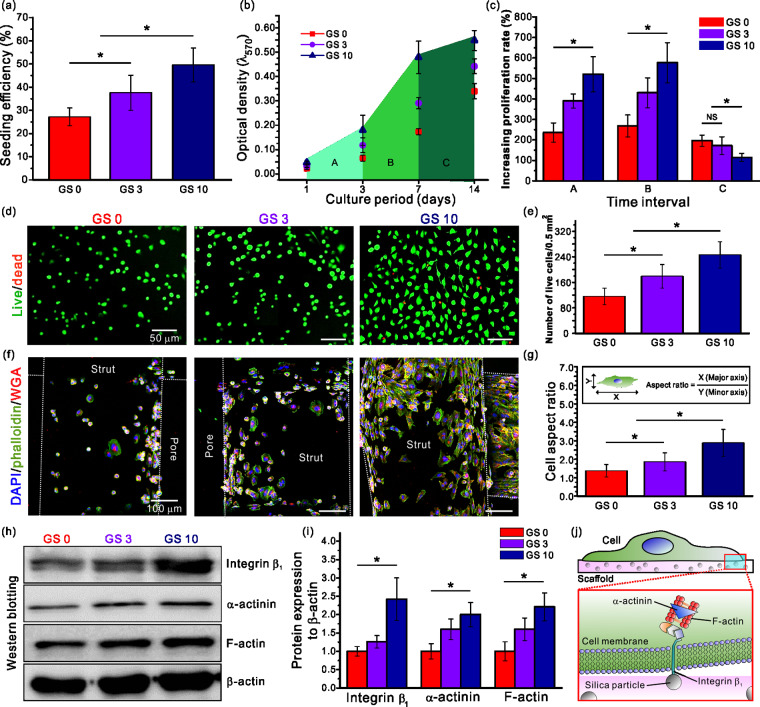
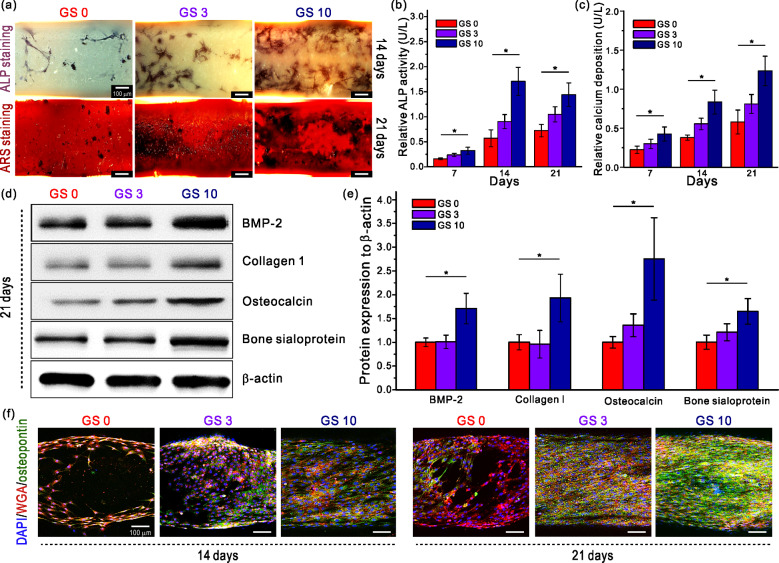
Among many biomaterials, gelatin methacrylate (GelMA), a photocurable protein, has been widely used in 3D bioprinting process owing to its excellent cellular responses, biocompatibility and biodegradability. However, GelMA still shows a low processability due to the severe temperature dependence of viscosity. To overcome this obstacle, we propose a two-stage temperature control system to effectively control the viscosity of GelMA. To optimize the process conditions, we evaluated the temperature of the cooling system (jacket and stage). Using the established system, three GelMA scaffolds were fabricated in which different concentrations (0, 3 and 10 wt%) of silanated silica particles were embedded. To evaluate the performances of the prepared scaffolds suitable for hard tissue regeneration, we analyzed the physical (viscoelasticity, surface roughness, compressive modulus and wettability) and biological (human mesenchymal stem cells growth, western blotting and osteogenic differentiation) properties. Consequently, the composite scaffold with greater silica contents (10 wt%) showed enhanced physical and biological performances including mechanical strength, cell initial attachment, cell proliferation and osteogenic differentiation compared with those of the controls. Our results indicate that the GelMA/silanated silica composite scaffold can be potentially used for hard tissue regeneration.
在众多生物材料中,甲基丙烯酸明胶(GelMA)是一种可光固化的蛋白质,因其出色的细胞反应、生物相容性和生物降解性,已在3D生物打印过程中得到广泛应用。然而,由于粘度对温度的强烈依赖性,GelMA的加工性能仍然较低。为克服这一障碍,我们提出了一种两级温度控制系统,以有效控制GelMA的粘度。为优化工艺条件,我们评估了冷却系统(夹套和平台)的温度。使用所建立的系统,制备了三种嵌入不同浓度(0、3和10 wt%)硅烷化二氧化硅颗粒的GelMA支架。为评估所制备的适合硬组织再生的支架的性能,我们分析了其物理性能(粘弹性、表面粗糙度、压缩模量和润湿性)和生物学性能(人间充质干细胞生长、蛋白质印迹法和骨分化)。结果表明,与对照组相比,二氧化硅含量更高(10 wt%)的复合支架在机械强度、细胞初始附着、细胞增殖和骨分化等方面的物理和生物学性能均有所增强。我们的结果表明,GelMA/硅烷化二氧化硅复合支架具有用于硬组织再生的潜力。