Liu Chuan, Hu Chuan, Huang Jiale, Xiang Kanghui, Li Zhi, Qu Jinglei, Chen Ying, Yang Bowen, Qu Xiujuan, Liu Yunpeng, Zhang Guangwei, Wen Ti
Department of Medical Oncology, The First Hospital of China Medical University, Shenyang, China.
Key Laboratory of Anticancer Drugs and Biotherapy of Liaoning Province, The First Hospital of China Medical University, Shenyang, China.
Front Oncol. 2021 Feb 26;11:591009. doi: 10.3389/fonc.2021.591009. eCollection 2021.
Among colon cancer patients, liver metastasis is a commonly deadly phenomenon, but there are few prognostic models for these patients.
The clinicopathologic data of colon cancer with liver metastasis (CCLM) patients were downloaded from the Surveillance, Epidemiology and End Results (SEER) database. All patients were randomly divided into training and internal validation sets based on the ratio of 7:3. A prognostic nomogram was established with Cox analysis in the training set, which was validated by two independent validation sets.
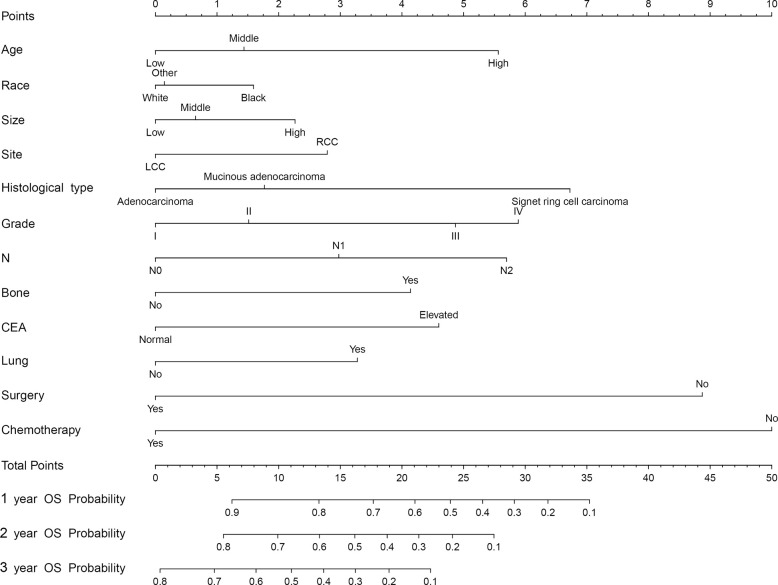
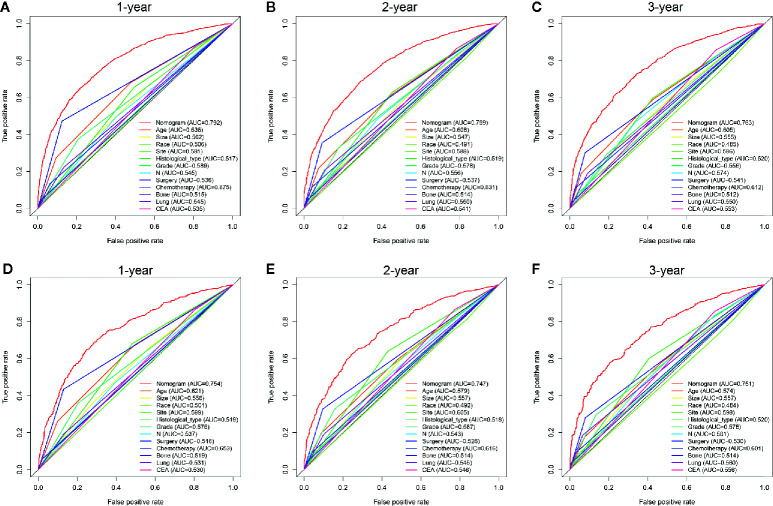
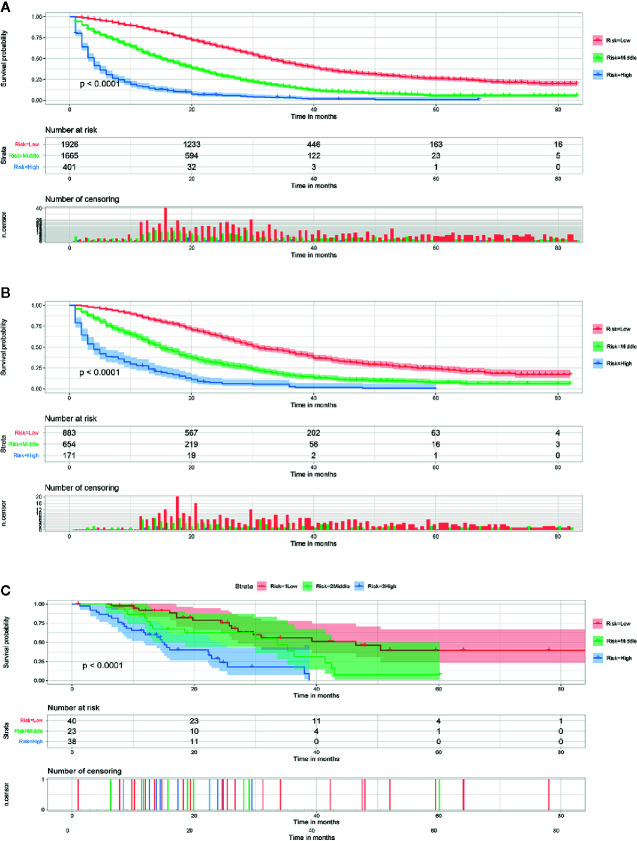
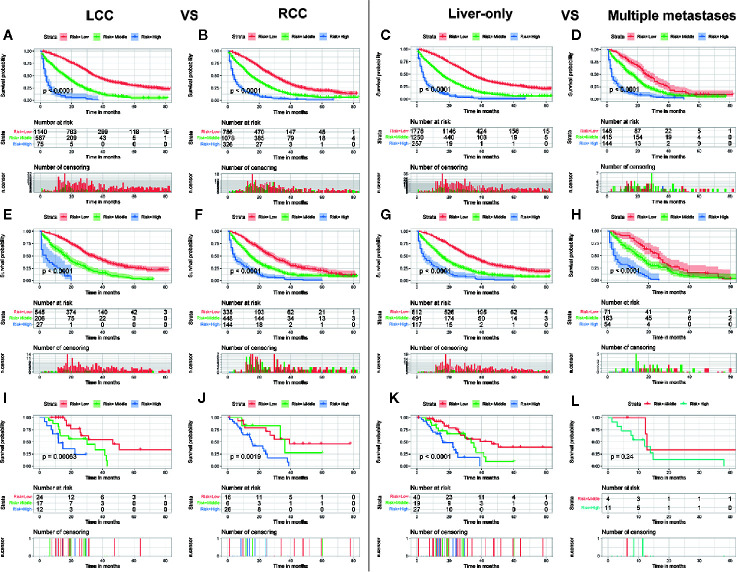
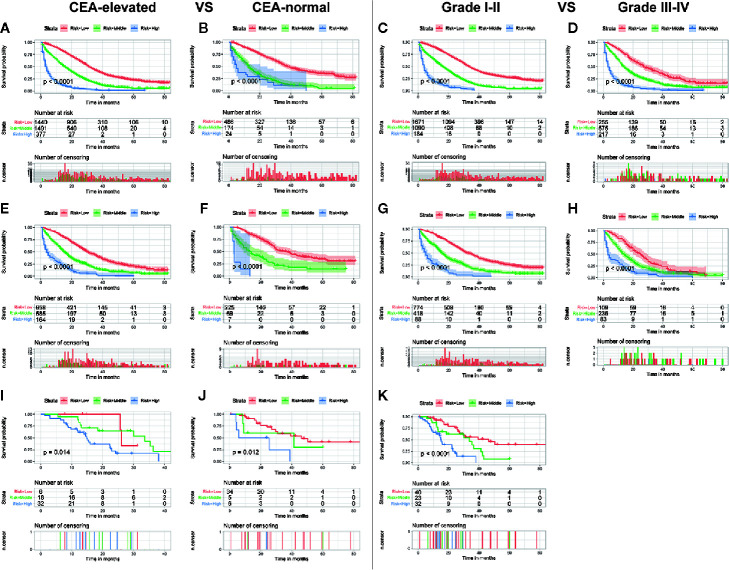
A total of 5,700 CCLM patients were included. Age, race, tumor size, tumor site, histological type, grade, AJCC N status, carcinoembryonic antigen (CEA), lung metastasis, bone metastasis, surgery, and chemotherapy were independently associated with the overall survival (OS) of CCLM in the training set, which were used to establish a nomogram. The AUCs of 1-, 2- and 3-year were higher than or equal to 0.700 in the training, internal validation, and external validation sets, indicating the favorable effects of our nomogram. Besides, whether in overall or subgroup analysis, the risk score calculated by this nomogram can divide CCLM patients into high-, middle- and low-risk groups, which suggested that the nomogram can significantly determine patients with different prognosis and is suitable for different patients.
Higher age, the race of black, larger tumor size, higher grade, histological type of mucinous adenocarcinoma and signet ring cell carcinoma, higher N stage, RCC, lung metastasis, bone metastasis, without surgery, without chemotherapy, and elevated CEA were independently associated with poor prognosis of CCLM patients. A nomogram incorporating the above variables could accurately predict the prognosis of CCLM.
在结肠癌患者中,肝转移是一种常见的致命现象,但针对这些患者的预后模型较少。
从监测、流行病学和最终结果(SEER)数据库下载结肠癌肝转移(CCLM)患者的临床病理数据。所有患者按照7:3的比例随机分为训练集和内部验证集。在训练集中采用Cox分析建立预后列线图,并通过两个独立验证集进行验证。
共纳入5700例CCLM患者。年龄、种族、肿瘤大小、肿瘤部位、组织学类型、分级、美国癌症联合委员会(AJCC)N分期、癌胚抗原(CEA)、肺转移、骨转移、手术和化疗在训练集中与CCLM患者的总生存期(OS)独立相关,这些因素被用于建立列线图。训练集、内部验证集和外部验证集中1年、2年和3年的曲线下面积(AUC)均大于或等于0.700,表明我们的列线图效果良好。此外,无论是总体分析还是亚组分析,该列线图计算的风险评分均可将CCLM患者分为高、中、低风险组,这表明该列线图可显著区分不同预后的患者,适用于不同患者。
年龄较大、黑人种族、肿瘤较大、分级较高、黏液腺癌和印戒细胞癌组织学类型、N分期较高、癌胚抗原升高、肺转移、骨转移、未接受手术、未接受化疗与CCLM患者预后不良独立相关。纳入上述变量的列线图可准确预测CCLM患者的预后。