Zhu Huanzheng, Li Qiang, Tao Chenning, Hong Yu, Xu Ziquan, Shen Weidong, Kaur Sandeep, Ghosh Pintu, Qiu Min
State Key Laboratory of Modern Optical Instrumentation, College of Optical Science and Engineering, Zhejiang University, Hangzhou, China.
Key Laboratory of 3D Micro/Nano Fabrication and Characterization of Zhejiang Province, School of Engineering, Westlake University, Hangzhou, China.
Nat Commun. 2021 Mar 22;12(1):1805. doi: 10.1038/s41467-021-22051-0.
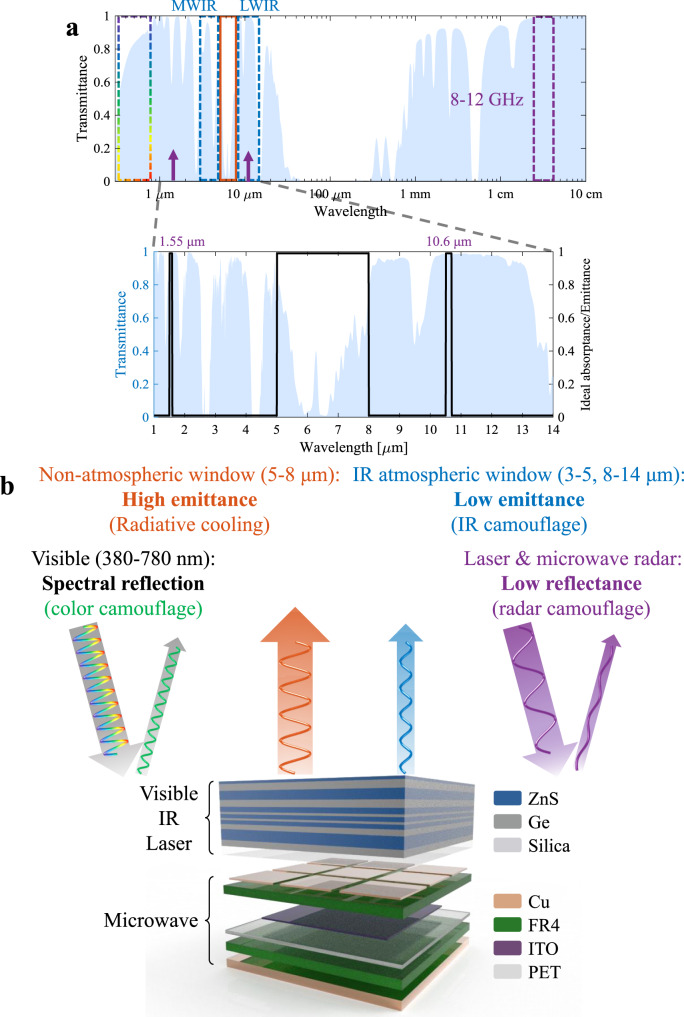
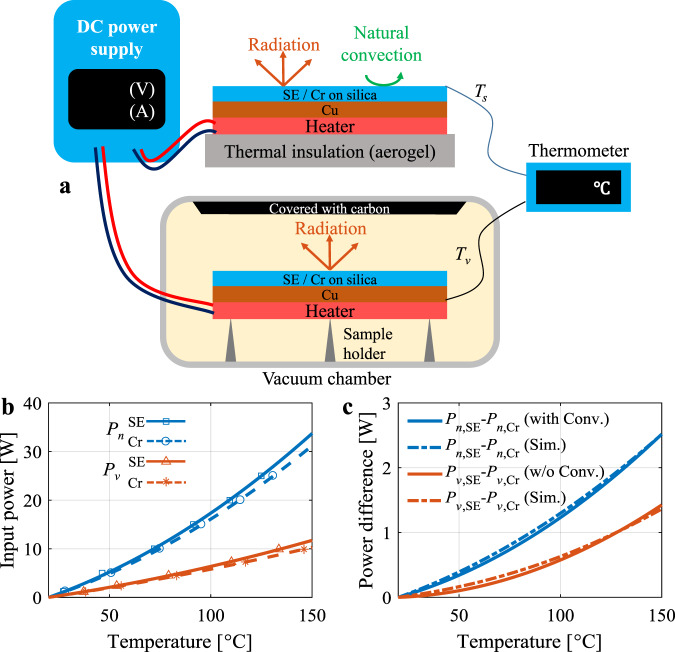
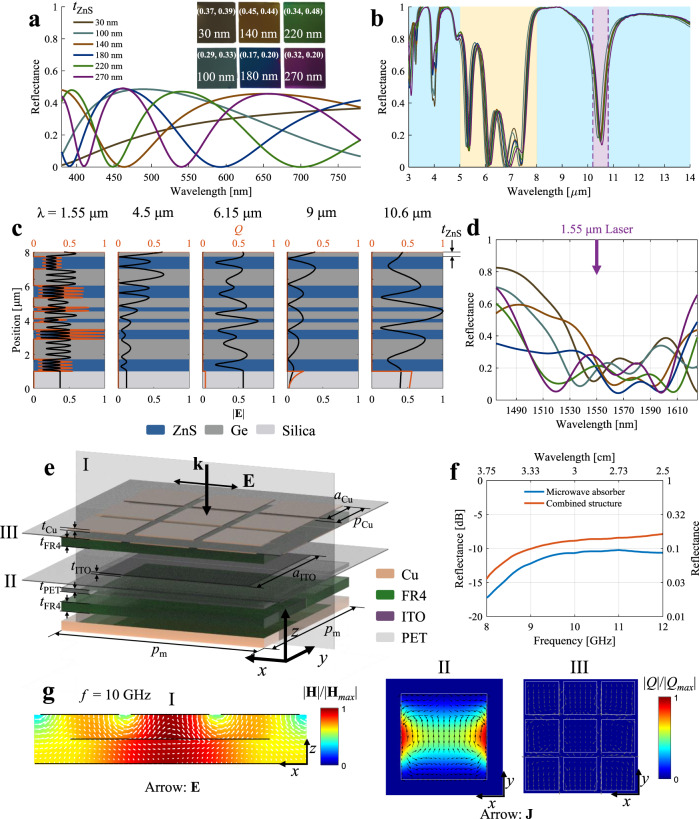
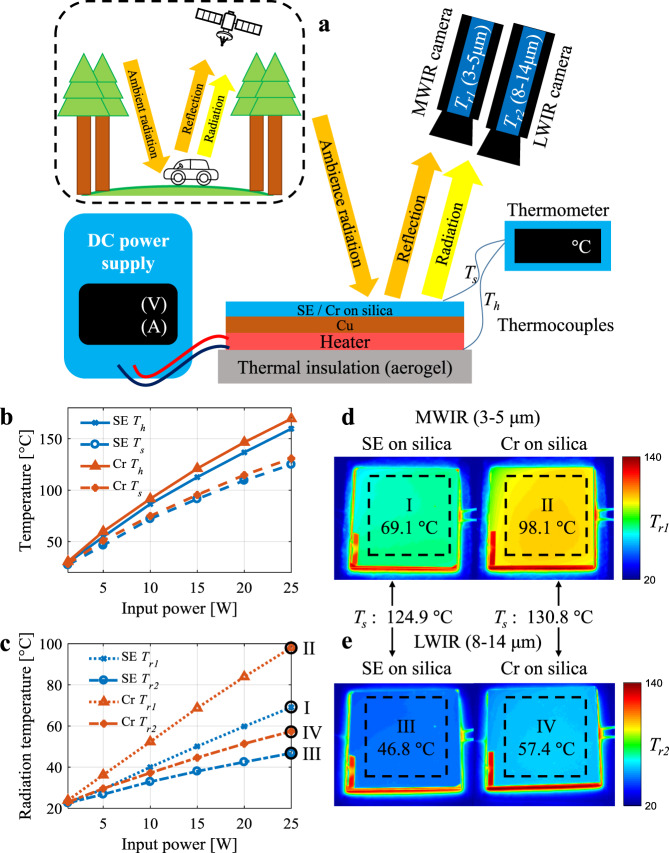
Interminable surveillance and reconnaissance through various sophisticated multispectral detectors present threats to military equipment and manpower. However, a combination of detectors operating in different wavelength bands (from hundreds of nanometers to centimeters) and based on different principles raises challenges to the conventional single-band camouflage devices. In this paper, multispectral camouflage is demonstrated for the visible, mid-infrared (MIR, 3-5 and 8-14 μm), lasers (1.55 and 10.6 μm) and microwave (8-12 GHz) bands with simultaneous efficient radiative cooling in the non-atmospheric window (5-8 μm). The device for multispectral camouflage consists of a ZnS/Ge multilayer for wavelength selective emission and a Cu-ITO-Cu metasurface for microwave absorption. In comparison with conventional broadband low emittance material (Cr), the IR camouflage performance of this device manifests 8.4/5.9 °C reduction of inner/surface temperature, and 53.4/13.0% IR signal decrease in mid/long wavelength IR bands, at 2500 W ∙ m input power density. Furthermore, we reveal that the natural convection in the atmosphere can be enhanced by radiation in the non-atmospheric window, which increases the total cooling power from 136 W ∙ m to 252 W ∙ m at 150 °C surface temperature. This work may introduce the opportunities for multispectral manipulation, infrared signal processing, thermal management, and energy-efficient applications.
通过各种先进的多光谱探测器进行的无休止监视和侦察对军事装备和人员构成了威胁。然而,不同波段(从数百纳米到厘米)、基于不同原理的探测器组合,给传统的单波段伪装设备带来了挑战。本文展示了一种多光谱伪装技术,该技术可同时在可见光、中红外(MIR,3 - 5和8 - 14μm)、激光(1.55和10.6μm)以及微波(8 - 12GHz)波段实现伪装,并在非大气窗口(5 - 8μm)实现高效的辐射冷却。这种多光谱伪装设备由用于波长选择性发射的ZnS/Ge多层膜和用于微波吸收的Cu - ITO - Cu超表面组成。与传统宽带低发射率材料(Cr)相比,在2500W∙m的输入功率密度下,该设备的红外伪装性能表现为内部/表面温度降低8.4/5.9°C,中/长波长红外波段的红外信号降低53.4/13.0%。此外,我们发现非大气窗口的辐射可以增强大气中的自然对流,在表面温度为150°C时,总冷却功率从136W∙m增加到252W∙m。这项工作可能为多光谱操纵、红外信号处理、热管理和节能应用带来机遇。