Scoz Robson Dias, Alves Bruno Mazziotti Oliveira, Burigo Ricardo Lima, Vieira Edgar Ramos, Ferreira Luciano Maia Alves, da Silva Rubens Alexandre, Hirata Rogerio Pessoto, Amorim Cesar Ferreira
Universidade Cidade de Sao Paulo (UNICID), Sao Paulo, Brazil.
Physical Therapy Department, Arsenal Football Club, London, UK.
BMJ Open Sport Exerc Med. 2021 Mar 5;7(1):e000927. doi: 10.1136/bmjsem-2020-000927. eCollection 2021.
BACKGROUND/AIM: The purpose of this study was to compare the isokinetic peak torque profiles from the quadriceps and hamstrings muscles during concentric and eccentric contractions in elite Brazilian soccer players across different field positions and age categories. Our hypothesis was that soccer players from different field positions are subjected to different ageing-related effects on their isokinetic peak torque.
This is a retrospective study based on professional elite-level soccer players between the years 2009 and 2019. It included 570 adult males who played for at least 5 years on first or second Brazilian divisions. Playing positions were divided as: goalkeepers, defenders, sidebacks, midfielders and forwards. Age categories were also divided as: G1 (17-20 years old), G2 (21-24 years old), G3 (25-28 years old), G4 (29-32 years old) and G5 (33 years old or more).
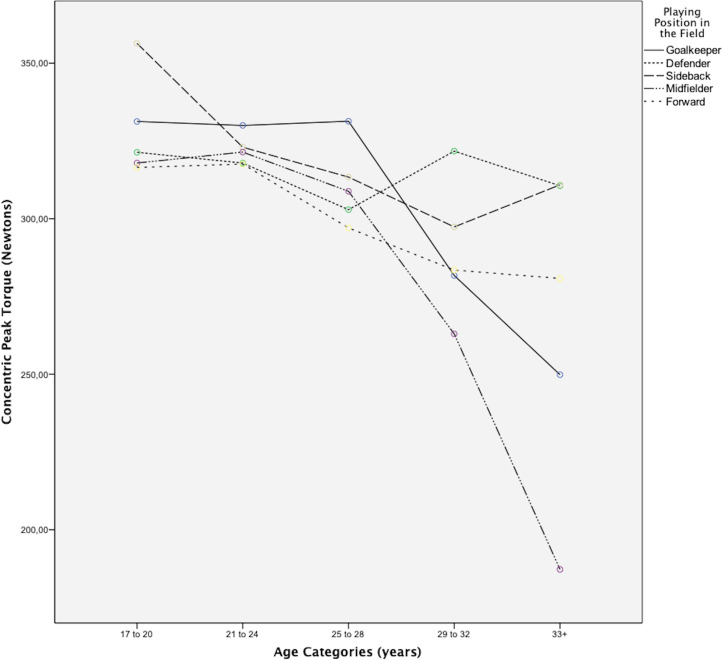
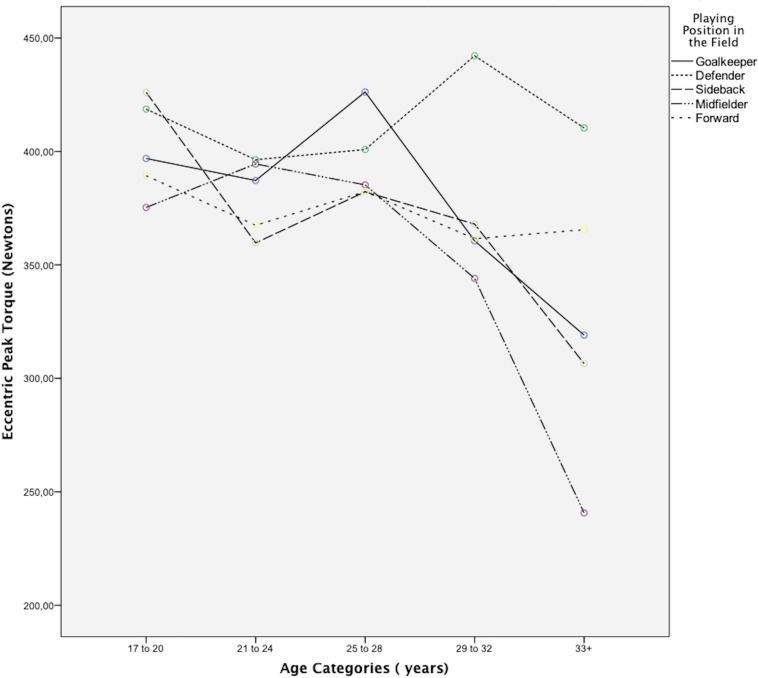
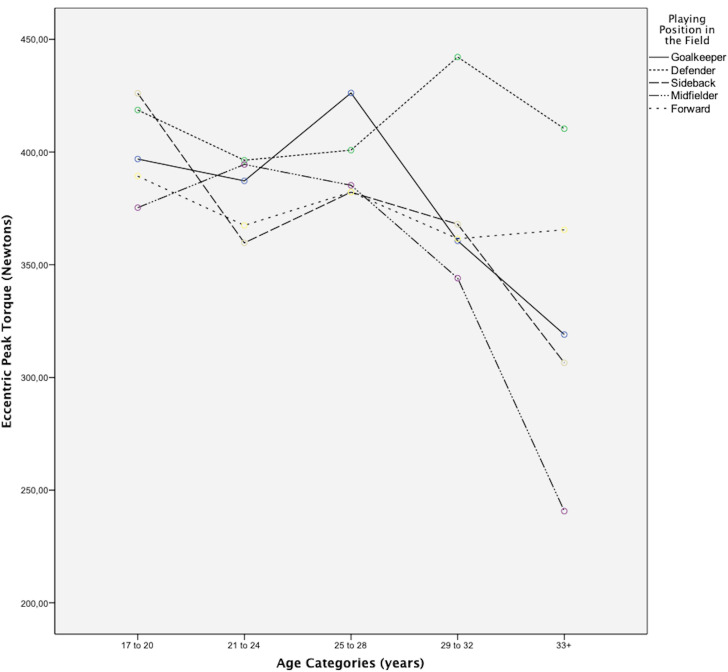
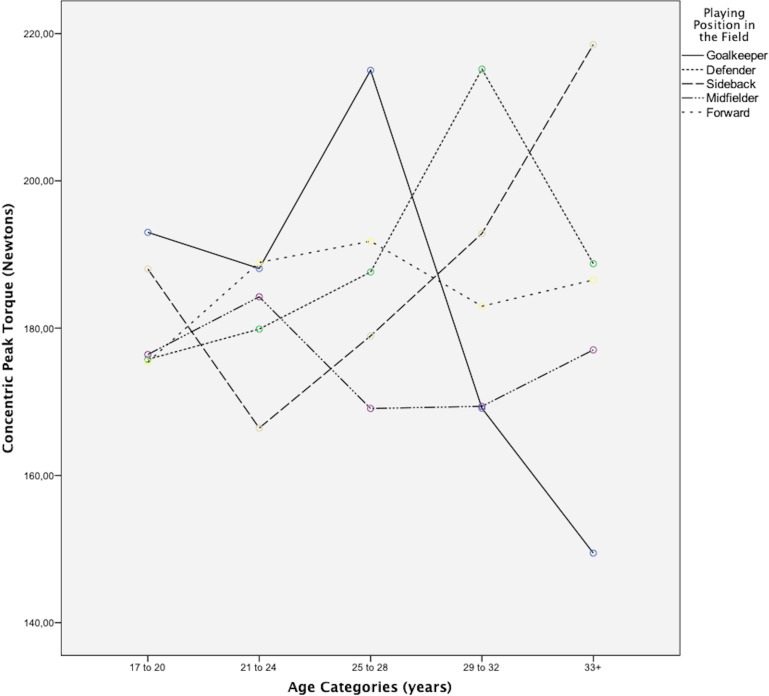
The results indicate a moderate effect of age (F(4545)=8.197; p<0.001; η=0.057) and a small effect of playing position (F(4545)=2.993; p<0.05; η=0.021) on torque of concentric extensors; mainly from midfielders and goalkeepers with 29 years or more.
Soccer players from different field positions are subjected to different ageing related effects on their muscular performance during their career special attention should be given to these players to avoid reduction in physical performance.
背景/目的:本研究旨在比较巴西精英足球运动员在不同场上位置和年龄组别的向心收缩和离心收缩过程中,股四头肌和腘绳肌的等速峰值扭矩曲线。我们的假设是,来自不同场上位置的足球运动员在等速峰值扭矩方面受到不同的衰老相关影响。
这是一项基于2009年至2019年职业精英水平足球运动员的回顾性研究。研究包括570名成年男性,他们在巴西甲级或乙级联赛中至少踢了5年球。比赛位置分为:守门员、后卫、边后卫、中场球员和前锋。年龄组也分为:G1(17 - 20岁)、G2(21 - 24岁)、G3(25 - 28岁)、G4(29 - 32岁)和G5(33岁及以上)。
结果表明,年龄对向心伸展肌扭矩有中等影响(F(4545)=8.197;p<0.001;η=0.057),比赛位置有较小影响(F(4545)=2.993;p<0.05;η=0.021);主要体现在29岁及以上的中场球员和守门员身上。
来自不同场上位置的足球运动员在其职业生涯中,肌肉表现受到不同的衰老相关影响,应特别关注这些运动员,以避免身体表现下降。