IEEE Rev Biomed Eng. 2022;15:325-340. doi: 10.1109/RBME.2021.3069213. Epub 2022 Jan 20.
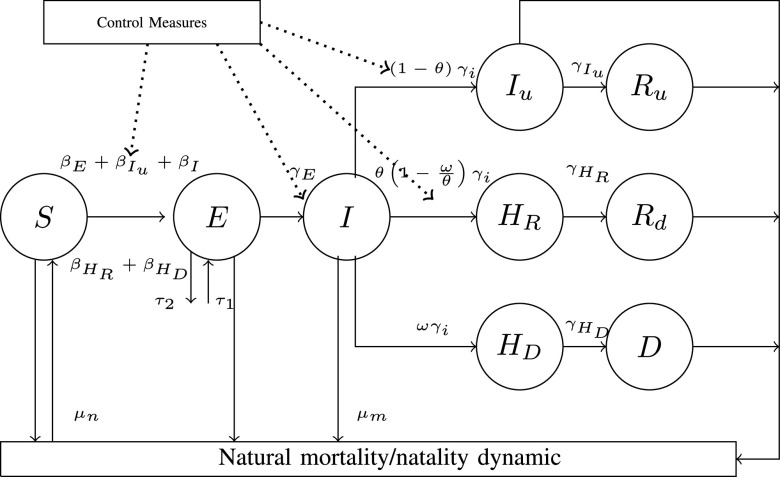
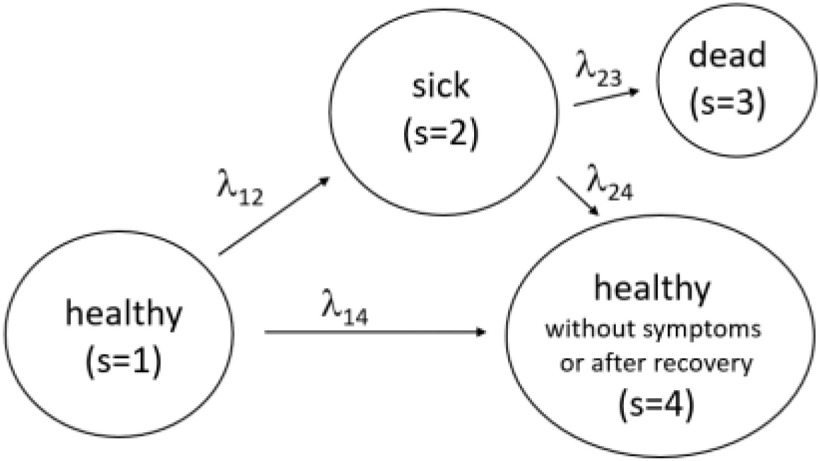
COVID-19 is a life threatening disease which has a enormous global impact. As the cause of the disease is a novel coronavirus whose gene information is unknown, drugs and vaccines are yet to be found. For the present situation, disease spread analysis and prediction with the help of mathematical and data driven model will be of great help to initiate prevention and control action, namely lockdown and qurantine. There are various mathematical and machine-learning models proposed for analyzing the spread and prediction. Each model has its own limitations and advantages for a particluar scenario. This article reviews the state-of-the art mathematical models for COVID-19, including compartment models, statistical models and machine learning models to provide more insight, so that an appropriate model can be well adopted for the disease spread analysis. Furthermore, accurate diagnose of COVID-19 is another essential process to identify the infected person and control further spreading. As the spreading is fast, there is a need for quick auotomated diagnosis mechanism to handle large population. Deep-learning and machine-learning based diagnostic mechanism will be more appropriate for this purpose. In this aspect, a comprehensive review on the deep learning models for the diagnosis of the disease is also provided in this article.
新型冠状病毒肺炎(COVID-19)是一种具有全球巨大影响的致命性疾病。由于该疾病的病因是一种新型冠状病毒,其基因信息未知,因此尚未发现药物和疫苗。就目前情况而言,借助数学和数据驱动模型进行疾病传播分析和预测,对于启动预防和控制行动(即封锁和隔离)将有很大帮助。已经提出了各种用于分析传播和预测的数学和机器学习模型。对于特定场景,每个模型都有其自身的局限性和优势。本文回顾了用于 COVID-19 的最新数学模型,包括隔室模型、统计模型和机器学习模型,以提供更深入的了解,从而可以为疾病传播分析选择合适的模型。此外,COVID-19 的准确诊断是识别感染者并控制进一步传播的另一个重要过程。由于传播速度很快,因此需要快速的自动化诊断机制来处理大量人群。基于深度学习和机器学习的诊断机制将更适合此目的。在这方面,本文还对用于疾病诊断的深度学习模型进行了全面回顾。