Callaway Frederick, Rangel Antonio, Griffiths Thomas L
Department of Psychology, Princeton University, Princeton, New Jersey, United States of America.
Departments of Humanities and Social Sciences and Computation and Neural Systems, California Institute of Technology, Pasadena, California, United States of America.
PLoS Comput Biol. 2021 Mar 26;17(3):e1008863. doi: 10.1371/journal.pcbi.1008863. eCollection 2021 Mar.
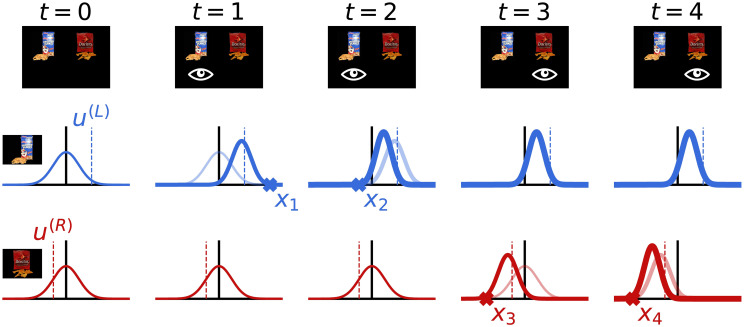
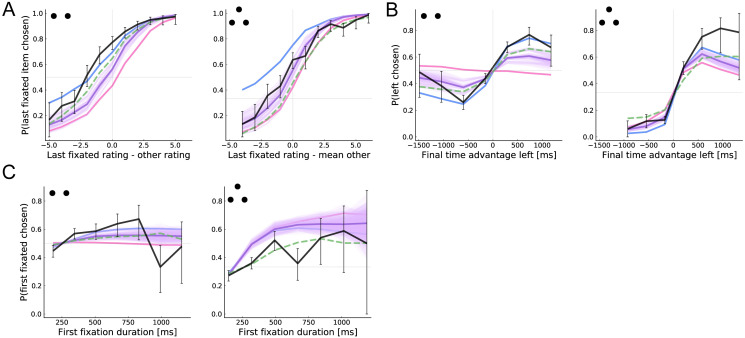
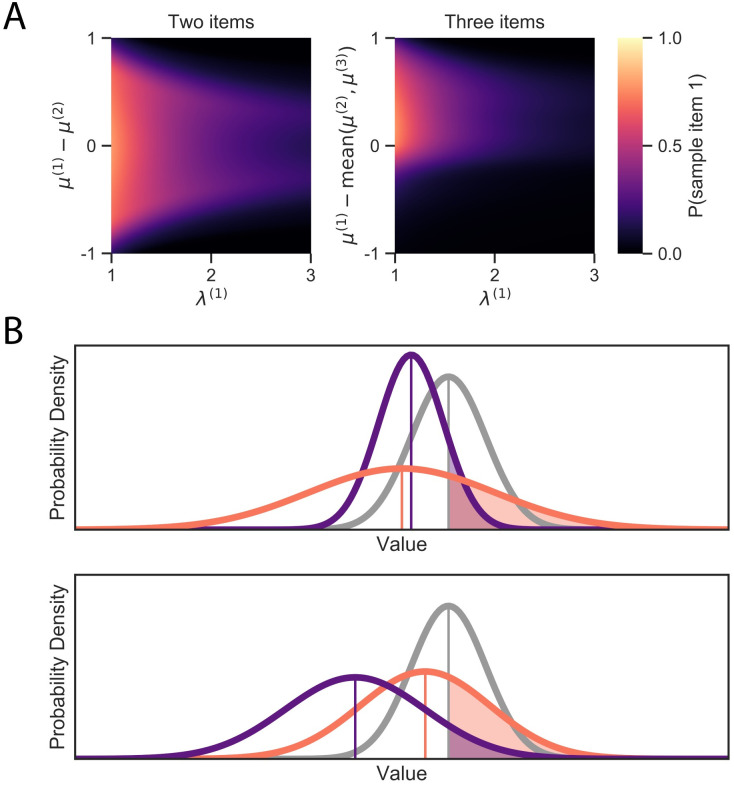
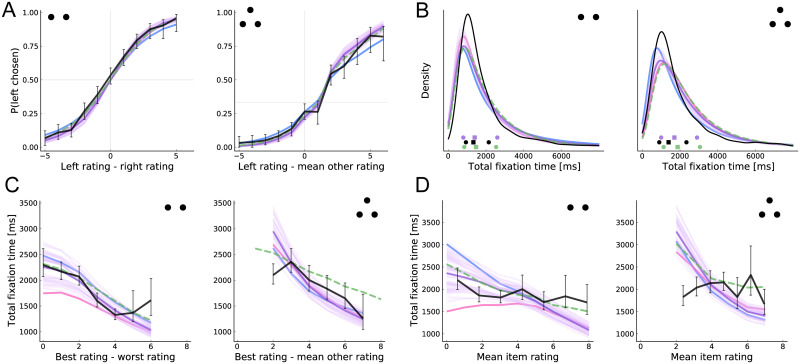
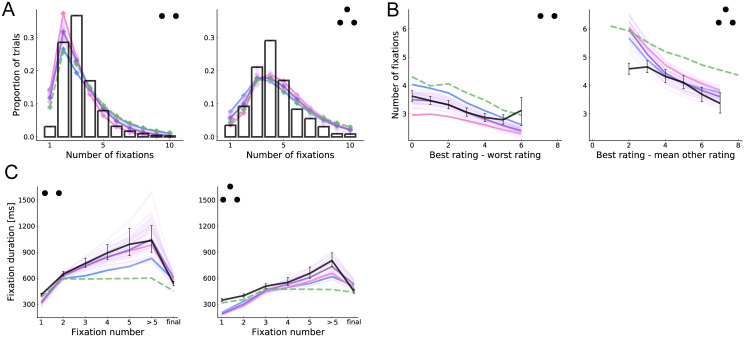
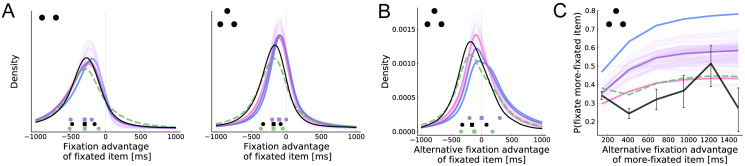
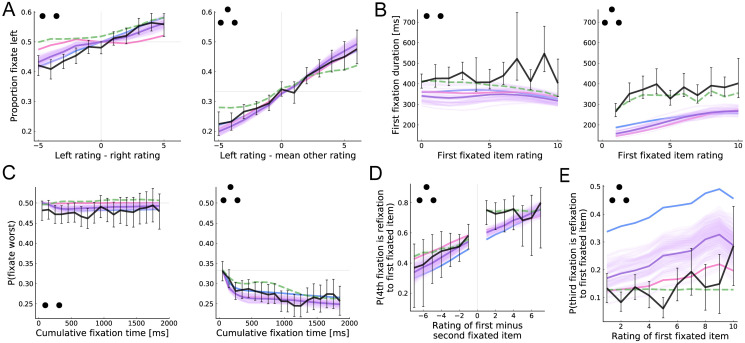
Simple choices (e.g., eating an apple vs. an orange) are made by integrating noisy evidence that is sampled over time and influenced by visual attention; as a result, fluctuations in visual attention can affect choices. But what determines what is fixated and when? To address this question, we model the decision process for simple choice as an information sampling problem, and approximate the optimal sampling policy. We find that it is optimal to sample from options whose value estimates are both high and uncertain. Furthermore, the optimal policy provides a reasonable account of fixations and choices in binary and trinary simple choice, as well as the differences between the two cases. Overall, the results show that the fixation process during simple choice is influenced dynamically by the value estimates computed during the decision process, in a manner consistent with optimal information sampling.
简单的选择(例如,选择吃苹果还是橙子)是通过整合随时间采样并受视觉注意力影响的有噪声证据来做出的;因此,视觉注意力的波动会影响选择。但是,是什么决定了注视的对象和时间呢?为了解决这个问题,我们将简单选择的决策过程建模为一个信息采样问题,并近似最优采样策略。我们发现,从价值估计既高又不确定的选项中进行采样是最优的。此外,最优策略合理地解释了二元和三元简单选择中的注视和选择,以及两种情况之间的差异。总体而言,结果表明,简单选择过程中的注视过程受到决策过程中计算出的价值估计的动态影响,其方式与最优信息采样一致。