Princeton Neuroscience Institute, Princeton University, Princeton, NJ, USA.
Department of Psychology, Princeton University, Princeton, NJ, USA.
Nat Commun. 2021 Mar 26;12(1):1922. doi: 10.1038/s41467-021-22202-3.
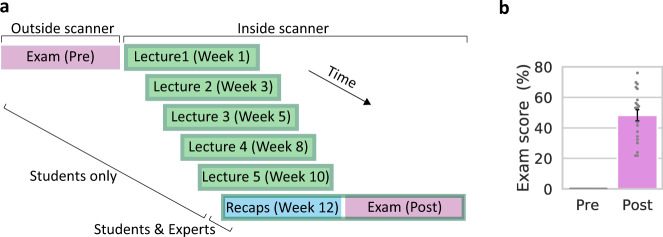
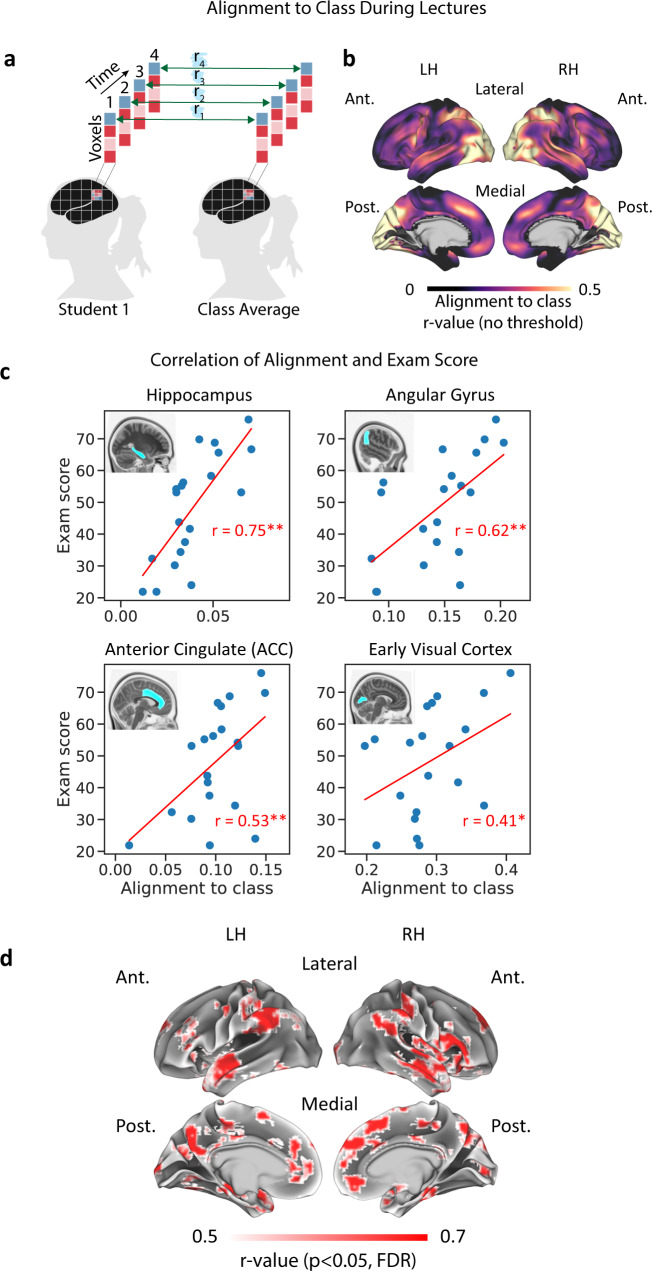
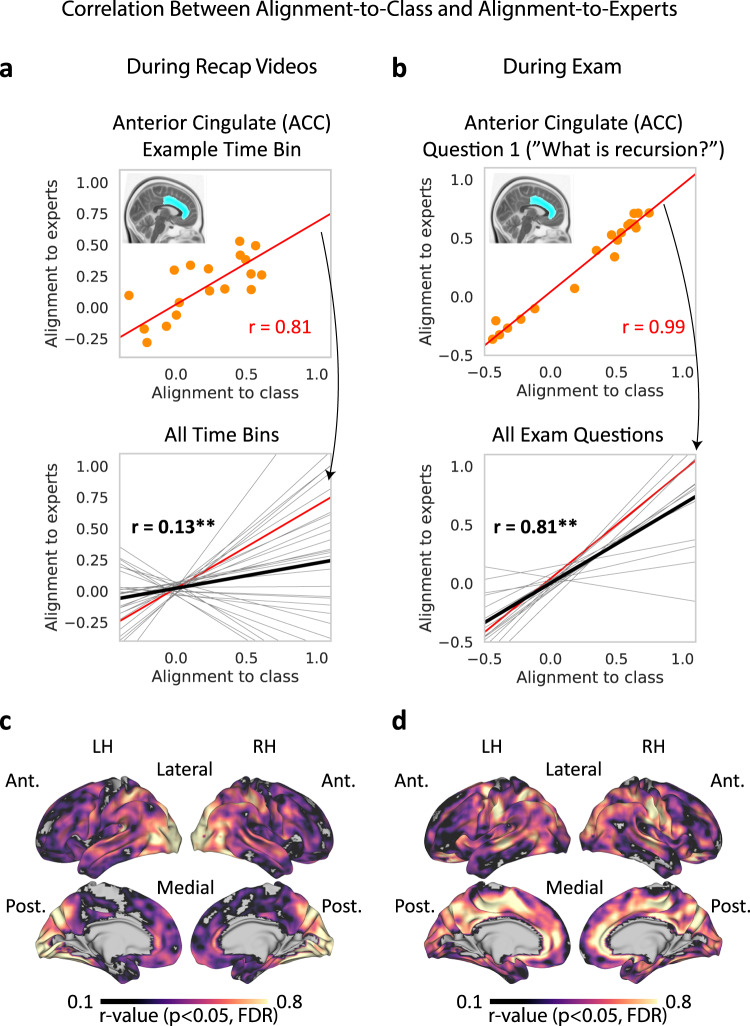
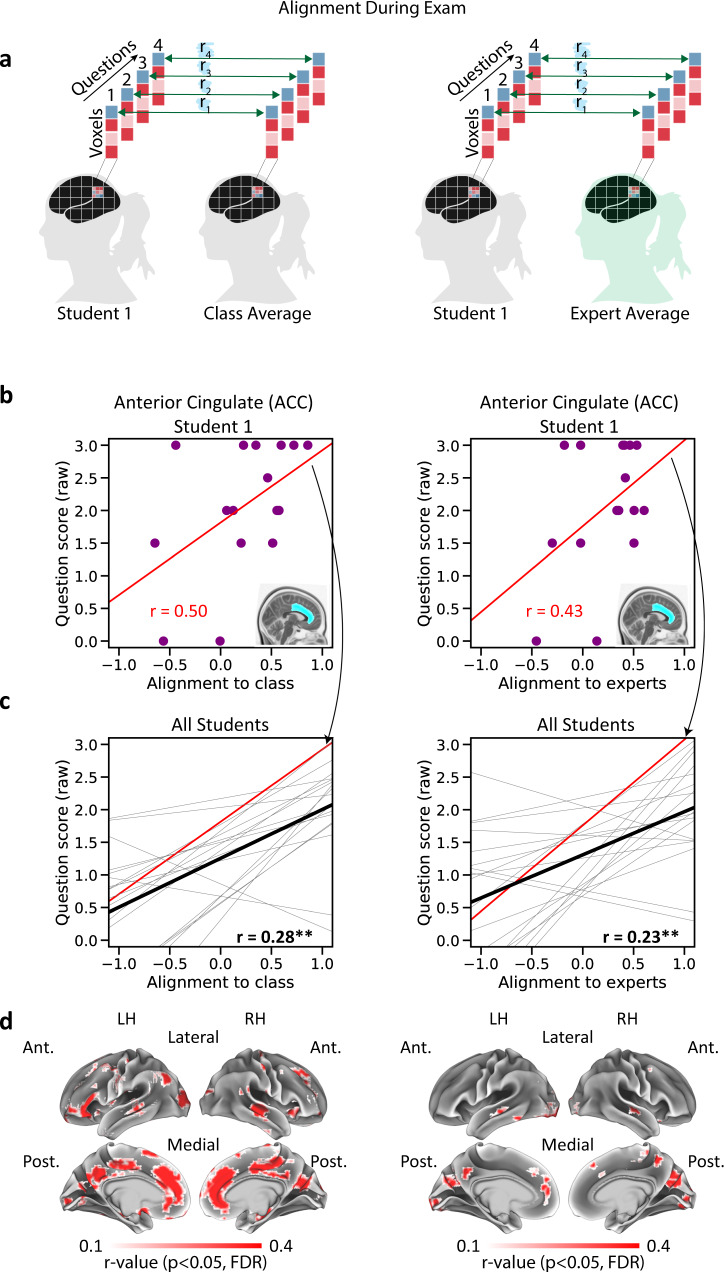
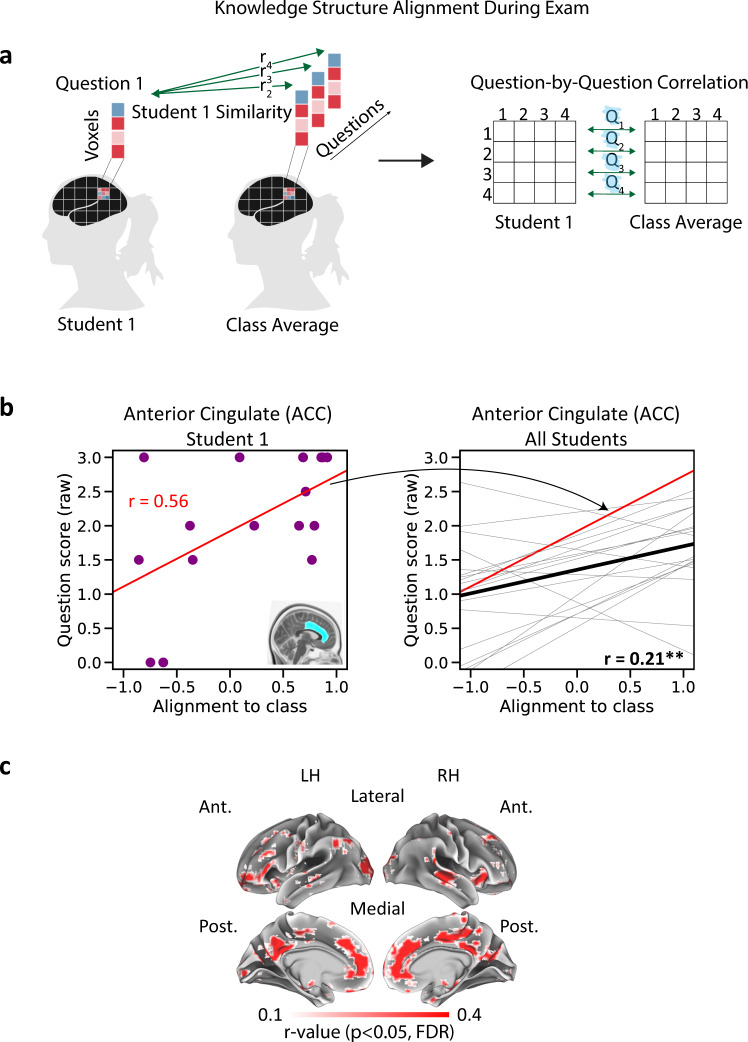
Despite major advances in measuring human brain activity during and after educational experiences, it is unclear how learners internalize new content, especially in real-life and online settings. In this work, we introduce a neural approach to predicting and assessing learning outcomes in a real-life setting. Our approach hinges on the idea that successful learning involves forming the right set of neural representations, which are captured in canonical activity patterns shared across individuals. Specifically, we hypothesized that learning is mirrored in neural alignment: the degree to which an individual learner's neural representations match those of experts, as well as those of other learners. We tested this hypothesis in a longitudinal functional MRI study that regularly scanned college students enrolled in an introduction to computer science course. We additionally scanned graduate student experts in computer science. We show that alignment among students successfully predicts overall performance in a final exam. Furthermore, within individual students, we find better learning outcomes for concepts that evoke better alignment with experts and with other students, revealing neural patterns associated with specific learned concepts in individuals.
尽管在测量教育经验期间和之后的人类大脑活动方面取得了重大进展,但学习者如何内化新内容(尤其是在现实生活和在线环境中)仍不清楚。在这项工作中,我们引入了一种神经方法来预测和评估现实环境中的学习成果。我们的方法基于这样一种观点,即成功的学习涉及形成正确的神经表示集,这些表示集被捕获在个体之间共享的典型活动模式中。具体来说,我们假设学习反映在神经对齐中:个体学习者的神经表示与专家以及其他学习者的神经表示的匹配程度。我们在一项纵向功能磁共振成像研究中检验了这一假设,该研究定期扫描参加计算机科学入门课程的大学生。我们还扫描了计算机科学领域的研究生专家。我们表明,学生之间的对齐可以成功预测期末考试的整体表现。此外,在个体学生中,我们发现与专家和其他学生的对齐程度更好的概念会产生更好的学习效果,从而揭示了与个体特定学习概念相关的神经模式。