Gupta Samta, Thokchom Sarda Devi, Kapoor Rupam
Department of Botany, University of Delhi, New Delhi, India.
Front Plant Sci. 2021 Mar 11;12:640379. doi: 10.3389/fpls.2021.640379. eCollection 2021.
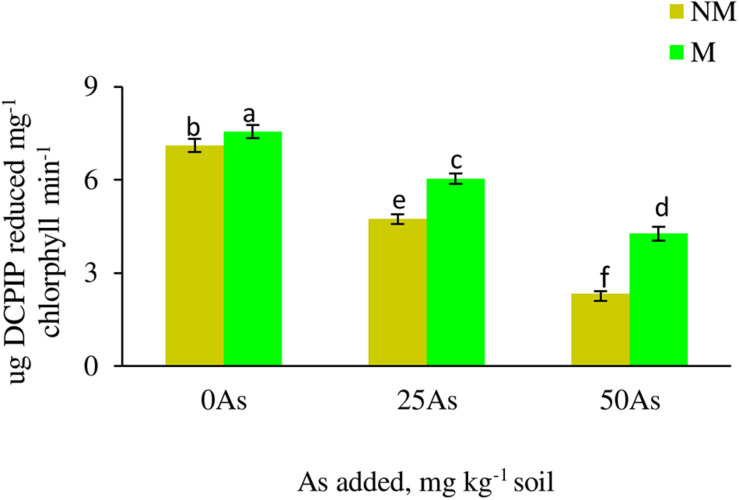
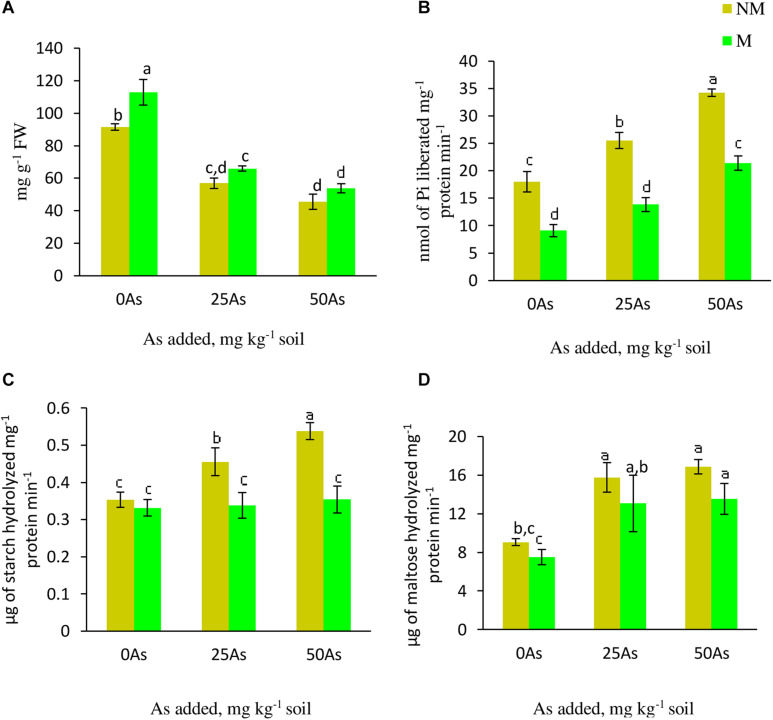
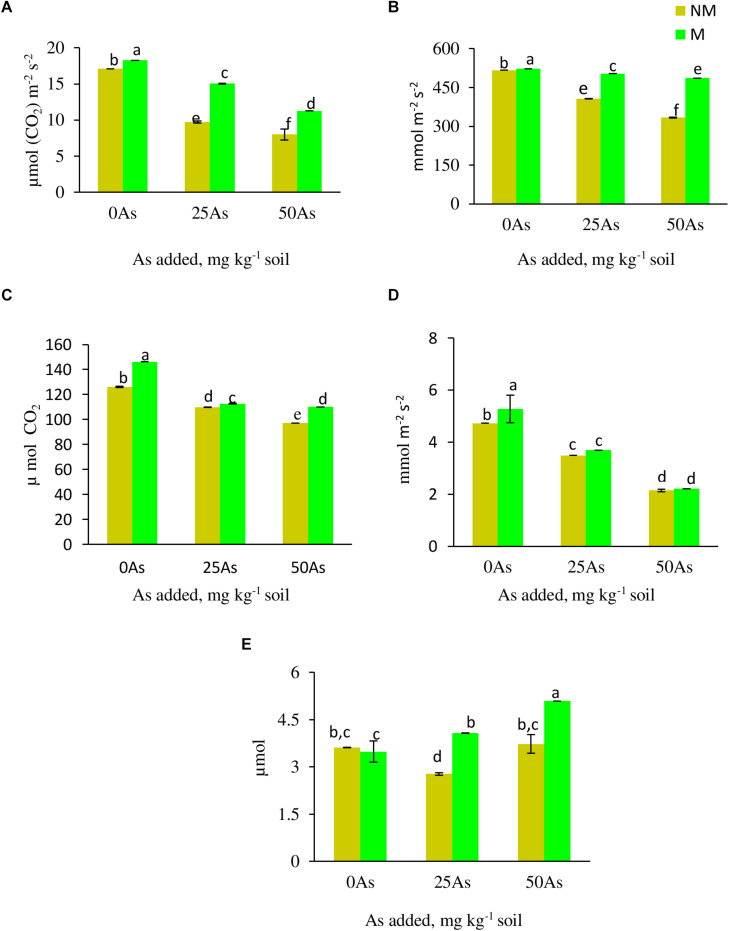
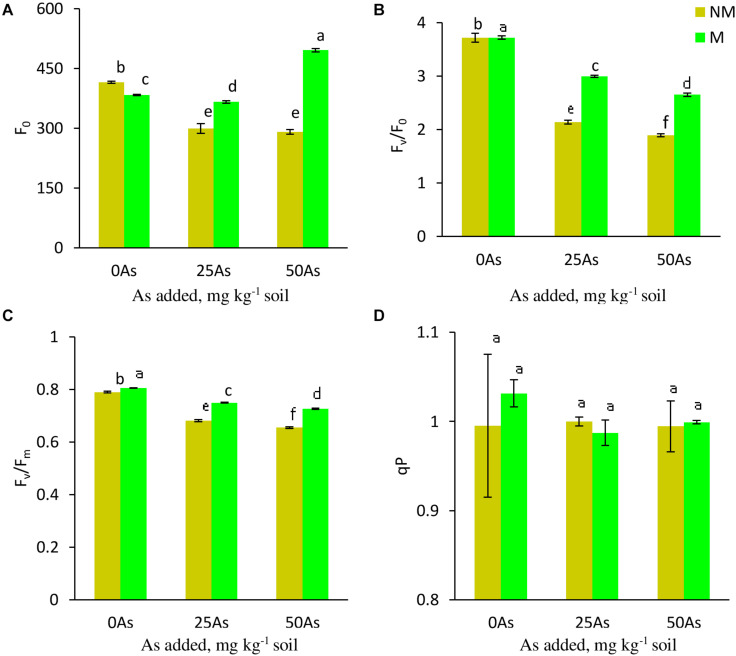
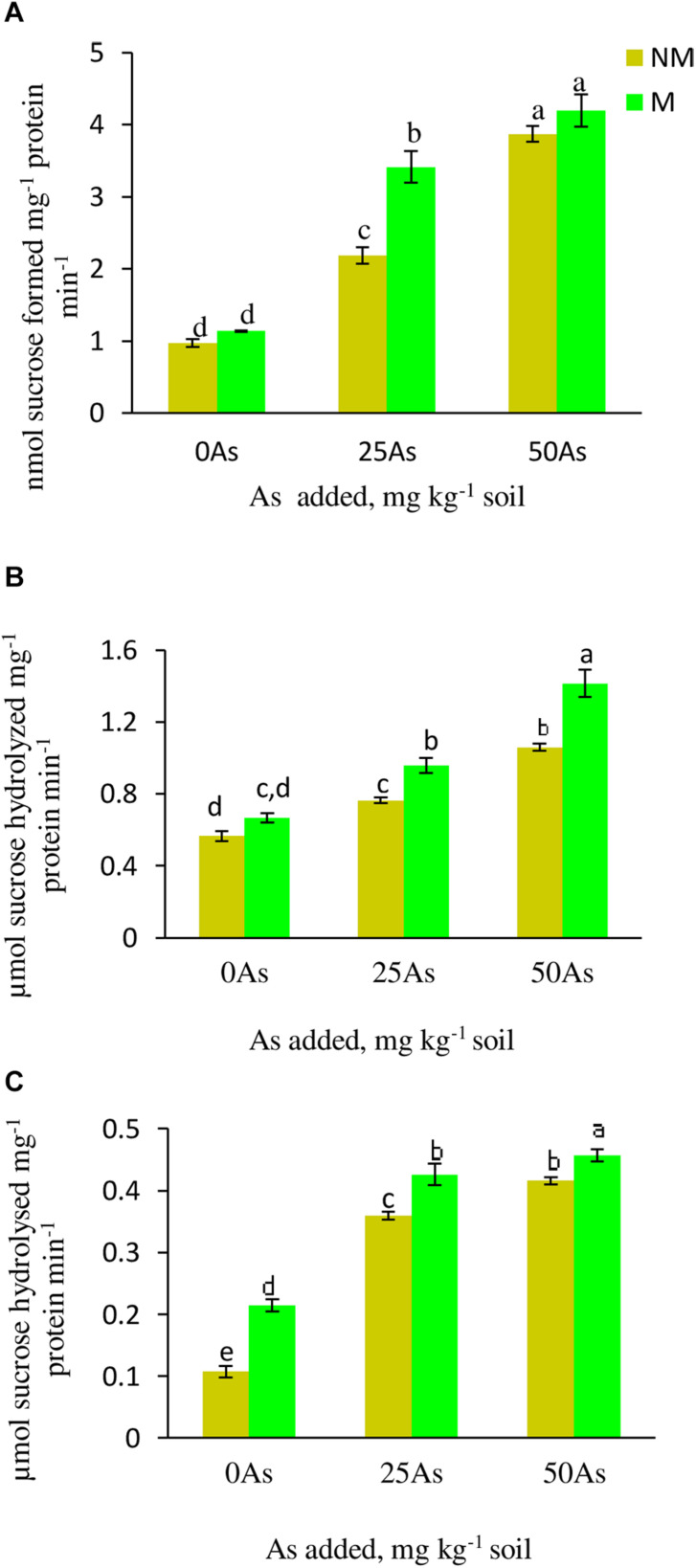
Contamination of agricultural soil by arsenic (As) is a serious menace to environmental safety and global food security. Symbiotic plant-microbe interaction, such as arbuscular mycorrhiza (AM), is a promising approach to minimize hazards of As contamination in agricultural soil. Even though the potential of AM fungi (AMF) in redeeming As tolerance and improving growth is well recognized, the detailed metabolic and physiological mechanisms behind such beneficial effects are far from being completely unraveled. The present study investigated the ability of an AM fungus, , in mitigating As-mediated negative effects on photosynthesis and sugar metabolism in wheat () subjected to three levels of As, viz., 0, 25, and 50 mg As kg of soil, supplied as sodium arsenate. As exposure caused significant decrease in photosynthetic pigments, Hill reaction activity, and gas exchange parameters such as net photosynthetic rate, stomatal conductance, transpiration rate, and intercellular CO concentration. In addition, As exposure also altered the activities of starch-hydrolyzing, sucrose-synthesizing, and sucrose-degrading enzymes in leaves. Colonization by not only promoted plant growth but also restored As-mediated impairments in plant physiology. The symbiosis augmented the concentration of photosynthetic pigments, enhanced Hill reaction activity, and improved leaf gas exchange parameters and water use efficiency of even at high dose of 50 mg As kg of soil. Furthermore, inoculation with also restored As-mediated alteration in sugar metabolism by modulating the activities of starch phosphorylase, α-amylase, β-amylase, acid invertase, sucrose synthase, and sucrose-phosphate synthase in leaves. This ensured improved sugar and starch levels in mycorrhizal plants. Overall, the study advocates the potential of in bio-amelioration of As-induced physiological disturbances in wheat plant.
砷(As)对农业土壤的污染是对环境安全和全球粮食安全的严重威胁。共生植物 - 微生物相互作用,如丛枝菌根(AM),是一种有前景的方法,可最大限度地减少农业土壤中砷污染的危害。尽管AM真菌(AMF)在恢复植物对砷的耐受性和促进生长方面的潜力已得到充分认可,但其有益作用背后的详细代谢和生理机制仍远未完全阐明。本研究调查了一种AM真菌在缓解不同砷水平(即分别以砷酸钠形式提供0、25和50 mg As kg土壤)对小麦光合作用和糖代谢的负面影响方面的能力。砷暴露导致光合色素、希尔反应活性以及气体交换参数(如净光合速率、气孔导度、蒸腾速率和细胞间CO浓度)显著下降。此外,砷暴露还改变了叶片中淀粉水解、蔗糖合成和蔗糖降解酶的活性。该AM真菌的定殖不仅促进了植物生长,还恢复了砷对植物生理的损害。即使在50 mg As kg土壤的高剂量下,这种共生关系也增加了光合色素的浓度,增强了希尔反应活性,改善了叶片气体交换参数和小麦的水分利用效率。此外,接种该AM真菌还通过调节叶片中淀粉磷酸化酶、α - 淀粉酶、β - 淀粉酶、酸性转化酶、蔗糖合酶和蔗糖磷酸合酶的活性,恢复了砷介导的糖代谢变化。这确保了菌根植物中糖和淀粉水平的提高。总体而言,该研究表明该AM真菌在生物修复砷诱导的小麦生理紊乱方面具有潜力。