Department of Breast Surgery, The First Affiliated Hospital with Nanjing Medical University, Nanjing, China
Jiangsu Key Lab of Cancer Biomarkers, Prevention and Treatment, Jiangsu Collaborative Innovation Center For Cancer Personalized Medicine, School of Public Health, Nanjing Medical University, Nanjing, China.
J Immunother Cancer. 2021 Apr;9(4). doi: 10.1136/jitc-2021-002343.
Despite great advances in the treatment of breast cancer, innovative approaches are still needed to reduce metastasis. As a minimally invasive local therapy (not standard therapy for breast cancer), microwave ablation (MWA) has been attempted to treat breast cancer, but the local effect and immune response induced by MWA have seldom been reported.
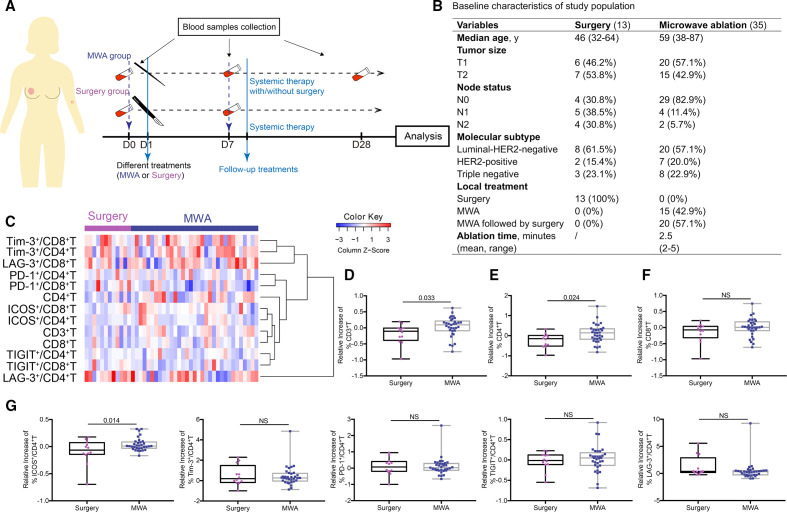
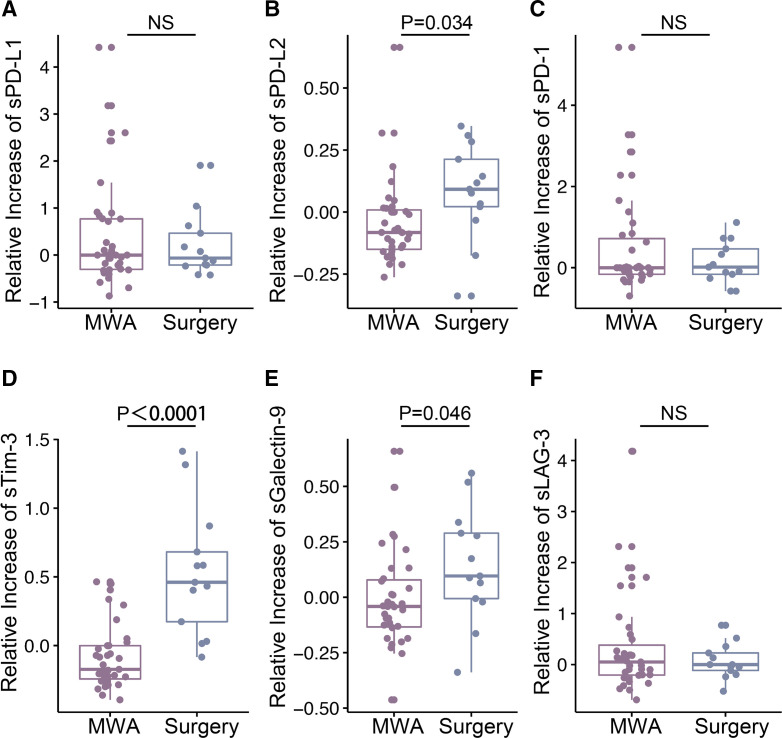
The clinical study was performed to determine the complete ablation rate of MWA for early-stage breast cancer. Secondary endpoints included safety and antitumor immune response. 35 subjects from this clinical study were enrolled in the current report, and the local effect was determined by pathological examinations or follow-up. To investigate MWA-induced immune response, patients treated with surgery (n=13) were enrolled as control, and blood samples were collected before and after MWA or surgery. The immune cell populations, serum cytokines, secretory immune checkpoint molecules, and T-cell receptor sequencing were analyzed.
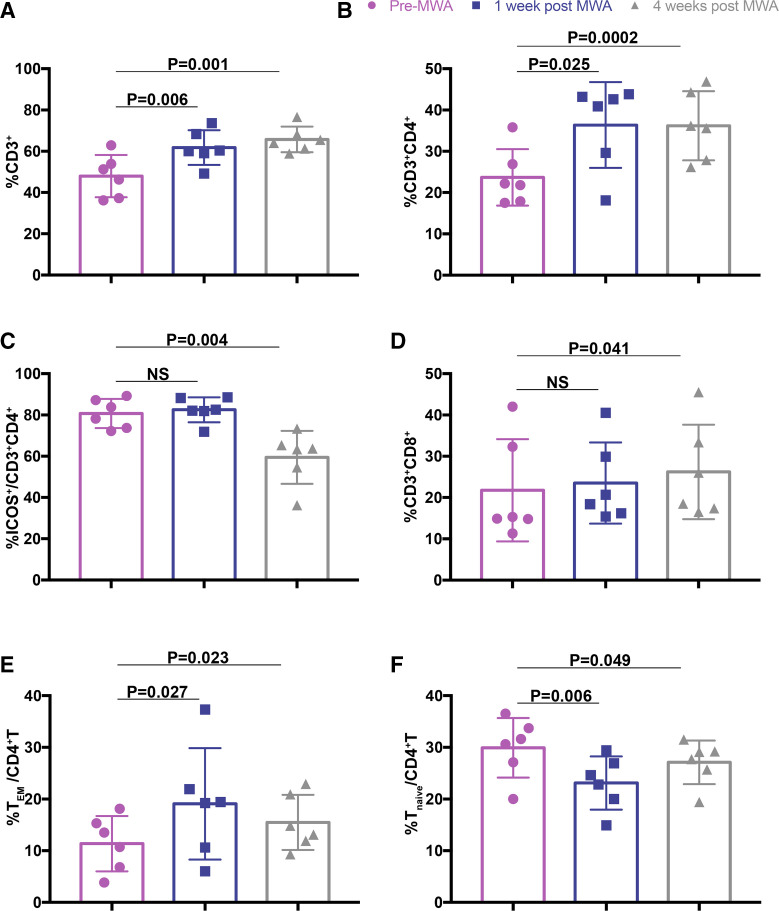
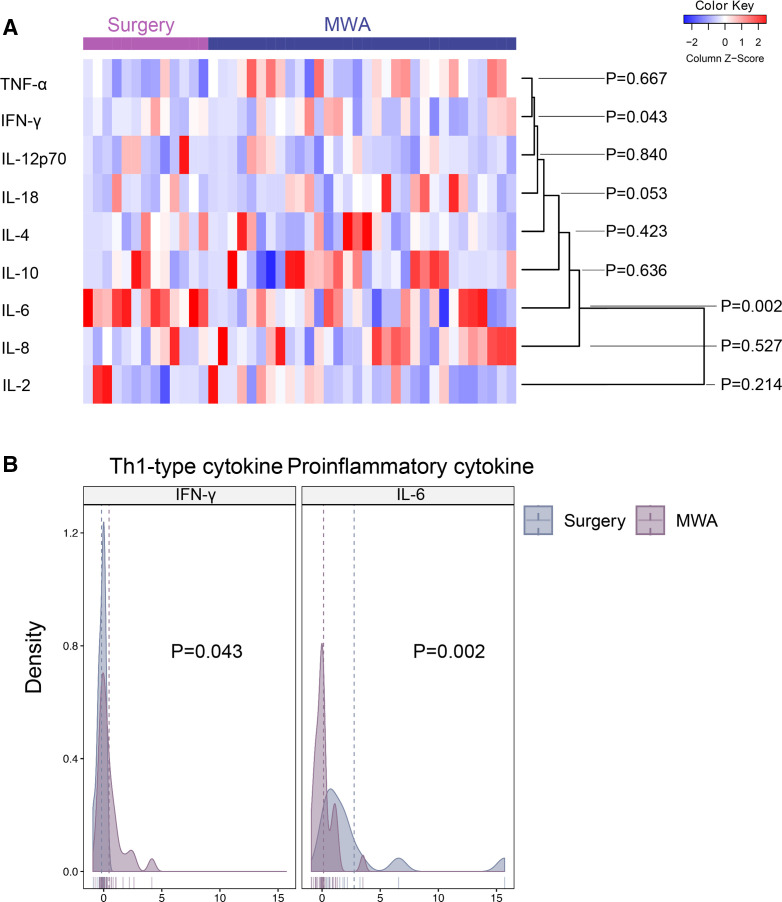
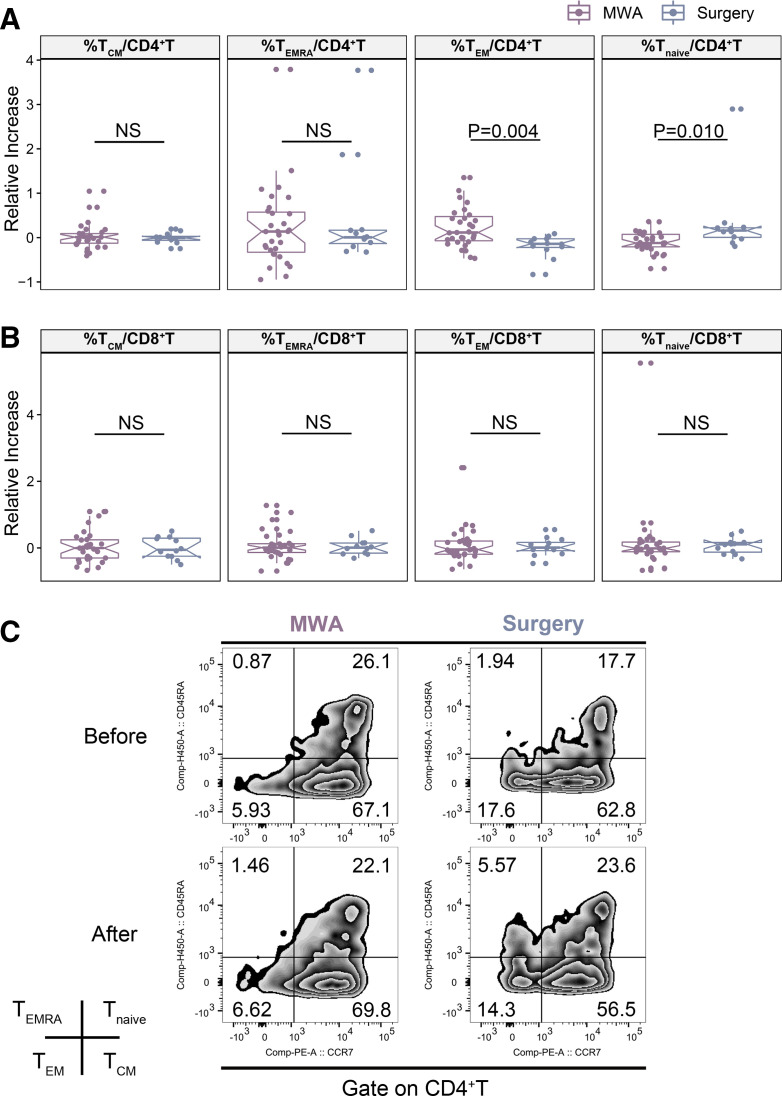
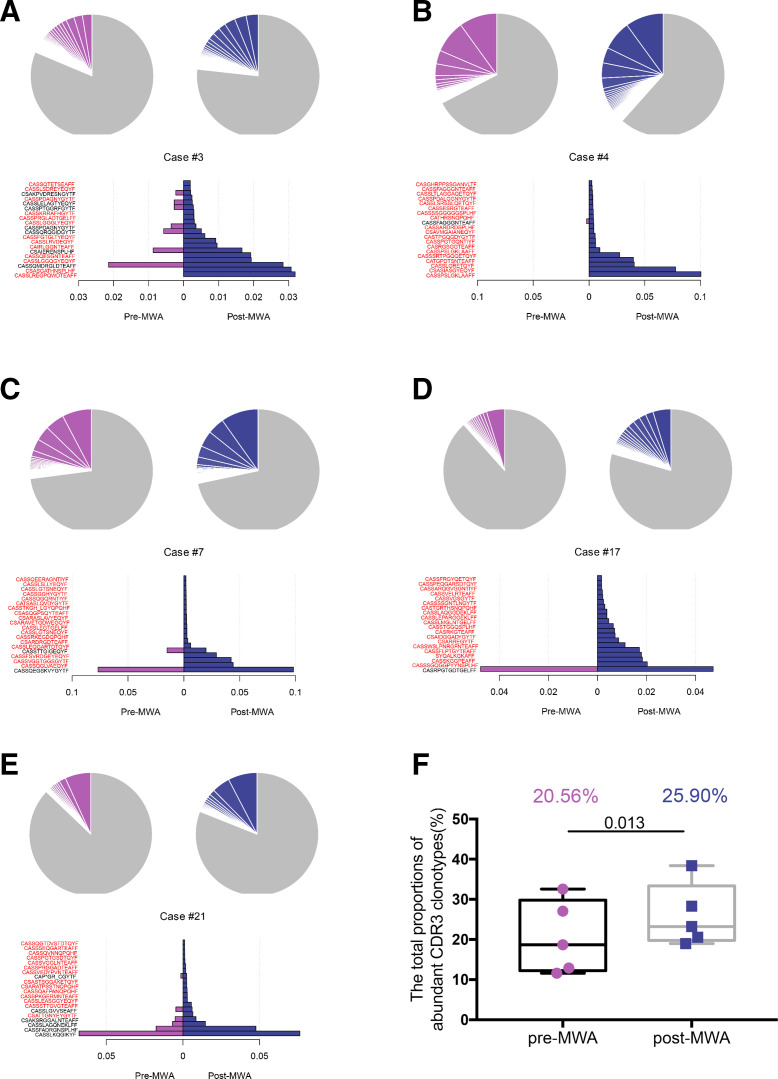
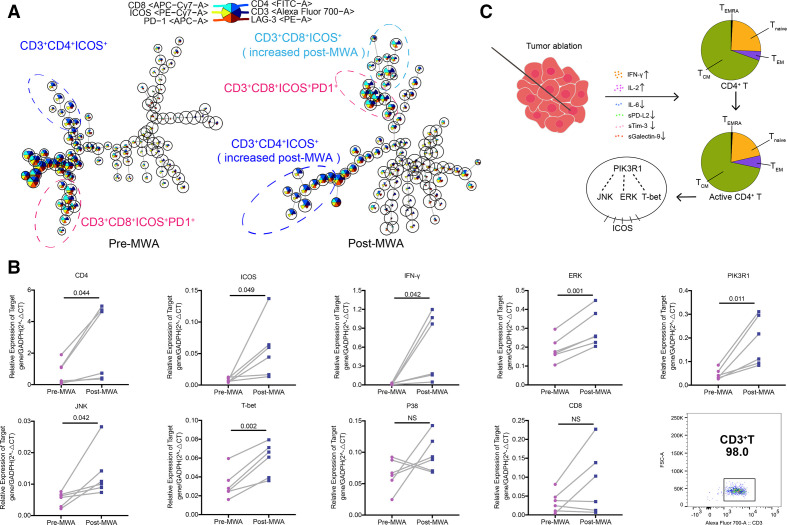
Of 35 enrolled patients, 32 (91.4%) showed complete ablation. Compared with surgery, MWA induced significantly increased levels of inducible co-stimulator (ICOS)+ activated CD4+ T cells and serum interferon gamma, indicating a shift in the Th1/Th2 balance toward Th1. The activated ICOS pathway was involved in the MWA-induced adaptive immune response. T-cell receptor sequencing revealed MWA of primary tumor activated T lymphocytes expansion and recognized some cancer-specific antigens. Moreover, CD4+ effector memory T-cell response was induced by MWA, and the immune response still existed after surgical resection of the ablated tumor.
MWA may not only be a promising local therapy but also a trigger of antitumor immunity for breast cancer, opening new avenues for the treatment of breast cancer. Combinatorial strategy using additional agents which boost MWA-induced immune response could be considered as potential treatment for clinical study for early breast cancer therapy.
尽管乳腺癌的治疗取得了重大进展,但仍需要创新方法来减少转移。作为一种微创局部治疗方法(不是乳腺癌的标准治疗方法),微波消融(MWA)已被尝试用于治疗乳腺癌,但 MWA 诱导的局部效果和免疫反应很少有报道。
进行了这项临床研究,以确定 MWA 治疗早期乳腺癌的完全消融率。次要终点包括安全性和抗肿瘤免疫反应。本报告纳入了这项临床研究中的 35 名患者,通过病理检查或随访确定局部效果。为了研究 MWA 诱导的免疫反应,纳入了接受手术治疗的患者(n=13)作为对照组,并在 MWA 或手术前后采集血样。分析免疫细胞群、血清细胞因子、分泌性免疫检查点分子和 T 细胞受体测序。
在纳入的 35 名患者中,32 名(91.4%)患者显示完全消融。与手术相比,MWA 诱导了明显增加的诱导共刺激因子(ICOS)+激活的 CD4+T 细胞和血清干扰素γ水平,表明 Th1/Th2 平衡向 Th1 倾斜。激活的 ICOS 途径参与了 MWA 诱导的适应性免疫反应。T 细胞受体测序显示,原发性肿瘤的 MWA 激活了 T 淋巴细胞的扩增,并识别了一些癌症特异性抗原。此外,MWA 诱导了 CD4+效应记忆 T 细胞反应,并且在消融肿瘤的手术切除后仍然存在免疫反应。
MWA 不仅可能是一种有前途的局部治疗方法,而且可能是乳腺癌抗肿瘤免疫的触发因素,为乳腺癌的治疗开辟了新的途径。可以考虑使用增强 MWA 诱导免疫反应的额外药物的联合策略,作为早期乳腺癌治疗的临床研究的潜在治疗方法。