Rad S M Ali Hosseini, Halpin Joshua Colin, Mollaei Mojtaba, Smith Bell Samuel W J, Hirankarn Nattiya, McLellan Alexander D
Department of Microbiology and Immunology, University of Otago, Dunedin 9010, Otago, New Zealand.
Department of Microbiology, Faculty of Medicine, Chulalongkorn University, Bangkok 10330, Thailand.
Cancers (Basel). 2021 Mar 11;13(6):1229. doi: 10.3390/cancers13061229.
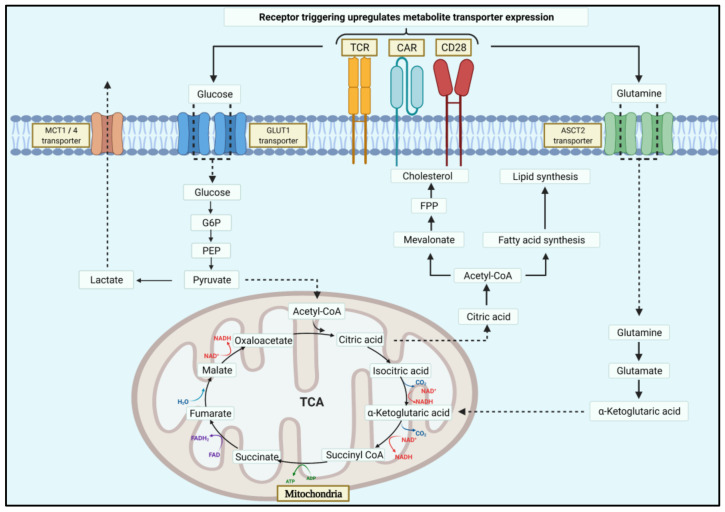
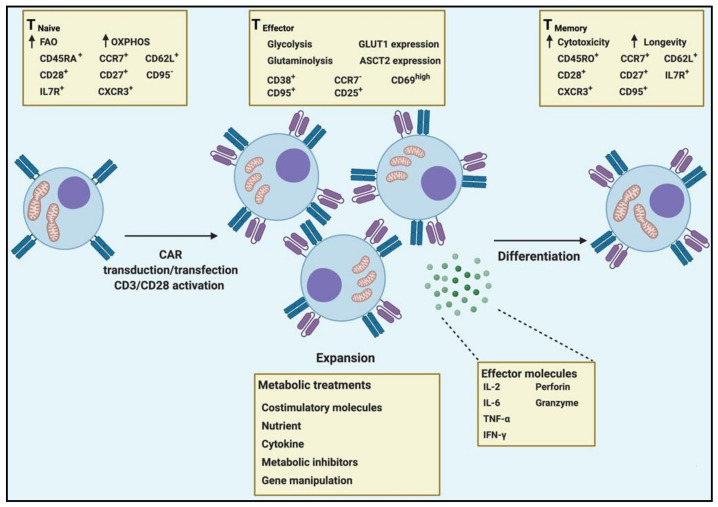
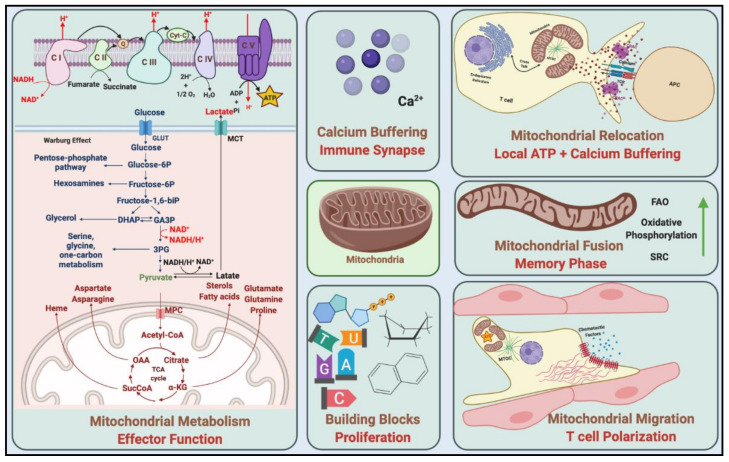
Chimeric antigen receptor (CAR) T-cell therapy has revolutionized adoptive cell therapy with impressive therapeutic outcomes of >80% complete remission (CR) rates in some haematological malignancies. Despite this, CAR T cell therapy for the treatment of solid tumours has invariably been unsuccessful in the clinic. Immunosuppressive factors and metabolic stresses in the tumour microenvironment (TME) result in the dysfunction and exhaustion of CAR T cells. A growing body of evidence demonstrates the importance of the mitochondrial and metabolic state of CAR T cells prior to infusion into patients. The different T cell subtypes utilise distinct metabolic pathways to fulfil their energy demands associated with their function. The reprogramming of CAR T cell metabolism is a viable approach to manufacture CAR T cells with superior antitumour functions and increased longevity, whilst also facilitating their adaptation to the nutrient restricted TME. This review discusses the mitochondrial and metabolic state of T cells, and describes the potential of the latest metabolic interventions to maximise CAR T cell efficacy for solid tumours.
嵌合抗原受体(CAR)T细胞疗法彻底改变了过继性细胞疗法,在某些血液系统恶性肿瘤中取得了超过80%的完全缓解(CR)率这一令人瞩目的治疗效果。尽管如此,CAR T细胞疗法在实体瘤治疗中在临床上始终未获成功。肿瘤微环境(TME)中的免疫抑制因子和代谢应激导致CAR T细胞功能障碍和耗竭。越来越多的证据表明,在将CAR T细胞输注给患者之前,其线粒体和代谢状态至关重要。不同的T细胞亚群利用不同的代谢途径来满足与其功能相关的能量需求。对CAR T细胞代谢进行重编程是一种可行的方法,可制造出具有卓越抗肿瘤功能和更长寿命的CAR T细胞,同时还能促进它们适应营养受限的TME。本综述讨论了T细胞的线粒体和代谢状态,并描述了最新代谢干预措施在最大化CAR T细胞对实体瘤疗效方面的潜力。