Lee Hansol, Da Silva Inês Pires, Palendira Umaimainthan, Scolyer Richard A, Long Georgina V, Wilmott James S
Melanoma Institute Australia, The University of Sydney, Sydney 2006, Australia.
Faculty of Medicine and Health Sciences, The University of Sydney, Sydney 2006, Australia.
Cancers (Basel). 2021 Mar 17;13(6):1363. doi: 10.3390/cancers13061363.
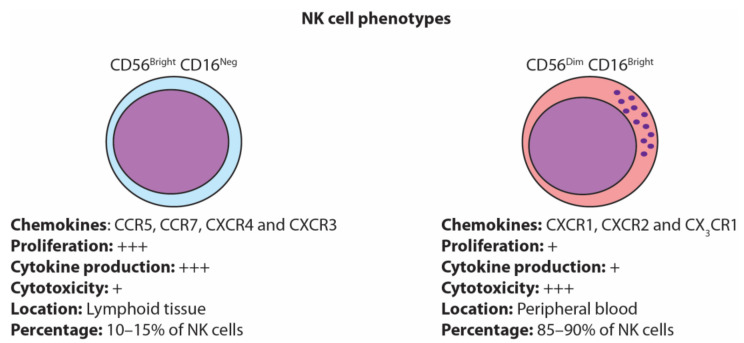
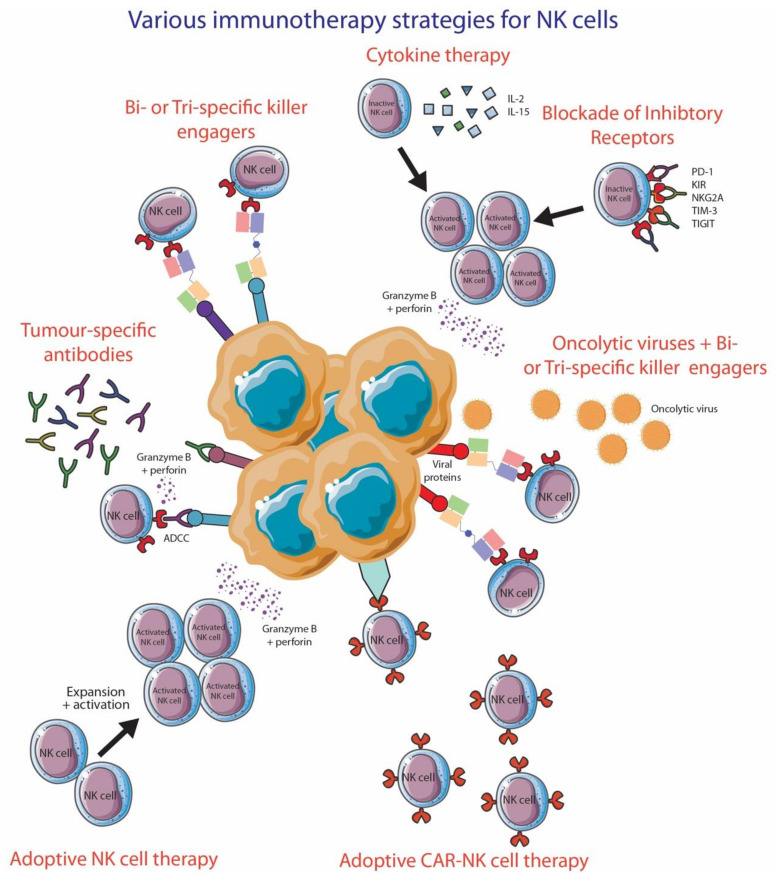
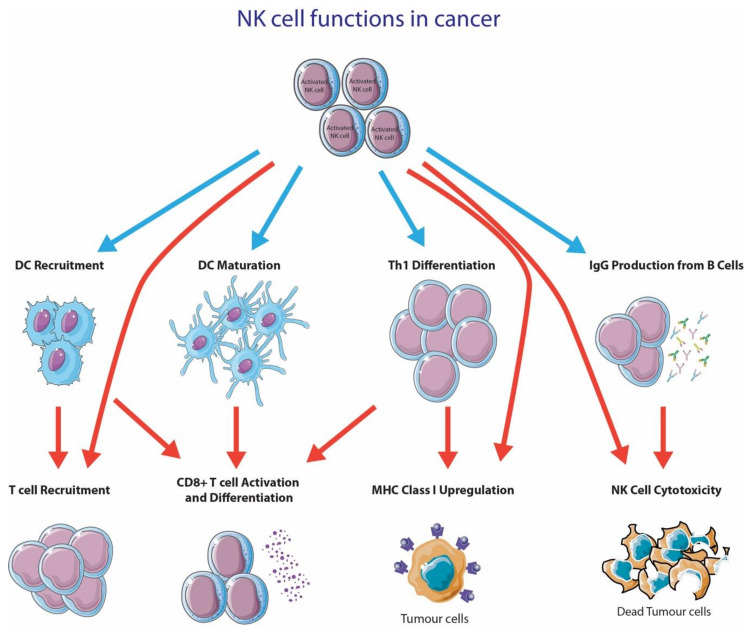
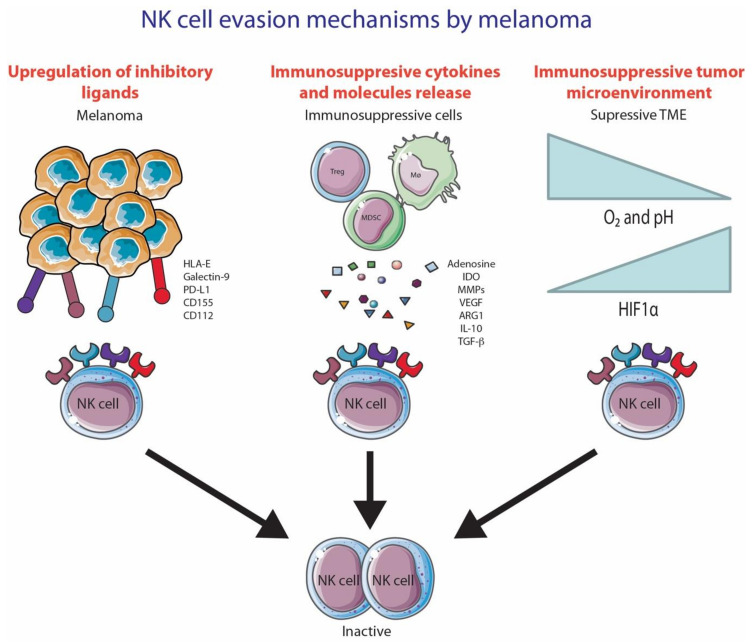
Natural killer (NK) cells are a key component of an innate immune system. They are important not only in initiating, but also in augmenting adaptive immune responses. NK cell activation is mediated by a carefully orchestrated balance between the signals from inhibitory and activating NK cell receptors. NK cells are potent producers of proinflammatory cytokines and are also able to elicit strong antitumor responses through secretion of perforin and granzyme B. Tumors can develop many mechanisms to evade NK cell antitumor responses, such as upregulating ligands for inhibitory receptors, secreting anti-inflammatory cytokines and recruiting immunosuppressive cells. Enhancing NK cell responses will likely augment the effectiveness of immunotherapies, and strategies to accomplish this are currently being evaluated in clinical trials. A comprehensive understanding of NK cell biology will likely provide additional opportunities to further leverage the antitumor effects of NK cells. In this review, we therefore sought to highlight NK cell biology, tumor evasion of NK cells and clinical trials that target NK cells.
自然杀伤(NK)细胞是先天性免疫系统的关键组成部分。它们不仅在启动适应性免疫反应中起重要作用,而且在增强适应性免疫反应方面也很重要。NK细胞的激活是由抑制性和激活性NK细胞受体发出的信号之间精心协调的平衡所介导的。NK细胞是促炎细胞因子的有效生产者,并且还能够通过分泌穿孔素和颗粒酶B引发强烈的抗肿瘤反应。肿瘤可以发展出许多机制来逃避NK细胞的抗肿瘤反应,例如上调抑制性受体的配体、分泌抗炎细胞因子和招募免疫抑制细胞。增强NK细胞反应可能会提高免疫疗法的有效性,目前正在临床试验中评估实现这一目标的策略。对NK细胞生物学的全面理解可能会提供更多机会,以进一步利用NK细胞的抗肿瘤作用。因此,在本综述中,我们试图强调NK细胞生物学、肿瘤对NK细胞的逃避以及针对NK细胞的临床试验。