Electronic Technology Department, Universidad Carlos III de Madrid, Leganés, Spain.
IMDEA Materials Institute, Eric Kandel 2, Getafe, Madrid, 28906, Spain.
Biosens Bioelectron. 2022 Jan 15;196:113729. doi: 10.1016/j.bios.2021.113729. Epub 2021 Oct 26.
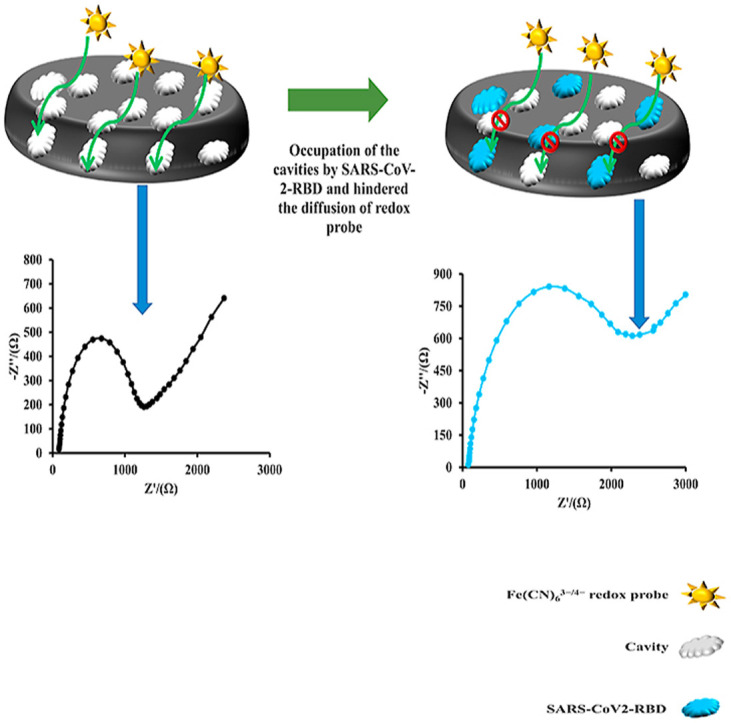
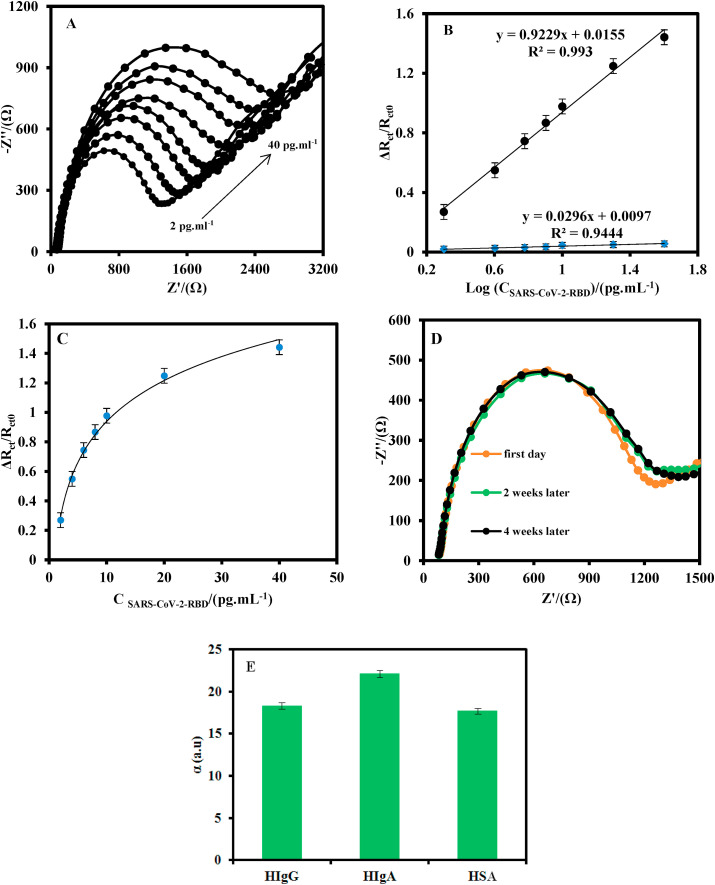
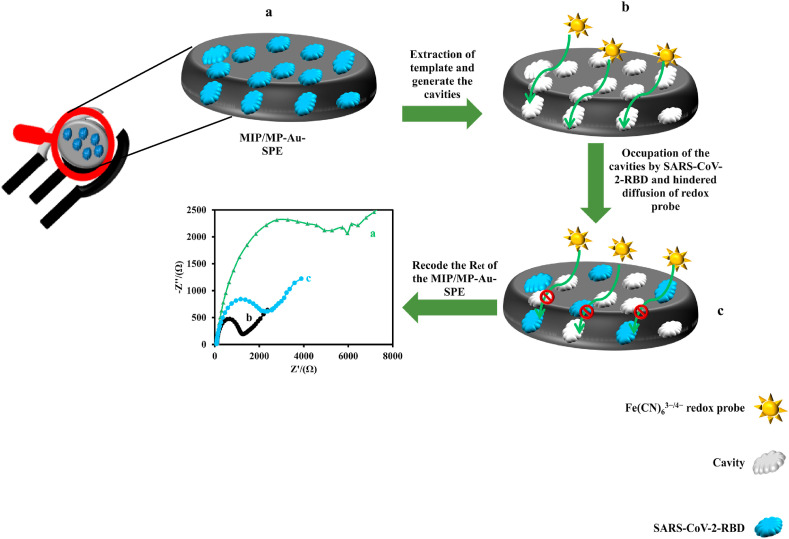
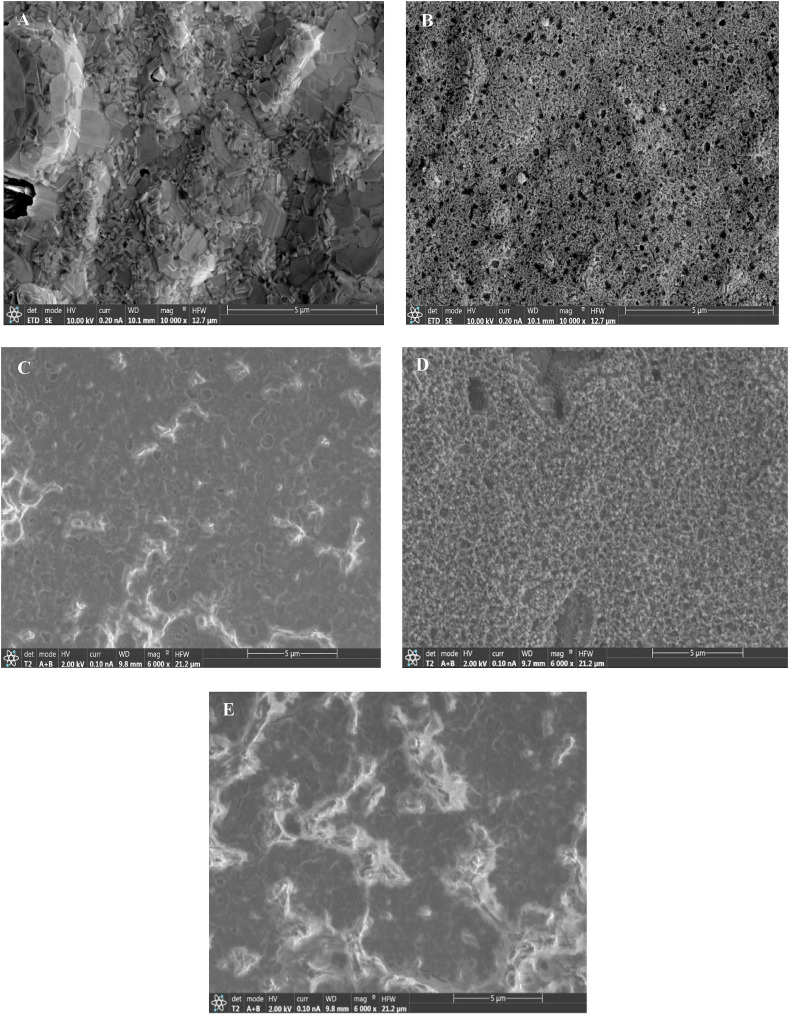
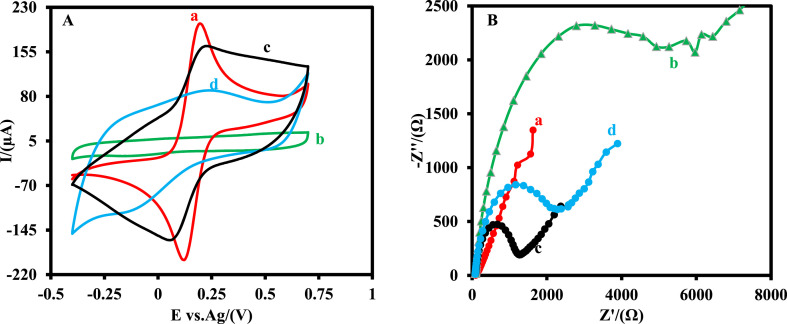
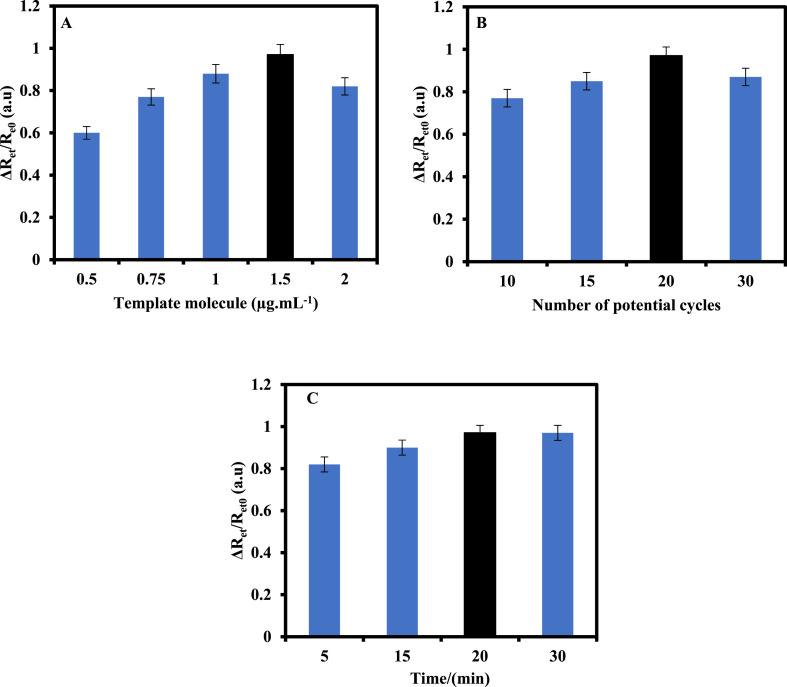
Herein, a novel molecularly imprinted polymer (MIP) based electrochemical sensor for the determination of the receptor-binding domain of severe acute respiratory syndrome coronavirus 2 (SARS-CoV-2-RBD) has been developed. For this purpose, first, a macroporous gold screen-printed electrode (MP-Au-SPE) has been fabricated. The MIP was then synthesized on the surface of the MP-Au-SPE through the electro-polymerization of ortho-phenylenediamine in the presence of SARS-CoV-2-RBD molecules as matrix polymer, and template molecules, respectively. During the fabrication process, the SARS-CoV-2-RBD molecules were embedded in the polymer matrix. Subsequently, the template molecules were removed from the electrode by using alkaline ethanol. The template molecules removal was studied using cyclic voltammetry (CV), electrochemical impedance spectroscopy (EIS), scanning electron microscope (SEM), energy-dispersive X-ray spectroscopy (EDX), and attenuated total reflectance spectroscopy (ATR). The fabricated MIP film acted as an artificial recognition element for the measurement of SARS-CoV-2-RBD. The EIS technique was used for the measurement of the SARS-CoV-2-RBD in the saliva solution. The electron transfer resistance (R) of the MIP-based sensor in a ferri/ferrocyanide solution increased as the SARS-CoV-2-RBD concentration increased due to the occupation of the imprinted cavities by the SARS-CoV-2-RBD. The MIP-based sensor exhibited a good response to the SARS-CoV-2-RBD in the concentration range between 2.0 and 40.0 pg mL with a limit of detection of 0.7 pg mL. The obtained results showed that the fabricated MIP sensor has high selectivity sensitivity, and stability.
本文开发了一种用于测定严重急性呼吸综合征冠状病毒 2(SARS-CoV-2)受体结合域(RBD)的新型分子印迹聚合物(MIP)电化学传感器。为此,首先制备了大孔金丝网印刷电极(MP-Au-SPE)。然后,在 SARS-CoV-2-RBD 分子作为基体聚合物和模板分子的存在下,通过邻苯二胺的电聚合在 MP-Au-SPE 表面上合成 MIP。在制备过程中,SARS-CoV-2-RBD 分子被嵌入聚合物基质中。随后,通过使用碱性乙醇从电极上除去模板分子。使用循环伏安法(CV)、电化学阻抗谱(EIS)、扫描电子显微镜(SEM)、能谱(EDX)和衰减全反射光谱(ATR)研究了模板分子的去除情况。制备的 MIP 膜作为人工识别元件用于测量 SARS-CoV-2-RBD。EIS 技术用于测量唾液溶液中的 SARS-CoV-2-RBD。由于 SARS-CoV-2-RBD 占据了印迹空穴,基于 MIP 的传感器在铁氰化铁溶液中的电子转移电阻(R)随着 SARS-CoV-2-RBD 浓度的增加而增加。基于 MIP 的传感器对 SARS-CoV-2-RBD 在 2.0 至 40.0 pg mL 之间的浓度范围内表现出良好的响应,检出限为 0.7 pg mL。所得结果表明,所制备的 MIP 传感器具有高选择性、灵敏度和稳定性。