Gavaruzzi Teresa, Caserotti Marta, Leo Irene, Tasso Alessandra, Speri Leonardo, Ferro Antonio, Fretti Elena, Sannino Anna, Rubaltelli Enrico, Lotto Lorella
Department of Developmental Psychology and Socialization, University of Padova, 35131 Padova, Italy.
Department of Humanities, University of Ferrara, 44121 Ferrara, Italy.
Vaccines (Basel). 2021 Mar 22;9(3):298. doi: 10.3390/vaccines9030298.
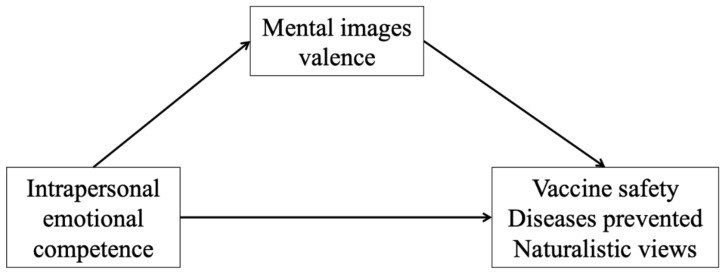
The role of parents' emotional competencies on vaccine hesitancy and decision making has been seldom examined. Two studies investigated the relationship between parents' attitudes towards childhood vaccines and self-reported behavior (Study 1) and between parents' emotional competence and attitudes towards vaccines (Study 2). In Study 1, predictors of temporal, partial, or complete vaccine refusal (having voluntarily postponed/forgone some/all vaccines) were examined in 2778 parents. In Study 2, psychological predictors of the attitude towards vaccines were examined in 593 parents, using the Profile of Emotional Competence and the valence of mental images spontaneously associated with the term "vaccine". In Study 1, attitudes were aggregated in three independent factors (concerns about vaccine safety; diseases prevented by vaccines; and naturalistic views) that independently predicted vaccine refusal. In Study 2, a significant mediational analysis showed a positive indirect effect of intrapersonal emotional competences on attitudes towards vaccines, through mental images associated with the word "vaccine". Parents' intrapersonal emotional competences affected all dimensions of attitudes towards vaccines, suggesting that being able to manage, identify, and recognize one's own emotions is central to vaccine acceptance. These findings suggest that intervention strategies, rather than stressing the pro-social benefits of vaccinating, should focus on aspects related to one's own emotions.
父母的情绪能力对疫苗犹豫和决策的作用很少被研究。两项研究调查了父母对儿童疫苗的态度与自我报告行为之间的关系(研究1),以及父母的情绪能力与对疫苗的态度之间的关系(研究2)。在研究1中,对2778名父母中暂时、部分或完全拒绝接种疫苗(自愿推迟/放弃部分/全部疫苗)的预测因素进行了研究。在研究2中,使用情绪能力概况和与“疫苗”一词自发关联的心理意象效价,对593名父母中对疫苗态度的心理预测因素进行了研究。在研究1中,态度被汇总为三个独立因素(对疫苗安全性的担忧;疫苗预防的疾病;以及自然主义观点),这些因素独立预测了疫苗拒绝情况。在研究2中,一项显著的中介分析表明,通过与“疫苗”一词相关的心理意象,个人情绪能力对疫苗态度有积极的间接影响。父母的个人情绪能力影响了对疫苗态度的所有维度,这表明能够管理、识别和认识自己的情绪是接受疫苗的关键。这些发现表明,干预策略不应强调接种疫苗的社会益处,而应关注与自身情绪相关的方面。