Faculty of Health Sciences, University of Primorska, 6310 Izola, Slovenia.
Nutrients. 2021 Mar 26;13(4):1082. doi: 10.3390/nu13041082.
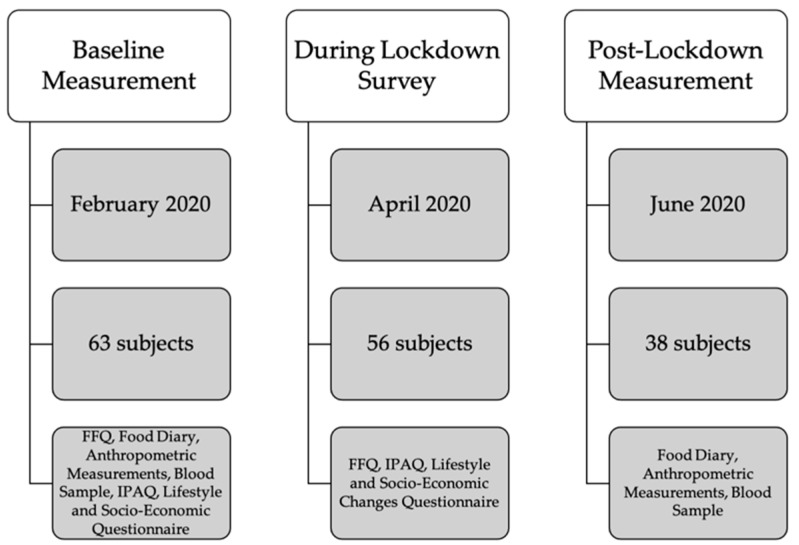
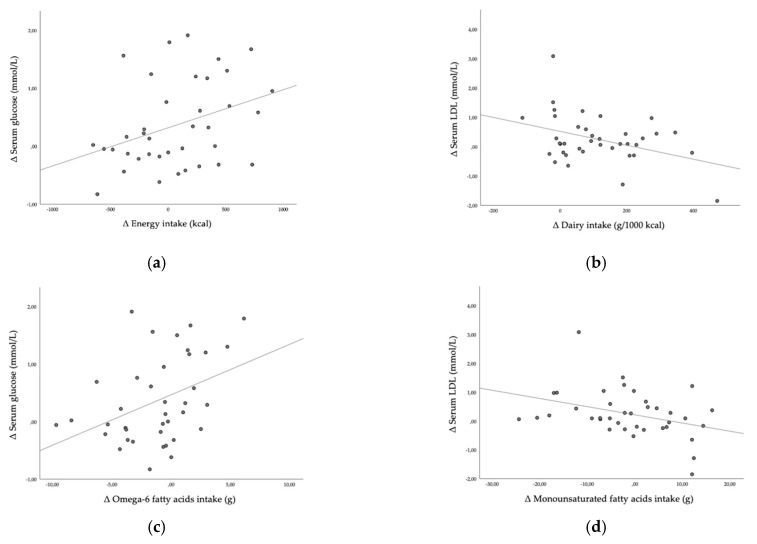
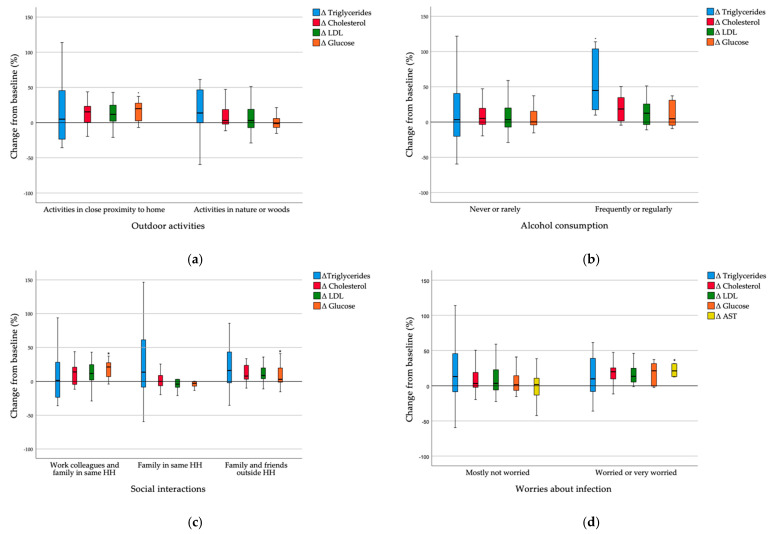
Due to limited data about the impact of lockdown on health status, the present study aimed to investigate the impact of COVID-19-related lockdown on changes in dietary habits, physical activity and serum markers in healthy adults. A total of 38 asymptomatic adults aged from 23 to 59 with a normal BMI (22.5 kg/m) participated in baseline and post-lockdown measurements that included dietary and physical activity assessment, anthropometric measurements and blood samples; and the lockdown survey which included dietary assessment and questionnaires about changes in lifestyle and physical activity. A decreased diet quality during lockdown was observed (Healthy Eating Index reduced from 64.59 to 61.08), which returned to near baseline post-lockdown. Energy intake decreased during lockdown ( = 0.002) and returned to baseline post-lockdown. Despite lower physical activity levels during lockdown ( = 0.035), we observed no significant changes in body composition. However, we observed a significant increase in serum glucose ( = 0.005), total cholesterol ( = 0.003), and low-density lipoprotein (LDL) ( = 0.049) post-lockdown. Increase in serum glucose levels was pronounced in subjects with higher increase in energy intake ( = 0.039), increased omega-6 fatty acids intake ( = 0.016), those who were exposed to several risky contacts ( = 0.018, compared to those with less risky contacts) and those who were not active in nature ( = 0.008, compared to those active in nature). Increased serum LDL was correlated to decreased monounsaturated fatty acids intake ( = 0.028). Within the limits of this preliminary report, changes in serum markers observed among healthy subjects point to a possible impact of COVID-19-related lockdown on adults' health to be confirmed in larger groups.
由于关于封锁对健康状况影响的数据有限,本研究旨在调查 COVID-19 相关封锁对健康成年人饮食习惯、身体活动和血清标志物变化的影响。共有 38 名年龄在 23 至 59 岁之间、BMI(22.5kg/m)正常的无症状成年人参与了基线和封锁后测量,包括饮食和身体活动评估、人体测量和血液样本;以及封锁调查,包括饮食评估和关于生活方式和身体活动变化的问卷。在封锁期间观察到饮食质量下降(健康饮食指数从 64.59 降至 61.08),封锁后接近基线。在封锁期间能量摄入减少( = 0.002),封锁后恢复到基线。尽管在封锁期间身体活动水平较低( = 0.035),但我们没有观察到身体成分有显著变化。然而,我们观察到血清葡萄糖( = 0.005)、总胆固醇( = 0.003)和低密度脂蛋白(LDL)( = 0.049)水平显著升高。在能量摄入增加较多的受试者中( = 0.039),血清葡萄糖水平升高更为明显,ω-6 脂肪酸摄入增加( = 0.016),接触风险较高的受试者( = 0.018,与接触风险较低的受试者相比),以及不经常参加户外活动的受试者( = 0.008,与经常参加户外活动的受试者相比)。血清 LDL 升高与单不饱和脂肪酸摄入减少相关( = 0.028)。在本初步报告的范围内,健康受试者中观察到的血清标志物变化表明 COVID-19 相关封锁可能对成年人的健康产生影响,需要在更大的人群中进一步证实。