• 文献检索
  • 文档翻译
  • 深度研究
  • 学术资讯
  • Suppr Zotero 插件Zotero 插件
  • 邀请有礼
  • 套餐&价格
  • 历史记录
应用&插件
Suppr Zotero 插件Zotero 插件浏览器插件Mac 客户端Windows 客户端微信小程序
定价
高级版会员购买积分包购买API积分包
服务
文献检索文档翻译深度研究API 文档MCP 服务
关于我们
关于 Suppr公司介绍联系我们用户协议隐私条款
关注我们

Suppr 超能文献

核心技术专利:CN118964589B侵权必究
粤ICP备2023148730 号-1Suppr @ 2026

文献检索

告别复杂PubMed语法,用中文像聊天一样搜索,搜遍4000万医学文献。AI智能推荐,让科研检索更轻松。

立即免费搜索

文件翻译

保留排版,准确专业,支持PDF/Word/PPT等文件格式,支持 12+语言互译。

免费翻译文档

深度研究

AI帮你快速写综述,25分钟生成高质量综述,智能提取关键信息,辅助科研写作。

立即免费体验

精神分裂症默认模式网络的异常动态功能连接及其与症状严重程度的关系。

Aberrant Dynamic Functional Connectivity of Default Mode Network in Schizophrenia and Links to Symptom Severity.

机构信息

Wallace H. Coulter Department of Biomedical Engineering, Georgia Institute of Technology, Emory University, Atlanta, GA, United States.

Department of Electrical and Computer Engineering, Georgia Institute of Technology, Atlanta, GA, United States.

出版信息

Front Neural Circuits. 2021 Mar 18;15:649417. doi: 10.3389/fncir.2021.649417. eCollection 2021.

DOI:10.3389/fncir.2021.649417
PMID:33815070
原文链接:https://pmc.ncbi.nlm.nih.gov/articles/PMC8013735/
Abstract

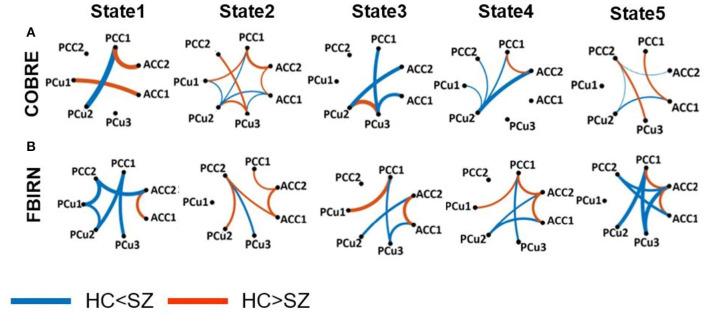
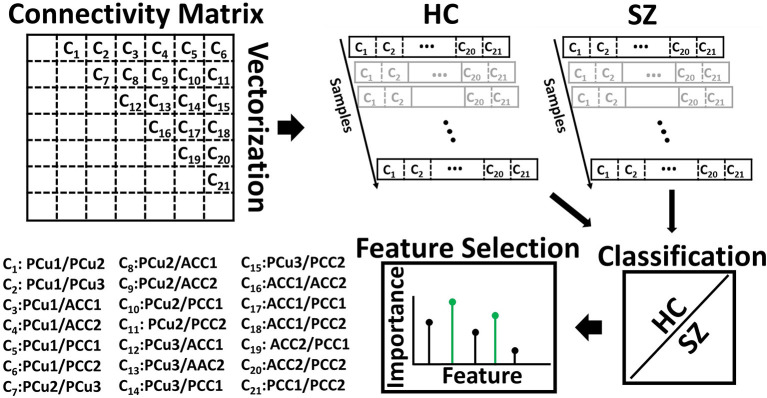
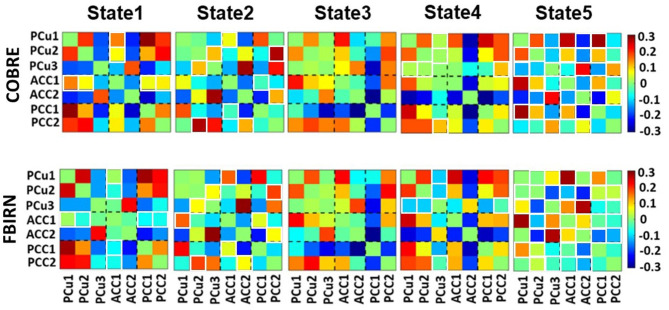
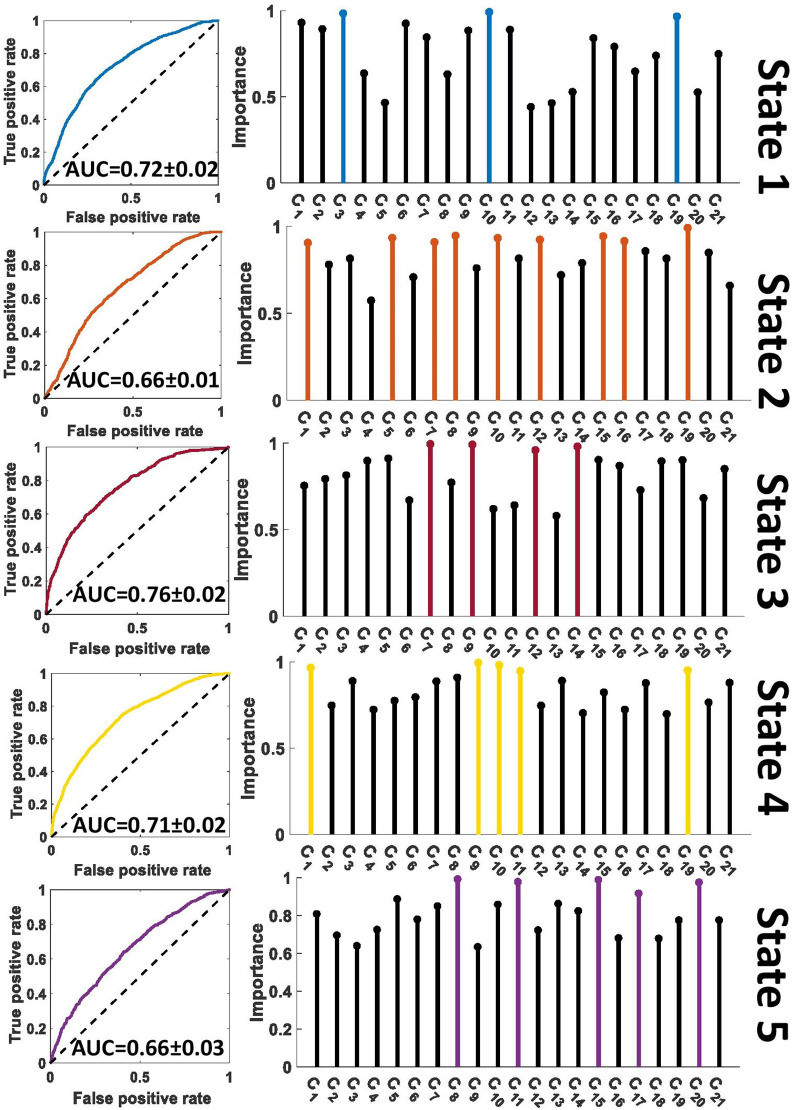
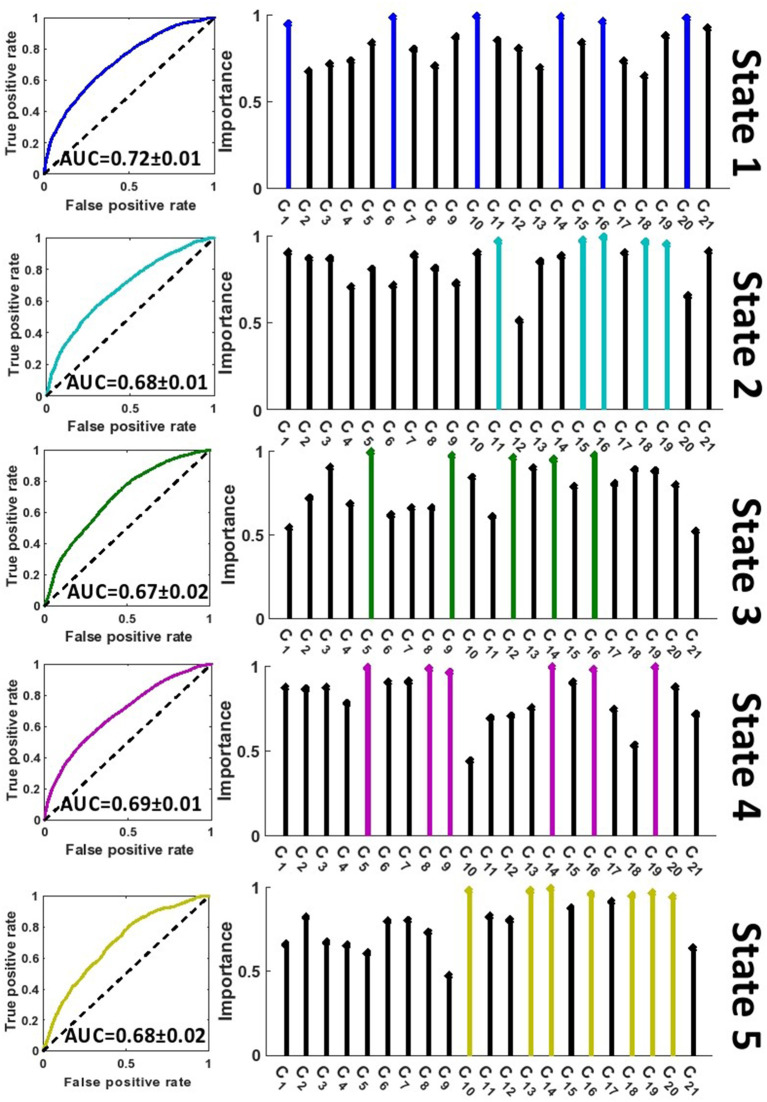
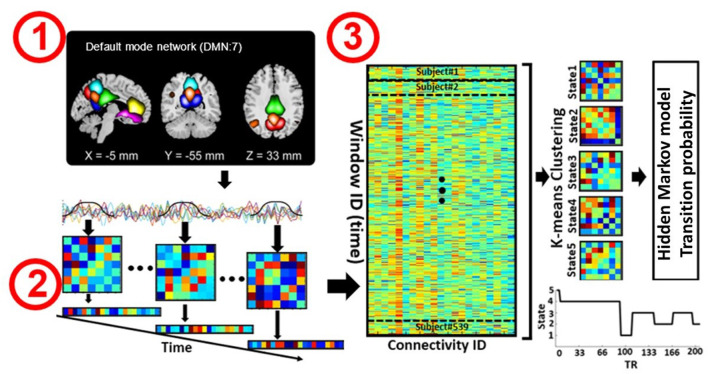
Schizophrenia affects around 1% of the global population. Functional connectivity extracted from resting-state functional magnetic resonance imaging (rs-fMRI) has previously been used to study schizophrenia and has great potential to provide novel insights into the disorder. Some studies have shown abnormal functional connectivity in the default mode network (DMN) of individuals with schizophrenia, and more recent studies have shown abnormal dynamic functional connectivity (dFC) in individuals with schizophrenia. However, DMN dFC and the link between abnormal DMN dFC and symptom severity have not been well-characterized. Resting-state fMRI data from subjects with schizophrenia (SZ) and healthy controls (HC) across two datasets were analyzed independently. We captured seven maximally independent subnodes in the DMN by applying group independent component analysis and estimated dFC between subnode time courses using a sliding window approach. A clustering method separated the dFCs into five reoccurring brain states. A feature selection method modeled the difference between SZs and HCs using the state-specific FC features. Finally, we used the transition probability of a hidden Markov model to characterize the link between symptom severity and dFC in SZ subjects. We found decreases in the connectivity of the anterior cingulate cortex (ACC) and increases in the connectivity between the precuneus (PCu) and the posterior cingulate cortex (PCC) (i.e., PCu/PCC) of SZ subjects. In SZ, the transition probability from a state with weaker PCu/PCC and stronger ACC connectivity to a state with stronger PCu/PCC and weaker ACC connectivity increased with symptom severity. To our knowledge, this was the first study to investigate DMN dFC and its link to schizophrenia symptom severity. We identified reproducible neural states in a data-driven manner and demonstrated that the strength of connectivity within those states differed between SZs and HCs. Additionally, we identified a relationship between SZ symptom severity and the dynamics of DMN functional connectivity. We validated our results across two datasets. These results support the potential of dFC for use as a biomarker of schizophrenia and shed new light upon the relationship between schizophrenia and DMN dynamics.

摘要

精神分裂症影响全球约 1%的人口。先前使用静息态功能磁共振成像(rs-fMRI)提取的功能连接来研究精神分裂症,并且具有提供对该疾病的新见解的巨大潜力。一些研究表明精神分裂症个体的默认模式网络(DMN)中存在功能连接异常,而最近的研究表明精神分裂症个体中存在动态功能连接(dFC)异常。然而,DMN dFC 以及异常 DMN dFC 与症状严重程度之间的联系尚未得到很好的描述。 对来自两个数据集的精神分裂症(SZ)和健康对照(HC)受试者的静息态 fMRI 数据进行了独立分析。我们通过应用组独立成分分析捕获了 DMN 中的七个最大独立子节点,并使用滑动窗口方法估计了子节点时间序列之间的 dFC。聚类方法将 dFC 分为五个重复出现的脑状态。特征选择方法使用状态特异性 FC 特征来模拟 SZ 和 HC 之间的差异。最后,我们使用隐马尔可夫模型的转移概率来描述 SZ 受试者中症状严重程度与 dFC 之间的联系。 我们发现 SZ 受试者的前扣带皮层(ACC)连接减少,而楔前叶(PCu)与后扣带皮层(PCC)之间的连接增加(即 PCu/PCC)。在 SZ 中,从一个具有较弱 PCu/PCC 和较强 ACC 连接的状态向一个具有较强 PCu/PCC 和较弱 ACC 连接的状态的转移概率随着症状严重程度的增加而增加。 据我们所知,这是第一项研究 DMN dFC 及其与精神分裂症症状严重程度的关系。我们以数据驱动的方式识别出可重复的神经状态,并证明了这些状态内的连接强度在 SZ 和 HC 之间存在差异。此外,我们确定了 SZ 症状严重程度与 DMN 功能连接动力学之间的关系。我们在两个数据集上验证了我们的结果。这些结果支持 dFC 作为精神分裂症生物标志物的潜力,并为精神分裂症与 DMN 动力学之间的关系提供了新的认识。
https://cdn.ncbi.nlm.nih.gov/pmc/blobs/7f4e/8013735/977e8633501b/fncir-15-649417-g0006.jpg
https://cdn.ncbi.nlm.nih.gov/pmc/blobs/7f4e/8013735/6883ac38651f/fncir-15-649417-g0001.jpg
https://cdn.ncbi.nlm.nih.gov/pmc/blobs/7f4e/8013735/1116c11547d7/fncir-15-649417-g0002.jpg
https://cdn.ncbi.nlm.nih.gov/pmc/blobs/7f4e/8013735/4766e687e05a/fncir-15-649417-g0003.jpg
https://cdn.ncbi.nlm.nih.gov/pmc/blobs/7f4e/8013735/9d6b254fe81a/fncir-15-649417-g0004.jpg
https://cdn.ncbi.nlm.nih.gov/pmc/blobs/7f4e/8013735/ae7bc07adce2/fncir-15-649417-g0005.jpg
https://cdn.ncbi.nlm.nih.gov/pmc/blobs/7f4e/8013735/977e8633501b/fncir-15-649417-g0006.jpg
https://cdn.ncbi.nlm.nih.gov/pmc/blobs/7f4e/8013735/6883ac38651f/fncir-15-649417-g0001.jpg
https://cdn.ncbi.nlm.nih.gov/pmc/blobs/7f4e/8013735/1116c11547d7/fncir-15-649417-g0002.jpg
https://cdn.ncbi.nlm.nih.gov/pmc/blobs/7f4e/8013735/4766e687e05a/fncir-15-649417-g0003.jpg
https://cdn.ncbi.nlm.nih.gov/pmc/blobs/7f4e/8013735/9d6b254fe81a/fncir-15-649417-g0004.jpg
https://cdn.ncbi.nlm.nih.gov/pmc/blobs/7f4e/8013735/ae7bc07adce2/fncir-15-649417-g0005.jpg
https://cdn.ncbi.nlm.nih.gov/pmc/blobs/7f4e/8013735/977e8633501b/fncir-15-649417-g0006.jpg

相似文献

1
Aberrant Dynamic Functional Connectivity of Default Mode Network in Schizophrenia and Links to Symptom Severity.精神分裂症默认模式网络的异常动态功能连接及其与症状严重程度的关系。
Front Neural Circuits. 2021 Mar 18;15:649417. doi: 10.3389/fncir.2021.649417. eCollection 2021.
2
Abnormal Dynamic Functional Network Connectivity Estimated from Default Mode Network Predicts Symptom Severity in Major Depressive Disorder.静息态默认模式网络估计的异常动态功能网络连接可预测重度抑郁症的症状严重程度。
Brain Connect. 2021 Dec;11(10):838-849. doi: 10.1089/brain.2020.0748. Epub 2021 Nov 23.
3
Dynamic patterns within the default mode network in schizophrenia subgroups.精神分裂症亚组默认模式网络中的动态模式。
Annu Int Conf IEEE Eng Med Biol Soc. 2021 Nov;2021:1640-1643. doi: 10.1109/EMBC46164.2021.9629825.
4
The effects of antipsychotics on interactions of dynamic functional connectivity in the triple-network in first episode schizophrenia.抗精神病药对首发精神分裂症三重网络动态功能连接交互作用的影响。
Schizophr Res. 2021 Oct;236:29-37. doi: 10.1016/j.schres.2021.07.038. Epub 2021 Aug 5.
5
Interaction among subsystems within default mode network diminished in schizophrenia patients: A dynamic connectivity approach.精神分裂症患者默认模式网络内子系统间的相互作用减弱:一种动态连接性方法。
Schizophr Res. 2016 Jan;170(1):55-65. doi: 10.1016/j.schres.2015.11.021. Epub 2015 Dec 3.
6
Dynamic Properties of Human Default Mode Network in Eyes-Closed and Eyes-Open.静息态下人脑默认模式网络的动态特性:闭眼与睁眼状态的对比。
Brain Topogr. 2020 Nov;33(6):720-732. doi: 10.1007/s10548-020-00792-3. Epub 2020 Aug 17.
7
Dynamic functional connectivity as a neural correlate of fatigue in multiple sclerosis.动态功能连接作为多发性硬化症疲劳的神经相关物。
Neuroimage Clin. 2021;29:102556. doi: 10.1016/j.nicl.2020.102556. Epub 2021 Jan 4.
8
Altered static and dynamic functional connectivity of the default mode network across epilepsy subtypes in children: A resting-state fMRI study.儿童癫痫各亚型默认模式网络的静息态和动态功能连接改变:一项静息态功能磁共振成像研究
Neurobiol Dis. 2024 Mar;192:106425. doi: 10.1016/j.nbd.2024.106425. Epub 2024 Jan 29.
9
Abnormal default-mode network homogeneity in first-episode, drug-naive schizophrenia at rest.首发未用药精神分裂症患者静息态下默认模式网络同质性异常。
Prog Neuropsychopharmacol Biol Psychiatry. 2014 Mar 3;49:16-20. doi: 10.1016/j.pnpbp.2013.10.021. Epub 2013 Nov 9.
10
Characterizing dynamic amplitude of low-frequency fluctuation and its relationship with dynamic functional connectivity: An application to schizophrenia.刻画低频波动的动态幅度及其与动态功能连接的关系:在精神分裂症中的应用。
Neuroimage. 2018 Oct 15;180(Pt B):619-631. doi: 10.1016/j.neuroimage.2017.09.035. Epub 2017 Sep 20.

引用本文的文献

1
Lateralized brain connectivity in auditory verbal hallucinations: fMRI insights into the superior and middle temporal gyri.听觉言语幻觉中的脑半球偏侧化连接:功能磁共振成像对颞上回和颞中回的洞察
Front Hum Neurosci. 2025 Aug 20;19:1650178. doi: 10.3389/fnhum.2025.1650178. eCollection 2025.
2
A Method for Estimating Dynamic Functional Network Connectivity Gradients (dFNGs) From ICA Captures Smooth Inter-Network Modulation.一种从独立成分分析(ICA)估计动态功能网络连通性梯度(dFNGs)的方法可捕捉到网络间的平滑调制。
Hum Brain Mapp. 2025 Jul;46(10):e70262. doi: 10.1002/hbm.70262.
3
Pairing explainable deep learning classification with clustering to uncover effects of schizophrenia upon whole brain functional network connectivity dynamics.

本文引用的文献

1
Alzheimer's Disease Projection From Normal to Mild Dementia Reflected in Functional Network Connectivity: A Longitudinal Study.从正常到轻度痴呆的阿尔茨海默病的预测反映在功能网络连接中:一项纵向研究。
Front Neural Circuits. 2021 Jan 21;14:593263. doi: 10.3389/fncir.2020.593263. eCollection 2020.
2
Multiple overlapping dynamic patterns of the visual sensory network in schizophrenia.精神分裂症中视觉感觉网络的多种重叠动态模式。
Schizophr Res. 2021 Feb;228:103-111. doi: 10.1016/j.schres.2020.11.055. Epub 2021 Jan 9.
3
NeuroMark: An automated and adaptive ICA based pipeline to identify reproducible fMRI markers of brain disorders.
将可解释的深度学习分类与聚类相结合,以揭示精神分裂症对全脑功能网络连接动力学的影响。
Neuroimage Rep. 2023 Sep 29;3(4):100186. doi: 10.1016/j.ynirp.2023.100186. eCollection 2023 Dec.
4
A comparative machine learning study of schizophrenia biomarkers derived from functional connectivity.一项基于功能连接性的精神分裂症生物标志物的比较机器学习研究。
Sci Rep. 2025 Jan 22;15(1):2849. doi: 10.1038/s41598-024-84152-2.
5
Time-Varying Spatial Propagation of Brain Networks in fMRI Data.功能磁共振成像数据中脑网络的时变空间传播
Hum Brain Mapp. 2025 Feb 1;46(2):e70131. doi: 10.1002/hbm.70131.
6
Networks extracted from nonlinear fMRI connectivity exhibit unique spatial variation and enhanced sensitivity to differences between individuals with schizophrenia and controls.从非线性功能磁共振成像连接性中提取的网络表现出独特的空间变化,并且对精神分裂症患者与对照组之间的差异具有更高的敏感性。
Nat Ment Health. 2024;2(12):1464-1475. doi: 10.1038/s44220-024-00341-y. Epub 2024 Nov 21.
7
Functional Connectivity Biomarkers in Schizophrenia.精神分裂症的功能连接生物标志物。
Adv Neurobiol. 2024;40:237-283. doi: 10.1007/978-3-031-69491-2_10.
8
Privacy-Preserving Visualization of Brain Functional Connectivity.脑功能连接的隐私保护可视化
bioRxiv. 2024 Oct 15:2024.10.11.617267. doi: 10.1101/2024.10.11.617267.
9
4D dynamic spatial brain networks at rest linked to cognition show atypical variability and coupling in schizophrenia.静息态下的 4D 动态空间大脑网络与认知相关,在精神分裂症中表现出异常的可变性和耦合。
Hum Brain Mapp. 2024 Aug 1;45(11):e26773. doi: 10.1002/hbm.26773.
10
A Demographic-Conditioned Variational Autoencoder for fMRI Distribution Sampling and Removal of Confounds.一种用于功能磁共振成像分布采样和混杂因素去除的人口统计学条件变分自编码器。
ArXiv. 2024 May 13:arXiv:2405.07977v1.
NeuroMark:一种基于自动和自适应 ICA 的流水线,用于识别可重复的 fMRI 脑疾病标志物。
Neuroimage Clin. 2020;28:102375. doi: 10.1016/j.nicl.2020.102375. Epub 2020 Aug 11.
4
Individual Variation in Functional Brain Network Topography is Linked to Schizophrenia Symptomatology.个体功能脑网络拓扑的差异与精神分裂症症状有关。
Schizophr Bull. 2021 Jan 23;47(1):180-188. doi: 10.1093/schbul/sbaa088.
5
Space: A Missing Piece of the Dynamic Puzzle.空间:动态拼图中的缺失部分。
Trends Cogn Sci. 2020 Feb;24(2):135-149. doi: 10.1016/j.tics.2019.12.004. Epub 2020 Jan 23.
6
Spatial Dynamic Functional Connectivity Analysis Identifies Distinctive Biomarkers in Schizophrenia.空间动态功能连接分析识别精神分裂症中的独特生物标志物。
Front Neurosci. 2019 Sep 24;13:1006. doi: 10.3389/fnins.2019.01006. eCollection 2019.
7
Reduced connectivity in anterior cingulate cortex as an early predictor for treatment response in drug-naive, first-episode schizophrenia: A global-brain functional connectivity analysis.药物初治、首发精神分裂症患者前扣带回皮质连接减少可作为早期治疗反应的预测指标:全脑功能连接分析。
Schizophr Res. 2020 Jan;215:337-343. doi: 10.1016/j.schres.2019.09.003. Epub 2019 Sep 12.
8
Dynamic functional connectivity in schizophrenia and autism spectrum disorder: Convergence, divergence and classification.精神分裂症和自闭症谱系障碍的动态功能连接:汇聚、发散与分类。
Neuroimage Clin. 2019;24:101966. doi: 10.1016/j.nicl.2019.101966. Epub 2019 Aug 1.
9
Dynamic functional connectivity changes in dementia with Lewy bodies and Alzheimer's disease.路易体痴呆和阿尔茨海默病的动态功能连接变化。
Neuroimage Clin. 2019;22:101812. doi: 10.1016/j.nicl.2019.101812. Epub 2019 Apr 3.
10
Dynamic Functional Network Connectivity in Schizophrenia with Magnetoencephalography and Functional Magnetic Resonance Imaging: Do Different Timescales Tell a Different Story?精神分裂症的静息态功能磁共振成像与脑磁图的动态功能网络连接:不同时间尺度是否讲述了不同的故事?
Brain Connect. 2019 Apr;9(3):251-262. doi: 10.1089/brain.2018.0608.