Department of Pharmaceutical Biology, Faculty of Pharmacy, Universitas Padjadjaran, Jatinangor, Indonesia.
Division of Biological Activity, Central Laboratory, Universitas Padjadjaran, Jatinangor, Indonesia.
Drug Des Devel Ther. 2021 Mar 29;15:1357-1368. doi: 10.2147/DDDT.S282913. eCollection 2021.
In this study, (CA), one of the most popular marine sponges for cancer therapy research, was investigated for its phytochemical compounds and evaluated for its anticancer activity in various cell lines. Since lung cancer is the most frequently diagnosed cancer, a solution from this marine source is a good choice to address the resistance to anticancer agents. Elucidation of the underlying mechanism of cell death elicited by a CA extract in human lung carcinoma cells A549 was undertaken.
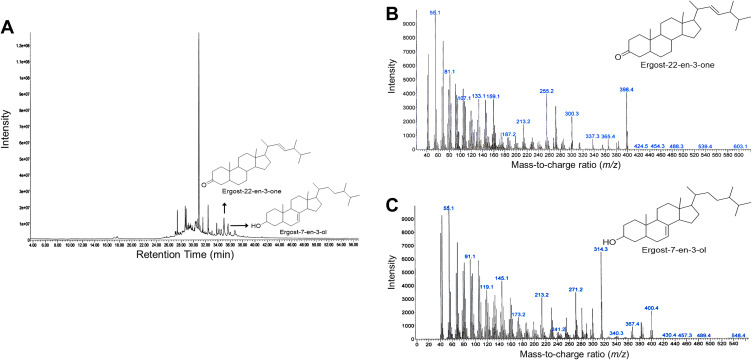
The presence of secondary metabolites in CA methanol extract was revealed by gas chromatography-mass spectrometry (GC-MS) and evaluated on four cancerous cell lines and a non-cancerous cell line using Cell Counting Kit-8. Since the activity of CA extract in A549 cells was then evaluated through clonogenic assay, morphological detection of apoptosis, polymerase chain reaction (PCR) and Western blot assay, were also presented in this study.
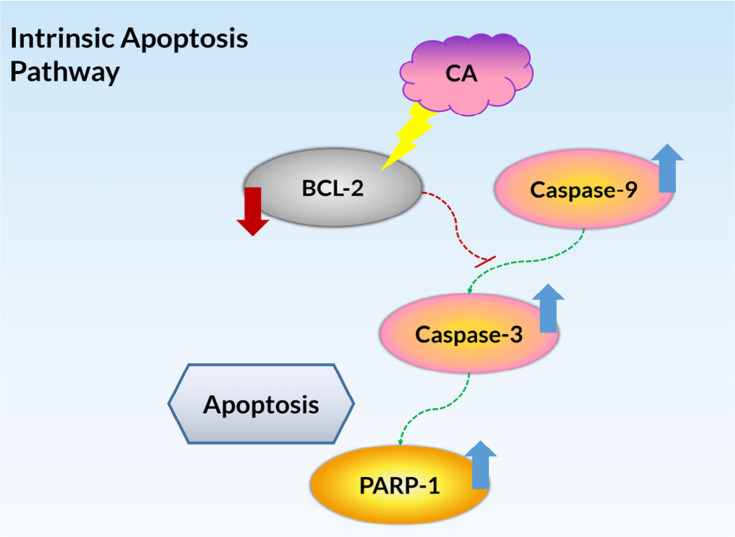
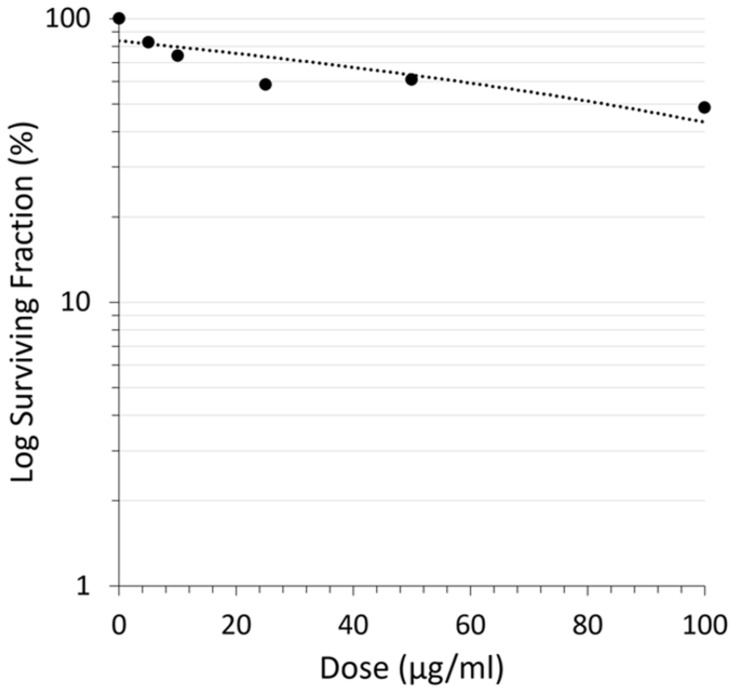
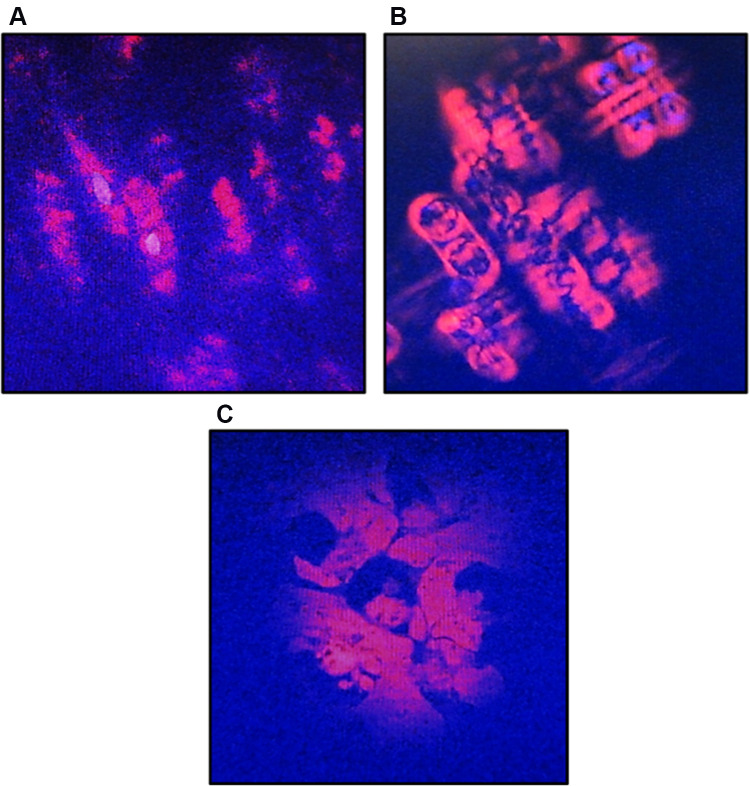
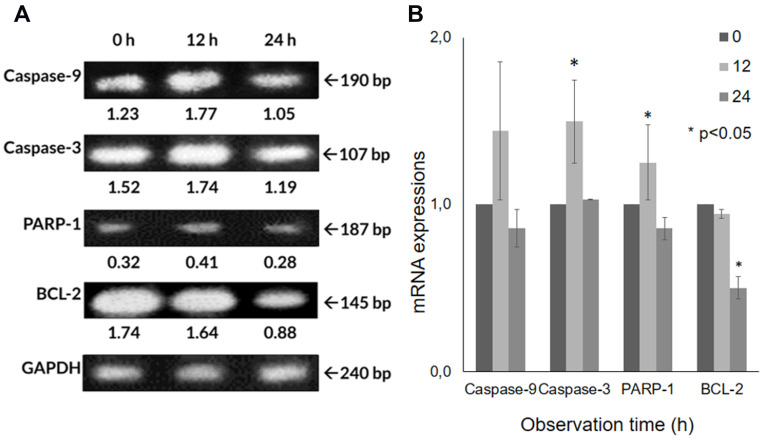
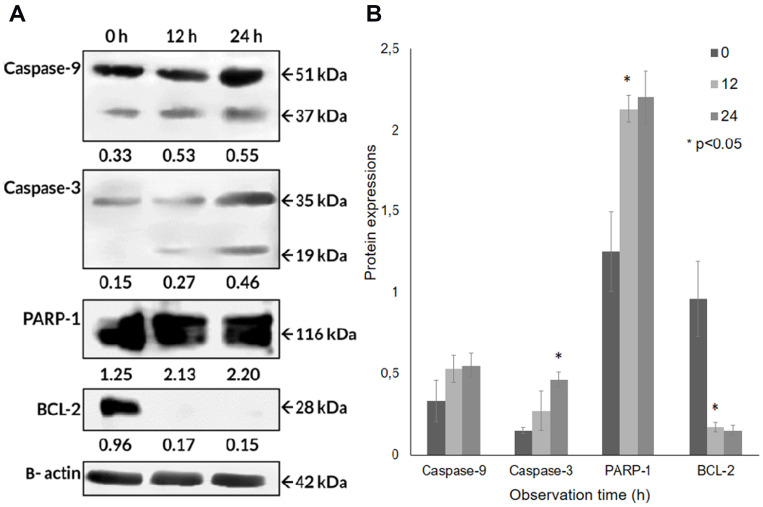
GC-MS analysis revealed the presence of two ergosteroids, ergost-22-en-3-one, (5β,22), and ergost-7-en-3-ol, (35β) in the sponge extract that was suggested to suppress A549 cells (IC 9.38 μg/mL), and another cancerous cell's viability (IC 3.12-10.72 μg/mL) in 24 h, but not in the non-cancerous cells. Moreover, CA extract was also able to reduce the colony-forming ability of A549 cells, and through A549 cells morphology seems that apoptosis is the underlying mechanism of cell death. Further, the treatment with CA extract induced the up-regulation of caspase-9, caspase-3, and PARP-1, and the down-regulation of BCL-2, in both and proteins expression level, promoting apoptotic cell death via caspase cascade.
These findings suggest that the compounds in CA extract possess the ability to induce apoptotic cell death in A549 cells and could become a promising candidate for future anticancer therapy.
在这项研究中,(CA)是最常用于癌症治疗研究的海洋海绵之一,研究了其植物化学化合物,并在各种细胞系中评估了其抗癌活性。由于肺癌是最常见的癌症,因此这种海洋来源的解决方案是解决对抗癌药物耐药性的好选择。本研究旨在阐明 CA 提取物在人肺癌细胞 A549 中诱导细胞死亡的潜在机制。
通过气相色谱-质谱联用(GC-MS)揭示 CA 甲醇提取物中次生代谢产物的存在,并使用细胞计数试剂盒-8 在四种癌细胞系和一种非癌细胞系中进行评估。由于 CA 提取物在 A549 细胞中的活性随后通过集落形成测定、凋亡形态学检测、聚合酶链反应(PCR)和 Western blot 分析进行了评估,因此本研究也介绍了这些方法。
GC-MS 分析表明,海绵提取物中存在两种麦角甾醇,麦角甾-22-烯-3-酮,(5β,22)和麦角甾-7-烯-3-醇,(35β),这两种化合物被认为能抑制 A549 细胞(IC9.38μg/mL)和另一种癌细胞的活力(IC3.12-10.72μg/mL),但对非癌细胞没有作用。此外,CA 提取物还能够降低 A549 细胞的集落形成能力,通过 A549 细胞形态似乎表明细胞凋亡是细胞死亡的潜在机制。此外,CA 提取物的处理诱导了 caspase-9、caspase-3 和 PARP-1 的上调,以及 BCL-2 的下调,无论是在mRNA 还是蛋白表达水平,都通过 caspase 级联促进了凋亡性细胞死亡。
这些发现表明,CA 提取物中的化合物具有诱导 A549 细胞凋亡的能力,并可能成为未来癌症治疗的有前途的候选药物。