Eusebi Paulina G, Sevane Natalia, O'Rourke Thomas, Pizarro Manuel, Boeckx Cedric, Dunner Susana
Universidad Complutense de Madrid, Avenida Puerta de Hierro, s/n, 28040, Madrid, Spain.
Universitat de Barcelona, Gran Vía de les Corts Catalanes 585, 08007, Barcelona, Spain.
BMC Genomics. 2021 Apr 7;22(1):245. doi: 10.1186/s12864-021-07505-5.
Aggressive behavior is an ancient and conserved trait, habitual for most animals in order to eat, protect themselves, compete for mating and defend their territories. Genetic factors have been shown to play an important role in the development of aggression both in animals and humans, displaying moderate to high heritability estimates. Although such types of behaviors have been studied in different animal models, the molecular architecture of aggressiveness remains poorly understood. This study compared gene expression profiles of 16 prefrontal cortex (PFC) samples from aggressive and non-aggressive cattle breeds: Lidia, selected for agonistic responses, and Wagyu, selected for tameness.
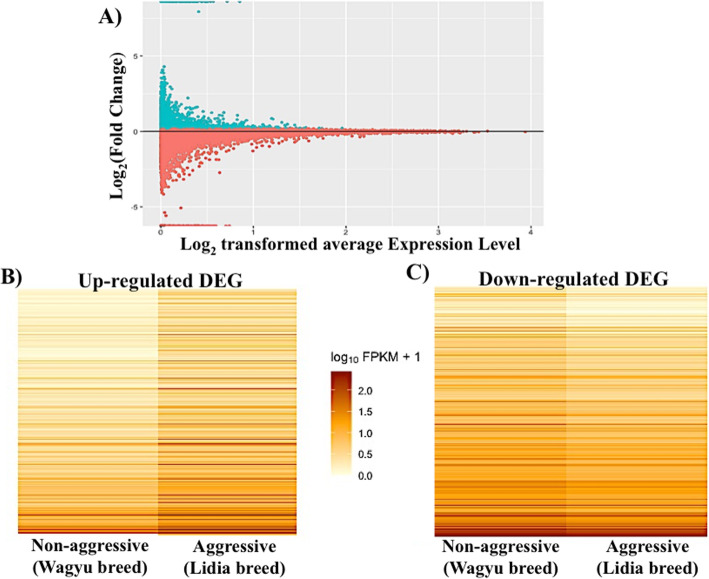
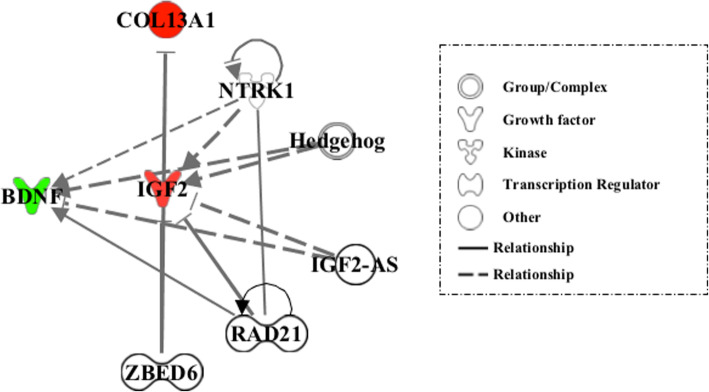
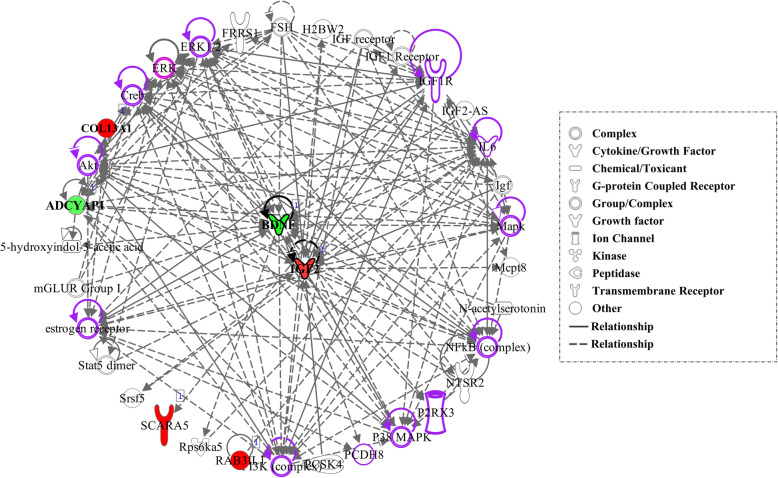
A total of 918 up-regulated and 278 down-regulated differentially expressed genes (DEG) were identified, representing above-chance overlap with genes previously identified in studies of aggression across species, as well as those implicated in recent human evolution. The functional interpretation of the up-regulated genes in the aggressive cohort revealed enrichment of pathways such as Alzheimer disease-presenilin, integrins and the ERK/MAPK signaling cascade, all implicated in the development of abnormal aggressive behaviors and neurophysiological disorders. Moreover, gonadotropins, are up-regulated as natural mechanisms enhancing aggression. Concomitantly, heterotrimeric G-protein pathways, associated with low reactivity mental states, and the GAD2 gene, a repressor of agonistic reactions associated with PFC activity, are down-regulated, promoting the development of the aggressive responses selected for in Lidia cattle. We also identified six upstream regulators, whose functional activity fits with the etiology of abnormal behavioral responses associated with aggression.
These transcriptional correlates of aggression, resulting, at least in part, from controlled artificial selection, can provide valuable insights into the complex architecture that underlies naturally developed agonistic behaviors. This analysis constitutes a first important step towards the identification of the genes and metabolic pathways that promote aggression in cattle and, providing a novel model species to disentangle the mechanisms underlying variability in aggressive behavior.
攻击性行为是一种古老且保守的特性,对于大多数动物来说是习惯性的,用于进食、自我保护、争夺配偶和保卫领地。遗传因素已被证明在动物和人类攻击性行为的发展中起着重要作用,显示出中度到高度的遗传力估计值。尽管此类行为已在不同动物模型中进行了研究,但攻击性行为的分子结构仍知之甚少。本研究比较了来自攻击性和非攻击性牛品种的16个前额叶皮层(PFC)样本的基因表达谱:用于争斗反应的利迪亚牛和用于温顺性的和牛。
共鉴定出918个上调和278个下调的差异表达基因(DEG),这些基因与先前在跨物种攻击性行为研究中鉴定的基因以及与近期人类进化相关的基因存在高于偶然的重叠。对攻击性群体中上调基因的功能解释揭示了诸如阿尔茨海默病 - 早老素、整合素和ERK/MAPK信号级联等通路的富集,所有这些都与异常攻击性行为和神经生理紊乱的发展有关。此外,促性腺激素上调,作为增强攻击性的自然机制。同时,与低反应性精神状态相关的异三聚体G蛋白通路以及与PFC活动相关的激动反应抑制因子GAD2基因下调,促进了利迪亚牛中选择的攻击反应的发展。我们还确定了六个上游调节因子,其功能活性与与攻击相关的异常行为反应的病因相符。
这些攻击性行为的转录相关性至少部分源于受控的人工选择,可为自然发展的争斗行为背后的复杂结构提供有价值的见解。该分析是朝着鉴定促进牛攻击性行为的基因和代谢途径迈出的重要第一步,并提供了一个新的模型物种来解开攻击性行为变异性背后的机制。