Department of Physiology, Tokyo Women's Medical University, Shinjuku, Tokyo, Japan.
Chubu University Center for Education in Laboratory Animal Research, Kasugai, Aichi, Japan.
Sci Rep. 2021 Apr 7;11(1):7630. doi: 10.1038/s41598-021-87226-7.
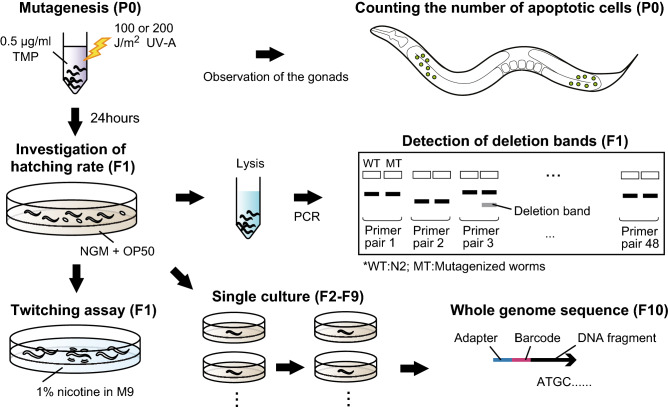
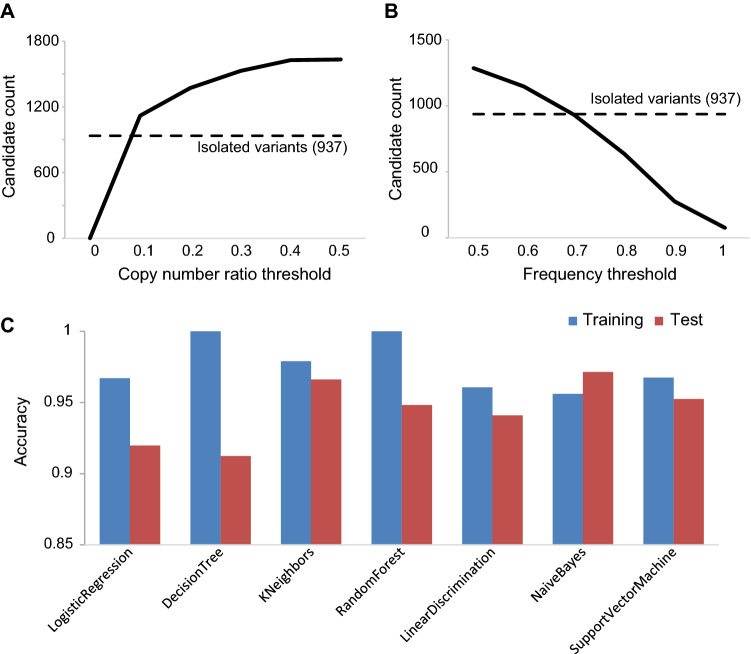
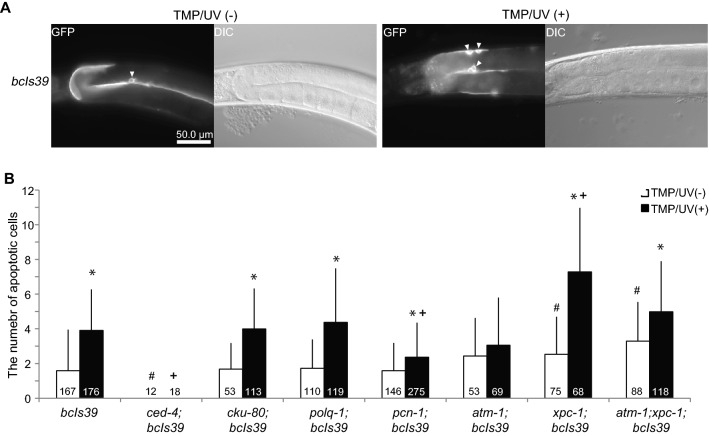
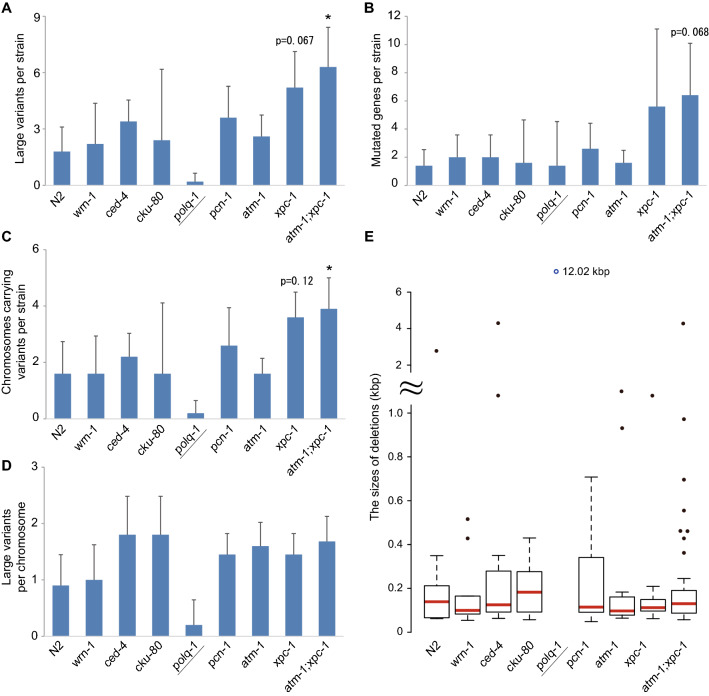
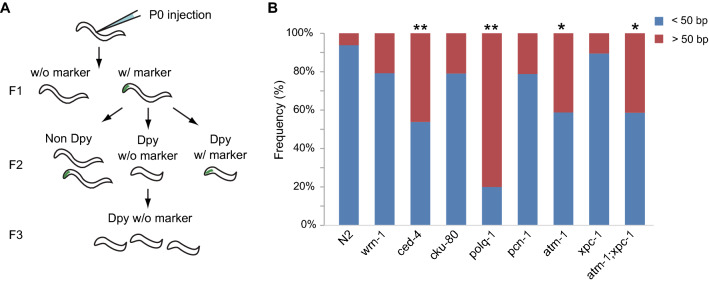
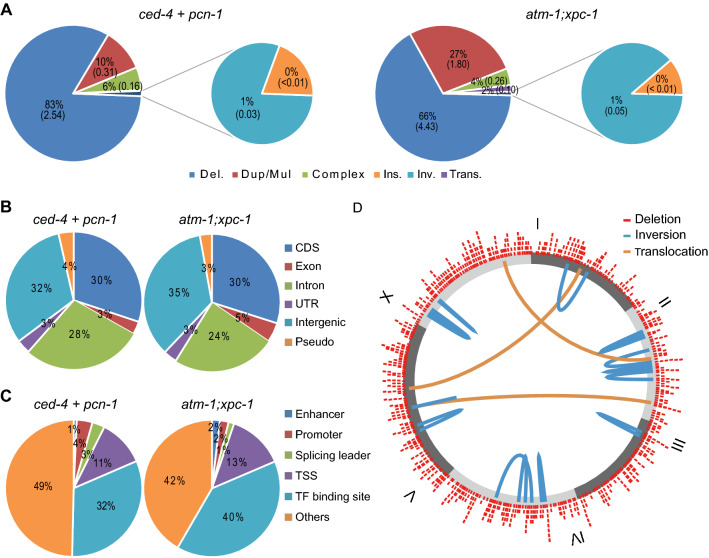
With the development of massive parallel sequencing technology, it has become easier to establish new model organisms that are ideally suited to the specific biological phenomena of interest. Considering the history of research using classical model organisms, we believe that the efficient construction and sharing of gene mutation libraries will facilitate the progress of studies using these new model organisms. Using C. elegans, we applied the TMP/UV mutagenesis method to animals lacking function in the DNA damage response genes atm-1 and xpc-1. This method produces genetic mutations three times more efficiently than mutagenesis of wild-type animals. Furthermore, we confirmed that the use of next-generation sequencing and the elimination of false positives through machine learning could automate the process of mutation identification with an accuracy of over 95%. Eventually, we sequenced the whole genomes of 488 strains and isolated 981 novel mutations generated by the present method; these strains have been made available to anyone who wants to use them. Since the targeted DNA damage response genes are well conserved and the mutagens used in this study are also effective in a variety of species, we believe that our method is generally applicable to a wide range of animal species.
随着大规模平行测序技术的发展,建立理想地适用于特定生物现象的新型模式生物变得更加容易。考虑到使用经典模式生物进行研究的历史,我们相信高效构建和共享基因突变文库将促进这些新型模式生物的研究进展。我们使用秀丽隐杆线虫,应用 TMP/UV 诱变方法对缺乏 DNA 损伤反应基因 atm-1 和 xpc-1 功能的动物进行了诱变。与野生型动物的诱变相比,这种方法产生遗传突变的效率提高了三倍。此外,我们证实,通过机器学习可以实现下一代测序和消除假阳性,从而使突变识别过程的准确性达到 95%以上。最终,我们对 488 个品系的全基因组进行了测序,分离出了 981 种由本方法产生的新突变;这些品系可供任何有需要的人使用。由于靶向 DNA 损伤反应基因高度保守,而且本研究中使用的诱变剂在多种物种中也有效,因此我们相信我们的方法普遍适用于多种动物物种。