Marandola Fabrice
J Eye Mov Res. 2019 Mar 31;11(2). doi: 10.16910/jemr.11.2.7.
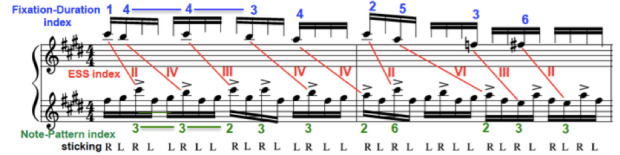
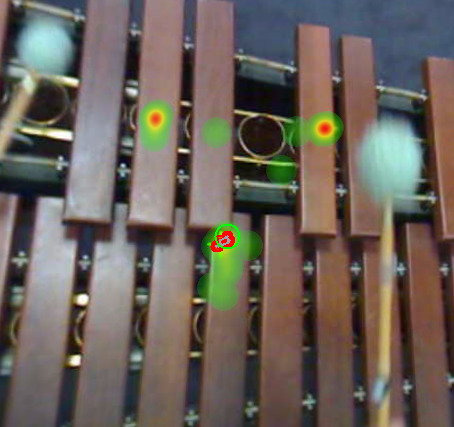
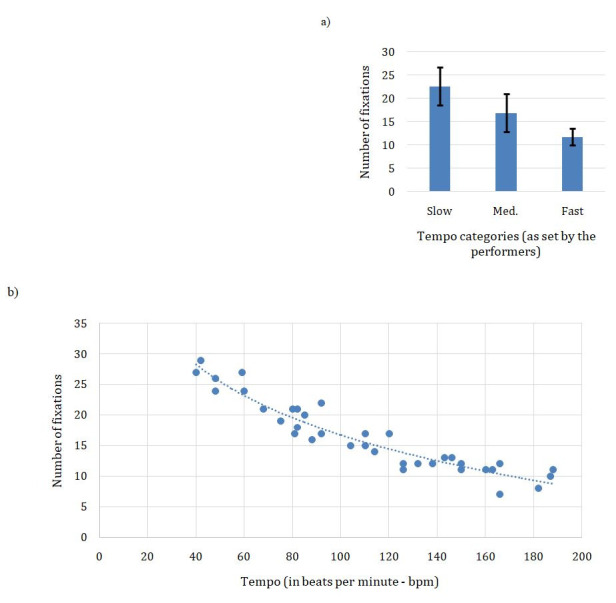
This article is the result of a first foray into xylophone performance with percussionists from Canada and Cameroon. It proposes to use the combination of Eye-Stroke Span (ESS), Fixation- Duration and Note-Pattern indexes to analyze free-score and performance oriented musical tasks, instead of eye-hand span or awareness span for sight-reading and score-based eye-tracking research in music. Based on measurements realized with a head-mounted eyetracker system, the research examines gaze-movements related to eye-hand synchronization in xylophone performance with musicians coming from three different ethnic groups from Cameroon (Bedzan Pygmies, Tikar and Eton) and classically trained Western percussionists (Canada). Increases in tempo are found to involve a diminution of the number of fixations, but not proportionally, as well as changes in lateral gaze shifts. Fixation-Duration and Note- Pattern are closely related but not identical, while ESS is relatively more independent. These gaze patterns are consistent within individuals, but not across individuals. Cameroonian musicians tend to look away from their instrument, interacting with their peers or with the audience. When they look at their keyboard, preliminary measures of ESS were found similar to the ESS of Western performers.
本文是与来自加拿大和喀麦隆的打击乐手首次尝试木琴演奏的成果。它提议使用眼动跨度(ESS)、注视时长和音符模式指标的组合来分析自由乐谱和以表演为导向的音乐任务,而不是用于音乐视奏和基于乐谱的眼动追踪研究中的眼手跨度或意识跨度。基于使用头戴式眼动追踪系统进行的测量,该研究考察了来自喀麦隆三个不同民族(贝赞俾格米人、蒂卡尔人和埃顿人)的音乐家以及接受过古典训练的西方打击乐手(加拿大)在木琴演奏中与眼手同步相关的注视运动。研究发现,节奏加快会导致注视次数减少,但并非成比例减少,同时横向注视转移也会发生变化。注视时长和音符模式密切相关但并不相同,而ESS相对更具独立性。这些注视模式在个体内部是一致的,但在个体之间并非如此。喀麦隆音乐家往往会看向乐器之外,与同行或观众互动。当他们看向键盘时,发现ESS的初步测量结果与西方演奏者的ESS相似。