Bhattacharya Aakashneel, Ranjan Piyush, Kumar Arvind, Brijwal Megha, Pandey Ravindra M, Mahishi Niranjan, Baitha Upendra, Pandey Shivam, Mittal Ankit, Wig Naveet
Infectious Diseases, All India Institute of Medical Sciences, New Delhi, IND.
Medicine, All India Institute of Medical Sciences, New Delhi, IND.
Cureus. 2021 Mar 3;13(3):e13681. doi: 10.7759/cureus.13681.
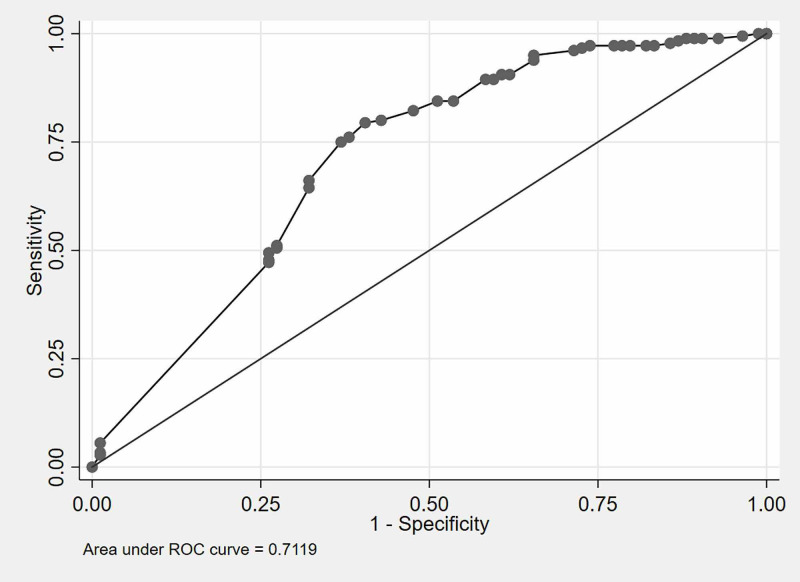
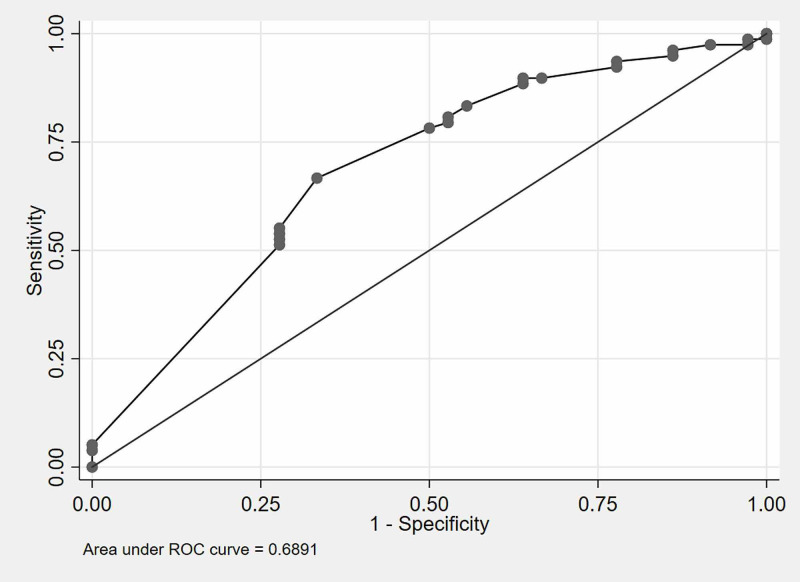
Background Preventive strategies in the form of early identification and isolation of patients are the cornerstones in the control of COVID-19 pandemic. We have conducted this study to develop a clinical symptom-based scoring system (CSBSS) for the diagnostic evaluation of COVID-19. Methods In this study, 378 patients presenting to screening outpatient clinic with clinical suspicion of COVID-19 were evaluated for various clinical symptoms. Statistical associations between presenting symptoms and reverse transcription-polymerase chain reaction (RT-PCR) results were analysed to select statistically significant clinical symptoms to design a scoring formula. CSBSS was developed by evaluating clinical symptoms in 70% of the total patients. The cut-off score of the CSBSS was determined from ROC (receiver operating characteristics) curve analysis to obtain a cut-off for optimum sensitivity and specificity. Subsequently, developed CSBSS was validated in the external validation dataset comprising 30% of patients. Results Clinical symptoms like fever >100F, myalgia, headache, cough and loss of smell had significant association with RT-PCR result. The adjusted odds ratios (95% confidence interval [CI]) for loss of smell, fever >100°F, headache, cough and myalgia were 5.00 (1.78-13.99), 2.05 (1.36-3.07), 1.31 (0.67-2.59), 1.26 (0.70-2.26) and 1.18 (0.50-2.78), respectively. The ROC curve and area under the curve of development and validation datasets were similar. Conclusion The presence of fever >100°F and loss of smell among suspected patients are important clinical predictors for the diagnosis of COVID-19. This newly developed CSBSS is a valid screening tool that can be useful in the diagnostic evaluation of patients with suspected COVID-19. This can be used for the risk stratification of the suspected patients before their RT-PCR results are generated.
背景 以早期识别和隔离患者为形式的预防策略是控制新冠疫情的基石。我们开展了这项研究,以开发一种基于临床症状的评分系统(CSBSS)用于新冠的诊断评估。
方法 在本研究中,对378名到筛查门诊就诊且临床怀疑感染新冠的患者的各种临床症状进行了评估。分析了所呈现症状与逆转录聚合酶链反应(RT-PCR)结果之间的统计学关联,以选择具有统计学意义的临床症状来设计评分公式。通过评估70%的患者的临床症状来开发CSBSS。CSBSS的截断分数通过ROC(受试者工作特征)曲线分析来确定,以获得最佳敏感性和特异性的截断值。随后,在由30%的患者组成的外部验证数据集中对开发的CSBSS进行验证。
结果 发热>100°F、肌痛、头痛、咳嗽和嗅觉丧失等临床症状与RT-PCR结果有显著关联。嗅觉丧失、发热>100°F、头痛、咳嗽和肌痛的调整优势比(95%置信区间[CI])分别为5.00(1.78 - 13.99)、2.05(1.36 - 3.07)、1.31(0.67 - 2.59)、1.26(0.70 - 2.26)和1.18(0.50 - 2.78)。开发数据集和验证数据集的ROC曲线及曲线下面积相似。
结论 疑似患者中发热>100°F和嗅觉丧失是新冠诊断的重要临床预测指标。这种新开发的CSBSS是一种有效的筛查工具,可用于疑似新冠患者的诊断评估。这可用于在疑似患者RT-PCR结果出来之前对其进行风险分层。