Biology Department, Wake Forest University, Winston Salem, North Carolina, USA.
Biology Department, Wake Forest University, Winston Salem, North Carolina, USA.
J Biol Chem. 2021 Jan-Jun;296:100222. doi: 10.1074/jbc.RA120.014543. Epub 2020 Dec 25.
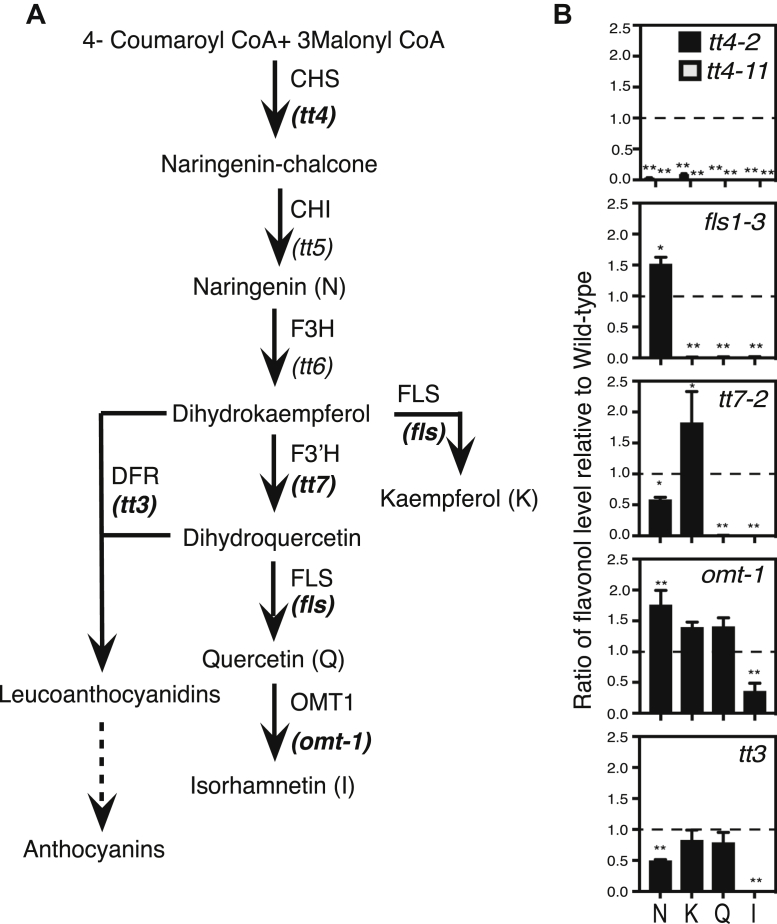
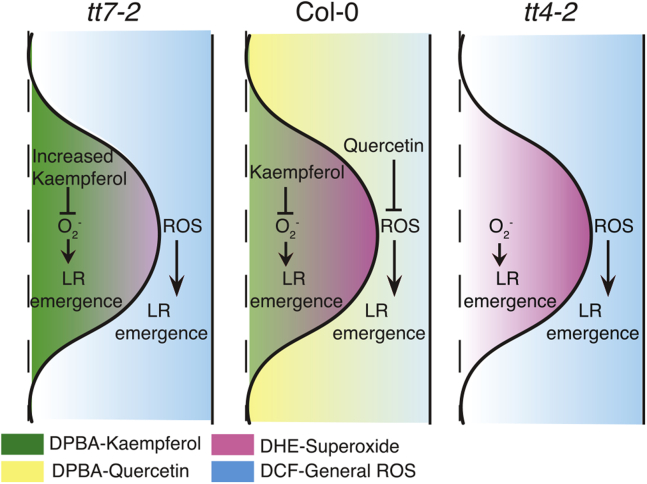
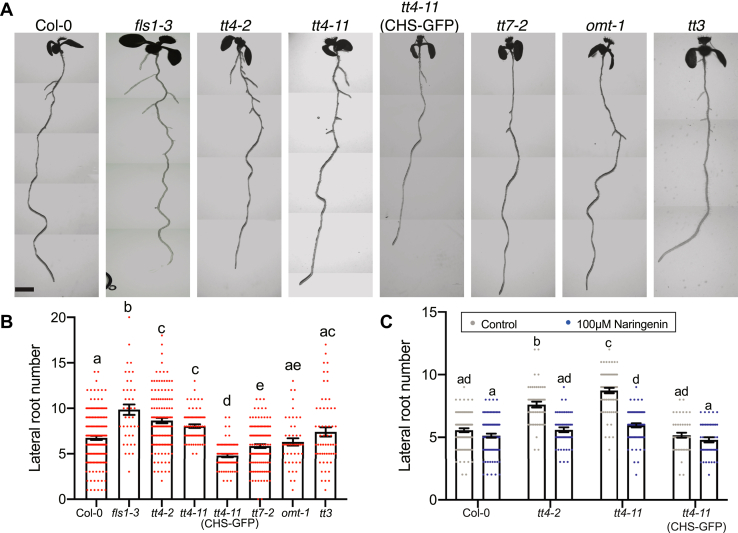
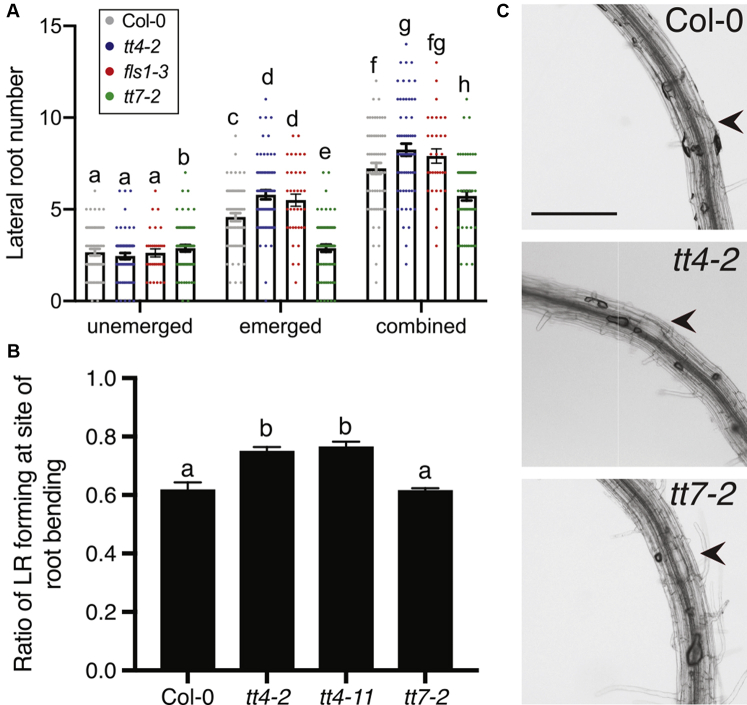
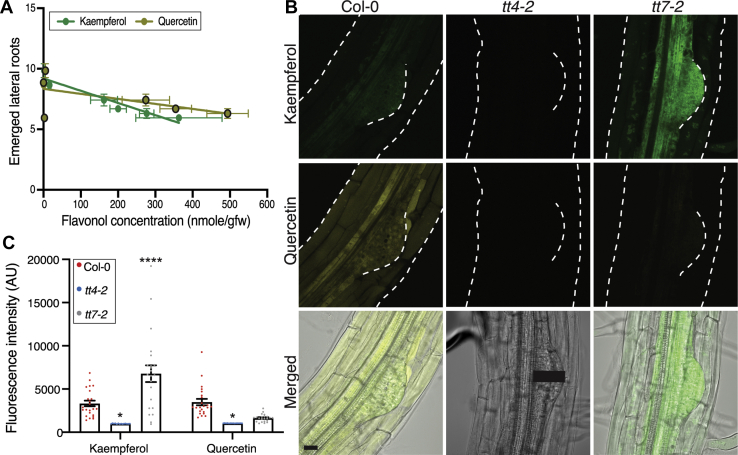
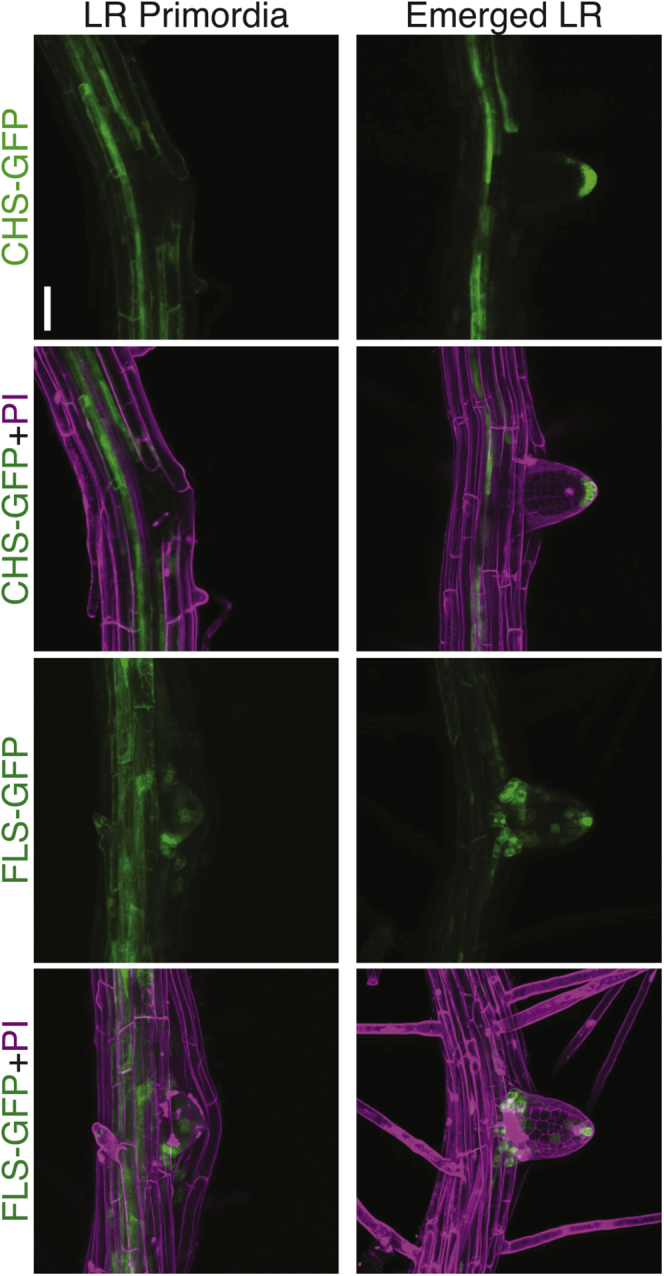
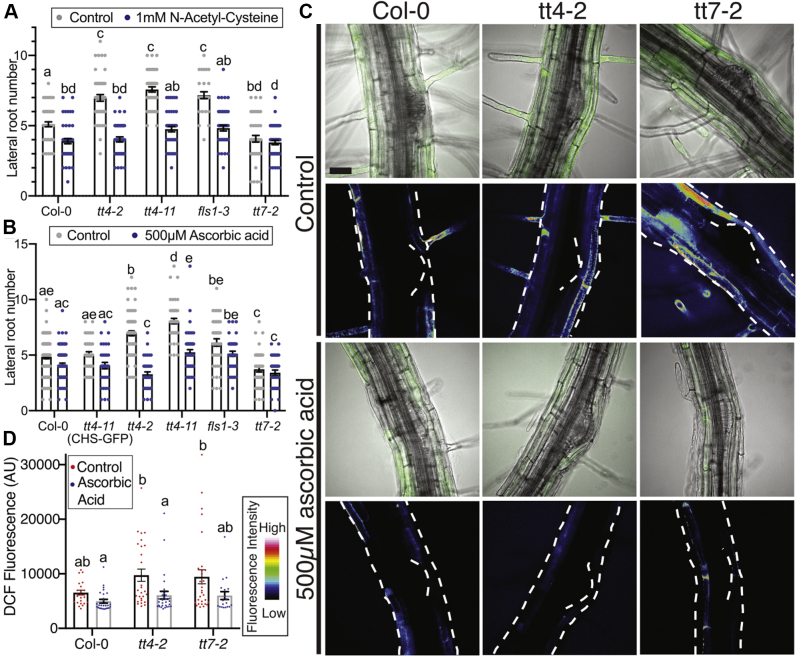
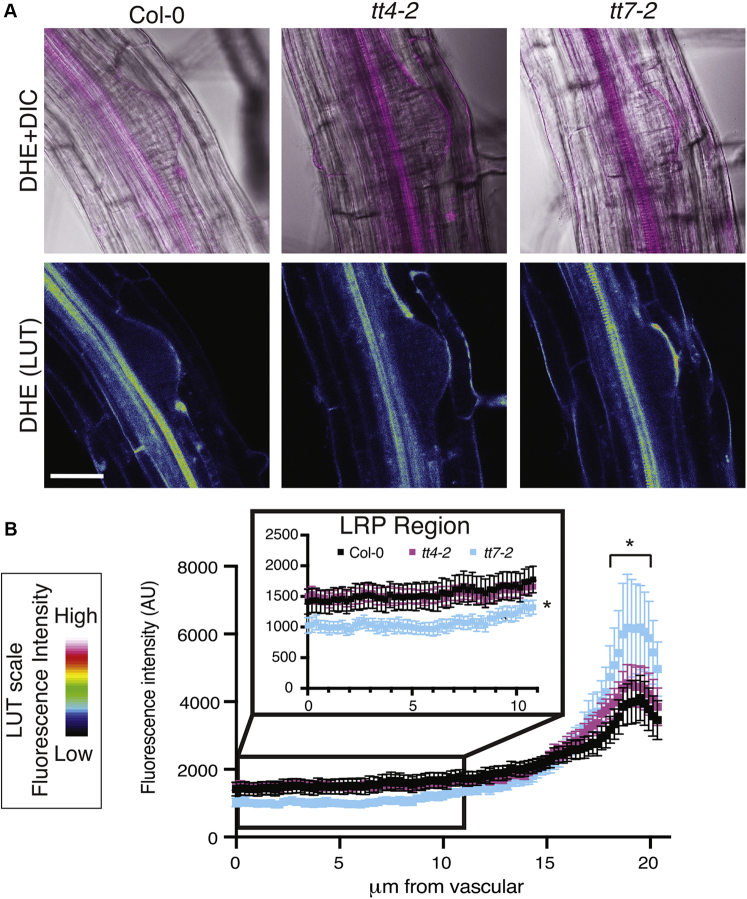
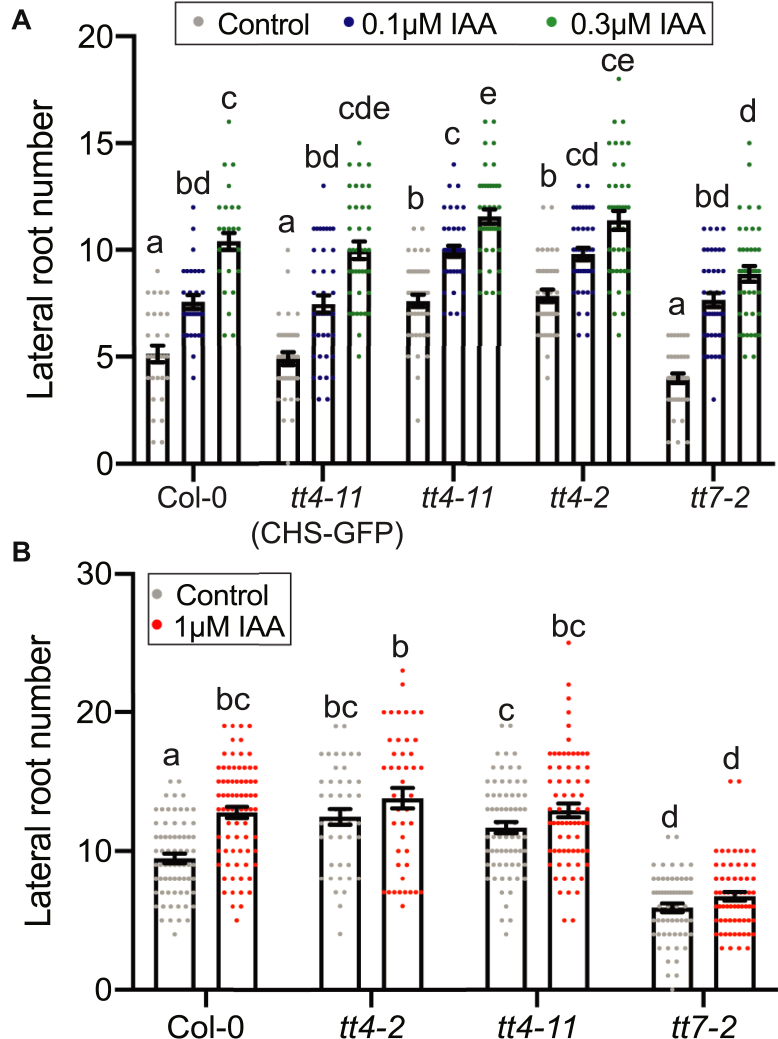
Flavonoids are a class of specialized metabolites with subclasses including flavonols and anthocyanins, which have unique properties as antioxidants. Flavonoids modulate plant development, but whether and how they impact lateral root development is unclear. We examined potential roles for flavonols in this process using Arabidopsis thaliana mutants with defects in genes encoding key enzymes in flavonoid biosynthesis. We observed the tt4 and fls1 mutants, which produce no flavonols, have increased lateral root emergence. The tt4 root phenotype was reversed by genetic and chemical complementation. To more specifically define the flavonoids involved, we tested an array of flavonoid biosynthetic mutants, eliminating roles for anthocyanins and the flavonols quercetin and isorhamnetin in modulating lateral root development. Instead, two tt7 mutant alleles, with defects in a branchpoint enzyme blocking quercetin biosynthesis, formed reduced numbers of lateral roots and tt7-2 had elevated levels of kaempferol. Using a flavonol-specific dye, we observed that in the tt7-2 mutant, kaempferol accumulated within lateral root primordia at higher levels than wild-type. These data are consistent with kaempferol, or downstream derivatives, acting as a negative regulator of lateral root emergence. We examined ROS accumulation using ROS-responsive probes and found reduced fluorescence of a superoxide-selective probe within the primordia of tt7-2 compared with wild-type, but not in the tt4 mutant, consistent with opposite effects of these mutants on lateral root emergence. These results support a model in which increased level of kaempferol in the lateral root primordia of tt7-2 reduces superoxide concentration and ROS-stimulated lateral root emergence.
类黄酮是一类具有特殊代谢功能的物质,包括类黄酮醇和花色苷,它们具有抗氧化剂的独特性质。类黄酮调节植物发育,但它们是否以及如何影响侧根发育尚不清楚。我们使用拟南芥中编码类黄酮生物合成关键酶的基因突变体来研究类黄酮醇在这个过程中的潜在作用。我们观察到 tt4 和 fls1 突变体不产生类黄酮醇,其侧根萌发增加。tt4 根表型通过遗传和化学互补得到逆转。为了更具体地定义涉及的类黄酮,我们测试了一系列类黄酮生物合成突变体,排除了花色苷以及类黄酮醇槲皮素和异鼠李素在调节侧根发育中的作用。相反,两个 tt7 突变等位基因,其在分支点酶中有缺陷,阻止了槲皮素的生物合成,形成的侧根数量减少,tt7-2 中 kaempferol 的水平升高。使用类黄酮特异性染料,我们观察到在 tt7-2 突变体中,kaempferol 在侧根原基中积累的水平高于野生型。这些数据与 kaempferol 或下游衍生物作为侧根萌发的负调节剂一致。我们使用 ROS 响应探针检查 ROS 积累,发现与野生型相比,tt7-2 突变体中超氧选择性探针的荧光减少,但在 tt4 突变体中没有,这与这些突变体对侧根萌发的相反影响一致。这些结果支持了这样一种模型,即 tt7-2 侧根原基中 kaempferol 水平的增加降低了超氧化物浓度和 ROS 刺激的侧根萌发。