Kuyt Katherine, Park Sang-Hee, Chang Todd P, Jung Timothy, MacKinnon Ralph
Manchester University NHS Foundation Trust, Manchester, UK.
Korea Institute of Civil Engineering and Building Technology, Seoul, South Korea.
Adv Simul (Lond). 2021 Apr 12;6(1):11. doi: 10.1186/s41077-021-00158-0.
Virtual reality (VR) and augmented reality (AR) have been proposed as novel methods to enhance cardio-pulmonary resuscitation (CPR) performance and increase engagement with CPR training. A scoping review was conducted to map the global evolution of these new approaches to CPR training, to assess their efficacy and determine future directions to meet gaps in current knowledge.
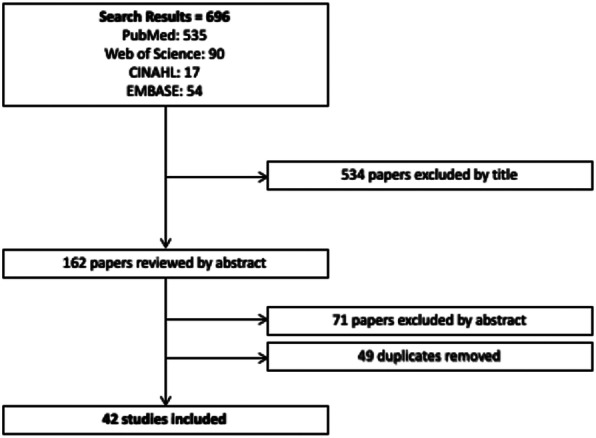
A standardised five-stage scoping methodology was used to (1) identify the research question, (2) identify relevant studies, (3) select the studies, (4) chart the data and (5) summarise the findings. The Kirkpatrick model levels of evidence were used to chart and assess the efficacy of each intervention reported. A multi-pronged search term strategy was used to search the Web of Science, PubMed, CINAHL and EMBASE databases up to June 2020.
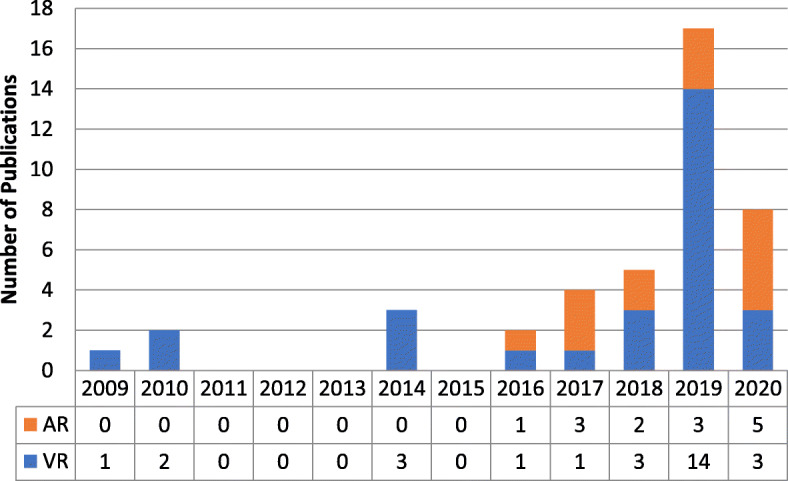
A total of 42 articles were included in this review. The first relevant paper identified was published in 2009 and based on VR, from 2014 onwards there was a large increase in the volume of work being published regarding VR and AR uses in CPR training. This review reports Kirkpatrick level one to three evidence for the use of VR/AR-CPR. Inconsistencies in the specific language, keywords used and methodologies are highlighted.
VR and AR technologies have shown great potential in the area of CPR, and there is continuing evidence of new novel applications and concepts. As VR/AR research into CPR reaches an inflection point, it is key to bring collaboration and consistency to the wider research community, to enable the growth of the area and ease of access to the wider medical community.
虚拟现实(VR)和增强现实(AR)已被提议作为提高心肺复苏(CPR)操作水平以及增强CPR培训参与度的新方法。开展了一项范围综述,以梳理这些CPR培训新方法的全球发展情况,评估其有效性,并确定未来方向,以填补现有知识空白。
采用标准化的五阶段范围综述方法,(1)确定研究问题,(2)识别相关研究,(3)选择研究,(4)整理数据,(5)总结研究结果。使用柯克帕特里克模型的证据级别来整理和评估所报告的每种干预措施的有效性。采用多管齐下的检索词策略,检索截至2020年6月的Web of Science、PubMed、CINAHL和EMBASE数据库。
本综述共纳入42篇文章。第一篇相关论文发表于2009年,基于VR,从2014年起,关于VR和AR在CPR培训中的应用的发表量大幅增加。本综述报告了使用VR/AR-CPR的柯克帕特里克一级至三级证据。突出了具体语言、所用关键词和方法上的不一致之处。
VR和AR技术在CPR领域已显示出巨大潜力,并且不断有新的应用和概念出现。随着VR/AR在CPR方面的研究达到一个转折点,关键是要在更广泛的研究群体中实现合作与一致性,以促进该领域的发展,并便于更广泛的医学界获取相关信息。