Asoodar Maryam, Janesarvatan Fatemeh, Yu Hao, de Jong Nynke
School of Health Professions Education, Department of Educational Development and Research, Faculty of Health, Medicine and Life sciences, Maastricht University, Universiteitssingel 60, Maastricht, 6229 MD, The Netherlands.
School of Business and Economics, Educational Research and Development Maastricht University, Maastricht, The Netherlands.
Adv Simul (Lond). 2024 Sep 9;9(1):36. doi: 10.1186/s41077-024-00311-5.
Augmented Reality (AR), Virtual Reality (VR) and Mixed Reality (MR) are emerging technologies that can create immersive learning environments for health professions education. However, there is a lack of systematic reviews on how these technologies are used, what benefits they offer, and what instructional design models or theories guide their use.
This scoping review aims to provide a global overview of the usage and potential benefits of AR/VR/MR tools for education and training of students and professionals in the healthcare domain, and to investigate whether any instructional design models or theories have been applied when using these tools.
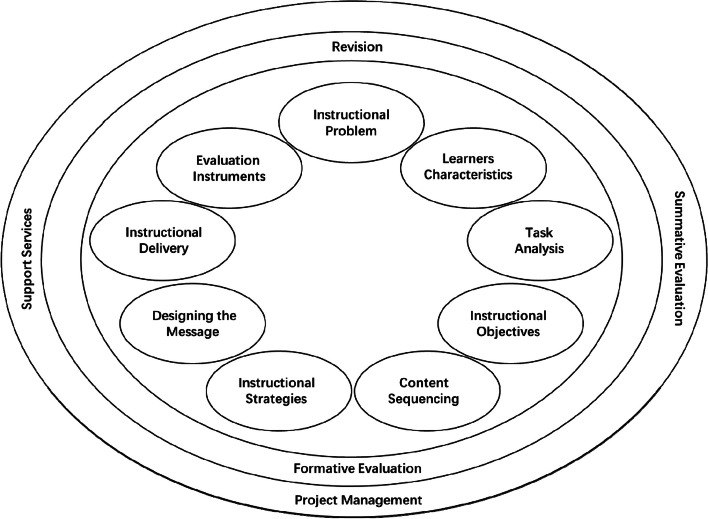
A systematic search was conducted in several electronic databases to identify peer-reviewed studies published between and including 2015 and 2020 that reported on the use of AR/VR/MR in health professions education. The selected studies were coded and analyzed according to various criteria, such as domains of healthcare, types of participants, types of study design and methodologies, rationales behind the use of AR/VR/MR, types of learning and behavioral outcomes, and findings of the studies. The (Morrison et al. John Wiley & Sons, 2010) model was used as a reference to map the instructional design aspects of the studies.
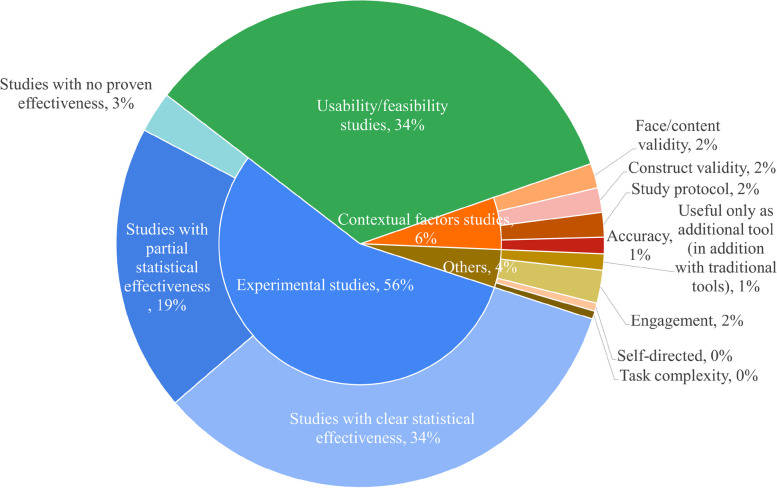
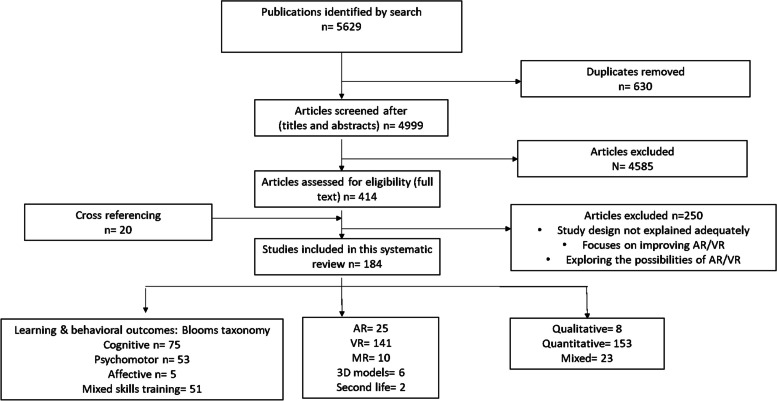
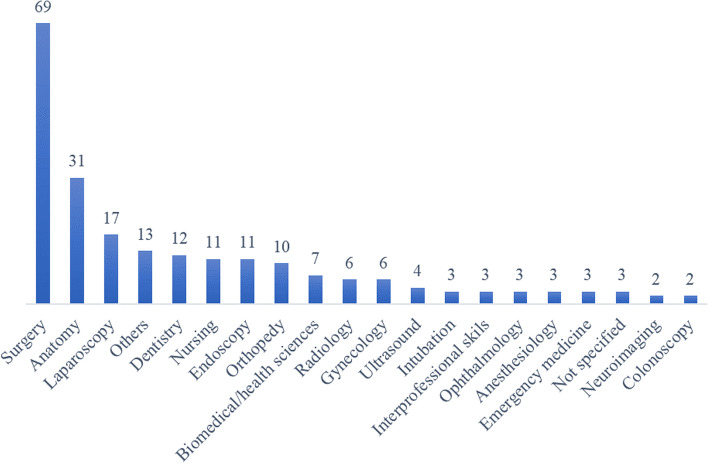
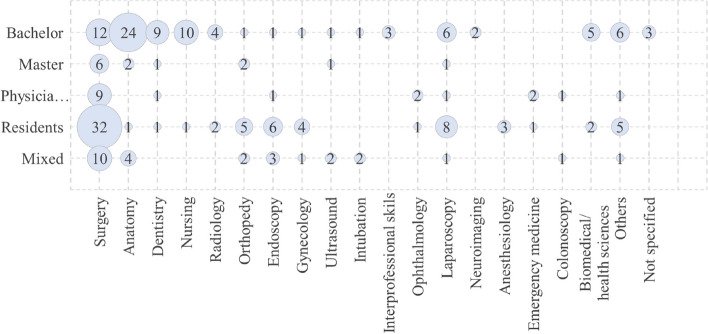
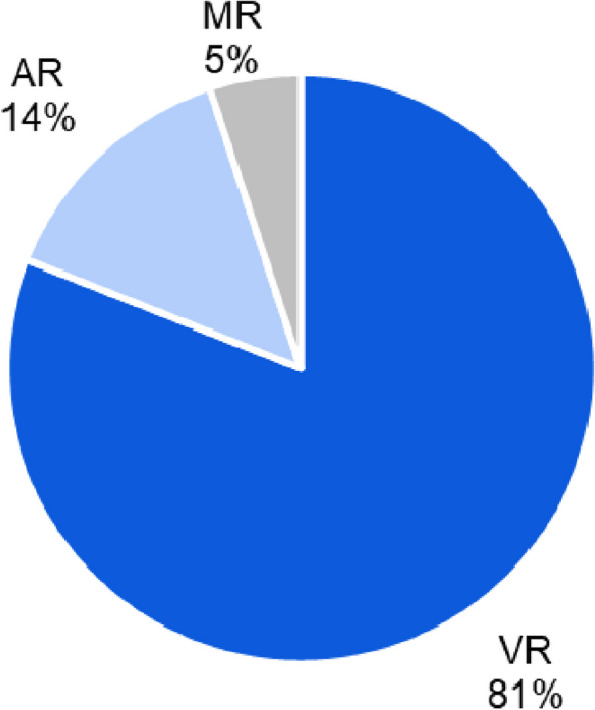
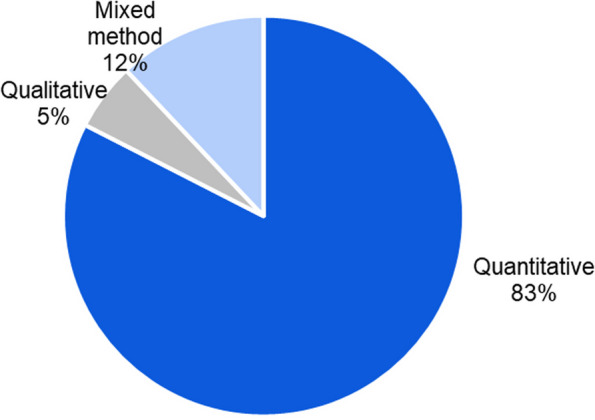
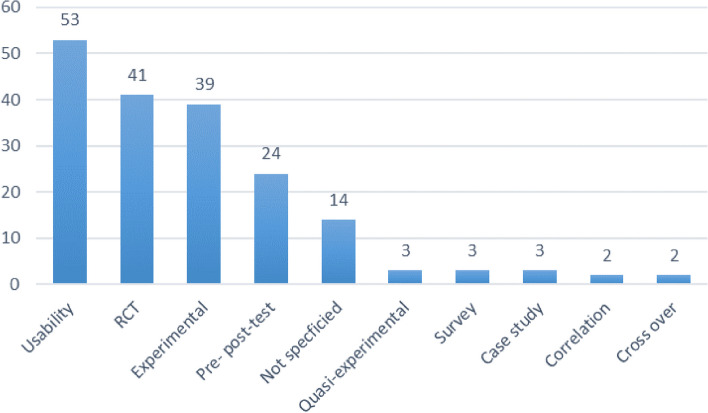
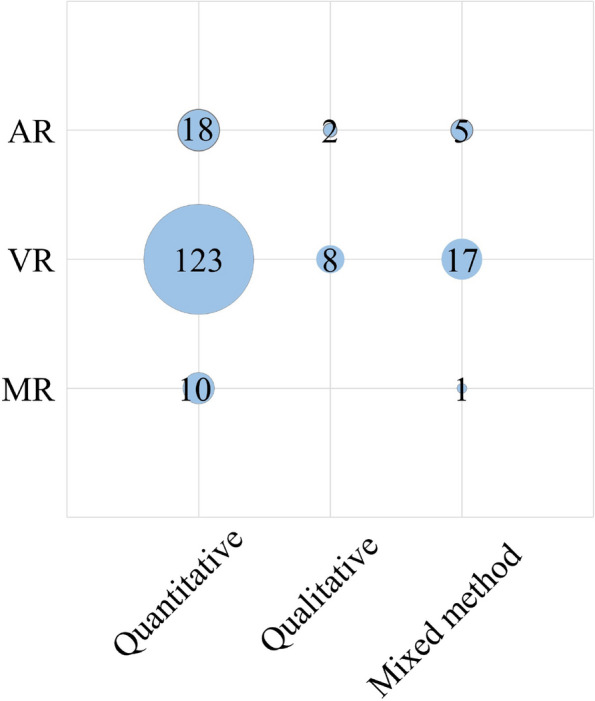
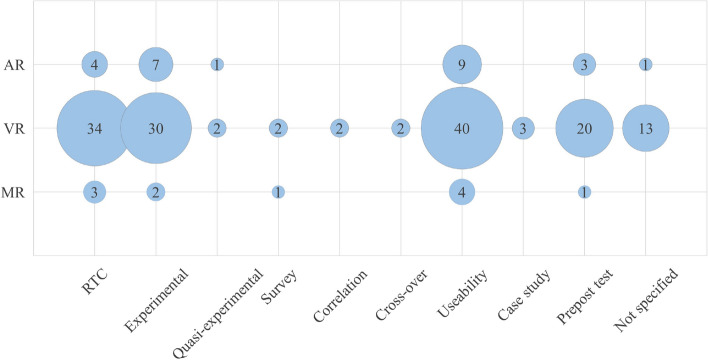
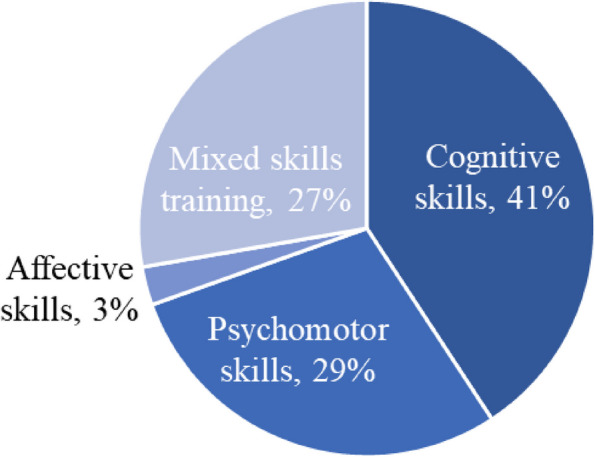
A total of 184 studies were included in the review. The majority of studies focused on the use of VR, followed by AR and MR. The predominant domains of healthcare using these technologies were surgery and anatomy, and the most common types of participants were medical and nursing students. The most frequent types of study design and methodologies were usability studies and randomized controlled trials. The most typical rationales behind the use of AR/VR/MR were to overcome limitations of traditional methods, to provide immersive and realistic training, and to improve students' motivations and engagements. The most standard types of learning and behavioral outcomes were cognitive and psychomotor skills. The majority of studies reported positive or partially positive effects of AR/VR/MR on learning outcomes. Only a few studies explicitly mentioned the use of instructional design models or theories to guide the design and implementation of AR/VR/MR interventions.
The review revealed that AR/VR/MR are promising tools for enhancing health professions education, especially for training surgical and anatomical skills. However, there is a need for more rigorous and theory-based research to investigate the optimal design and integration of these technologies in the curriculum, and to explore their impact on other domains of healthcare and other types of learning outcomes, such as affective and collaborative skills. The review also suggested that the (Morrison et al. John Wiley & Sons, 2010) model can be a useful framework to inform the instructional design of AR/VR/MR interventions, as it covers various elements and factors that need to be considered in the design process.
增强现实(AR)、虚拟现实(VR)和混合现实(MR)是新兴技术,可为卫生专业教育创造沉浸式学习环境。然而,关于这些技术如何被使用、它们带来哪些益处以及何种教学设计模型或理论指导其使用,缺乏系统性综述。
本范围综述旨在全面概述AR/VR/MR工具在医疗领域学生和专业人员教育与培训中的使用情况及潜在益处,并调查在使用这些工具时是否应用了任何教学设计模型或理论。
在多个电子数据库中进行系统检索,以识别2015年至2020年期间发表的、报告了AR/VR/MR在卫生专业教育中使用情况的同行评审研究。根据各种标准对所选研究进行编码和分析,如医疗领域、参与者类型、研究设计和方法类型、使用AR/VR/MR的理由、学习和行为结果类型以及研究结果。以(莫里森等人,约翰威立国际出版公司,2010年)模型为参考,绘制研究的教学设计方面。
本综述共纳入184项研究。大多数研究聚焦于VR的使用,其次是AR和MR。使用这些技术的主要医疗领域是外科手术和解剖学,最常见的参与者类型是医学和护理专业学生。最常见的研究设计和方法类型是可用性研究和随机对照试验。使用AR/VR/MR背后最典型的理由是克服传统方法的局限性、提供沉浸式和逼真的培训以及提高学生的动机和参与度。最常见的学习和行为结果类型是认知和心理运动技能。大多数研究报告了AR/VR/MR对学习结果有积极或部分积极影响。只有少数研究明确提到使用教学设计模型或理论来指导AR/VR/MR干预的设计和实施。
该综述表明,AR/VR/MR是增强卫生专业教育的有前景的工具,尤其是在培训外科手术和解剖学技能方面。然而,需要进行更严格且基于理论的研究,以调查这些技术在课程中的最佳设计和整合,并探索它们对医疗保健其他领域以及其他类型学习结果(如情感和协作技能)的影响。该综述还表明,(莫里森等人,约翰威立国际出版公司,2010年)模型可作为一个有用的框架,为AR/VR/MR干预的教学设计提供参考,因为它涵盖了设计过程中需要考虑的各种要素和因素。