Pooshidani Yasaman, Zoghi Nastaran, Rajabi Mina, Haghbin Nazarpak Masoumeh, Hassannejad Zahra
Departmant of Biomedical Engineering, Amirkabir University of Technology (Tehran Polytechnic), Tehran, Iran.
Department of Biochemistry, Faculty of Biological Sciences, Tarbiat Modares University, Tehran, Iran.
J Mater Sci Mater Med. 2021 Apr 13;32(4):46. doi: 10.1007/s10856-021-06519-5.
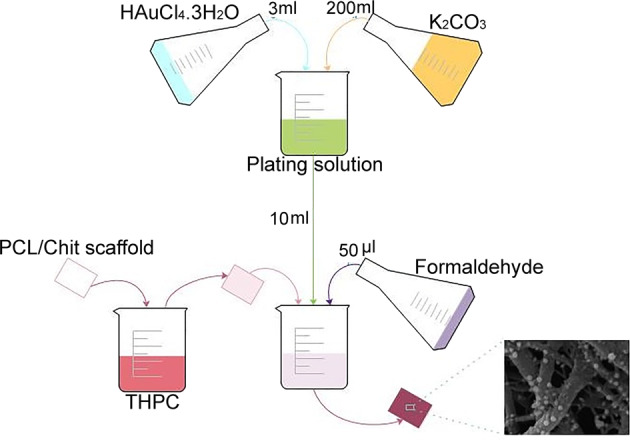
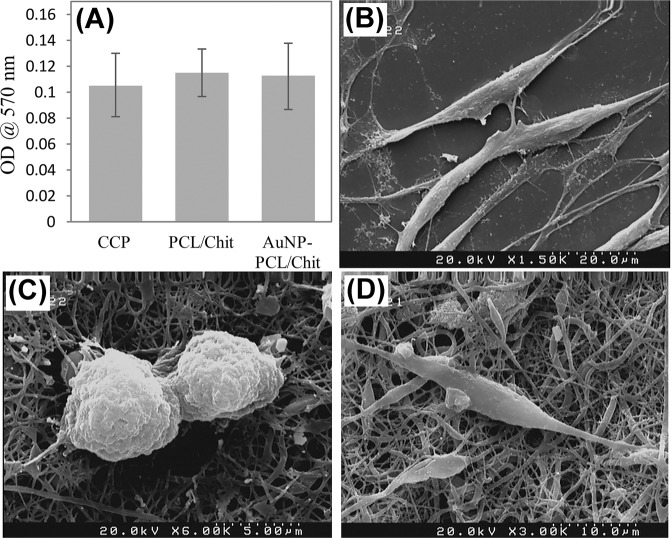
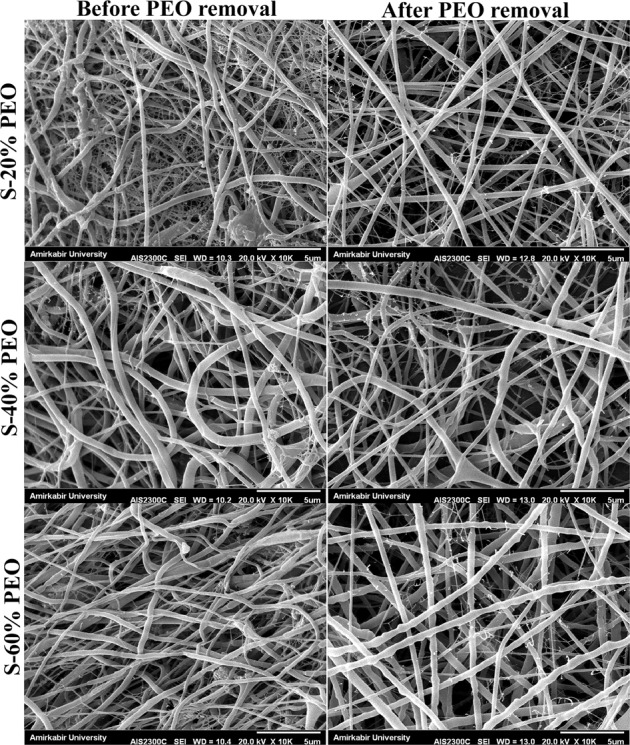
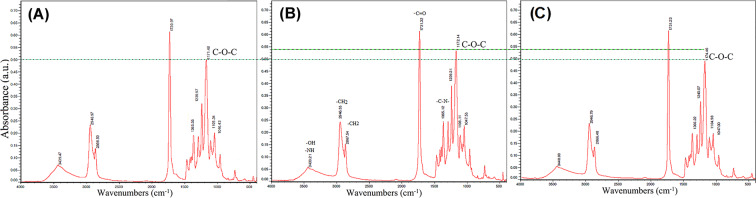
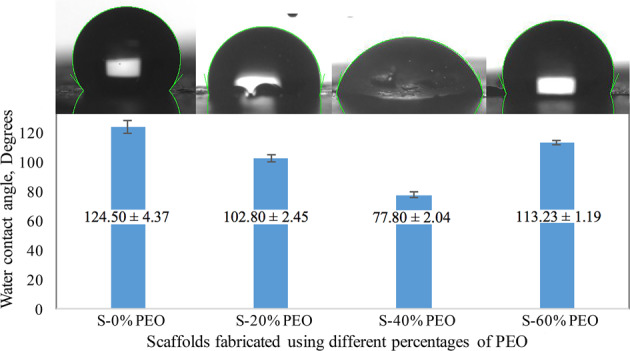
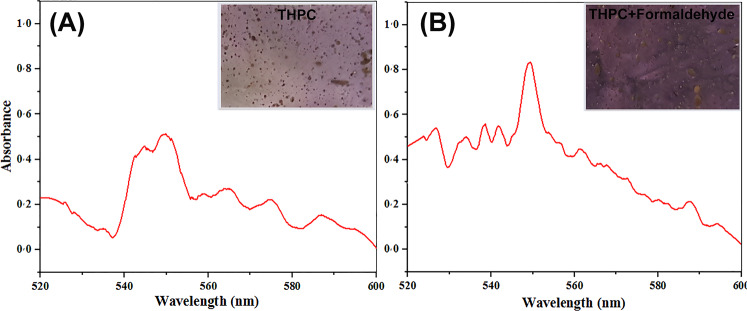
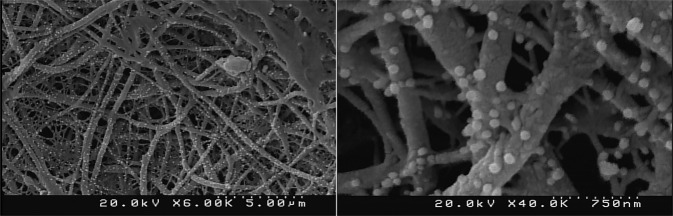
Peripheral nerve repair is still one of the major clinical challenges which has received a great deal of attention. Nerve tissue engineering is a novel treatment approach that provides a permissive environment for neural cells to overcome the constraints of repair. Conductivity and interconnected porosity are two required characteristics for a scaffold to be effective in nerve regeneration. In this study, we aimed to fabricate a conductive scaffold with controlled porosity using polycaprolactone (PCL) and chitosan (Chit), FDA approved materials for the use in implantable medical devices. A novel method of using tetrakis (hydroxymethyl) phosphonium chloride (THPC) and formaldehyde was applied for in situ synthesis of gold nanoparticles (AuNPs) on the scaffolds. In order to achieve desirable porosity, different percentage of polyethylene oxide (PEO) was used as sacrificial fiber. Fourier transform infrared spectroscopy (FTIR) and field emission scanning electron microscopy (FE-SEM) results demonstrated the complete removing of PEO from the scaffolds after washing and construction of interconnected porosities, respectively. Elemental and electrical analysis revealed the successful synthesis of AuNPs with uniform distribution and small average diameter on the PCL/Chit scaffold. Contact angle measurements showed the effect of porosity on hydrophilic properties of the scaffolds, where the porosity of 75-80% remarkably improved surface hydrophilicity. Finally, the effect of conductive nanofibrous scaffold on Schwann cells morphology and vaibility was investigated using FE-SEM and MTT assay, respectively. The results showed that these conductive scaffolds had no cytotoxic effect and support the spindle-shaped morphology of cells with elongated process which are typical of Schwann cell cultures.
周围神经修复仍然是备受关注的主要临床挑战之一。神经组织工程是一种新型治疗方法,可为神经细胞提供宽松环境以克服修复的限制。导电性和相互连通的孔隙率是支架在神经再生中发挥有效作用所需的两个特性。在本研究中,我们旨在使用聚己内酯(PCL)和壳聚糖(Chit)(美国食品药品监督管理局批准用于植入式医疗设备的材料)制造具有可控孔隙率的导电支架。一种使用四(羟甲基)氯化鏻(THPC)和甲醛的新方法被应用于在支架上原位合成金纳米颗粒(AuNPs)。为了实现理想的孔隙率,使用不同百分比的聚环氧乙烷(PEO)作为牺牲纤维。傅里叶变换红外光谱(FTIR)和场发射扫描电子显微镜(FE-SEM)结果分别表明,洗涤后PEO从支架上完全去除,并且构建了相互连通的孔隙。元素分析和电分析表明,在PCL/Chit支架上成功合成了分布均匀且平均直径较小的AuNPs。接触角测量显示了孔隙率对支架亲水性的影响,其中75-80%的孔隙率显著提高了表面亲水性。最后,分别使用FE-SEM和MTT法研究了导电纳米纤维支架对雪旺细胞形态和活力的影响。结果表明,这些导电支架没有细胞毒性作用,并支持具有典型雪旺细胞培养特征的细长突起的纺锤形细胞形态。