Department of Food Technology, University of Tetova, 1200, Tetovo, North Macedonia.
Department of Food Technology, University of Tetova, 1200, Tetovo, North Macedonia; Food and Veterinary Agency, Kosovo.
Appetite. 2021 Sep 1;164:105244. doi: 10.1016/j.appet.2021.105244. Epub 2021 Apr 10.
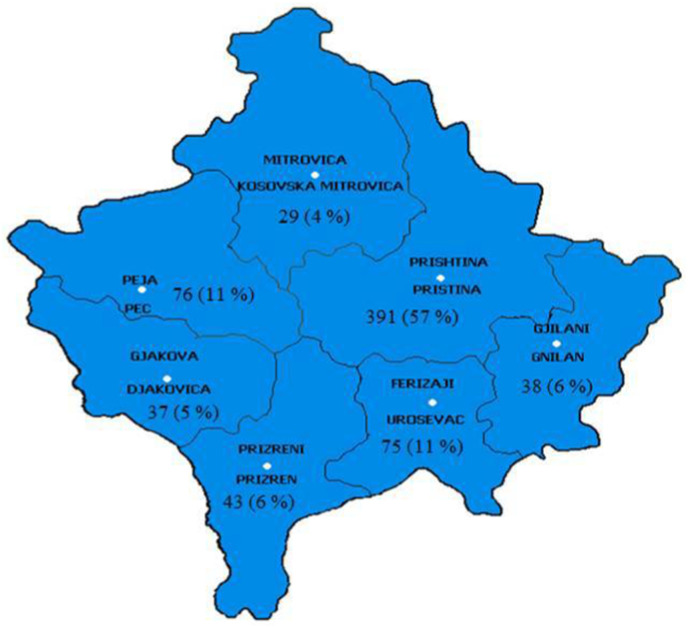
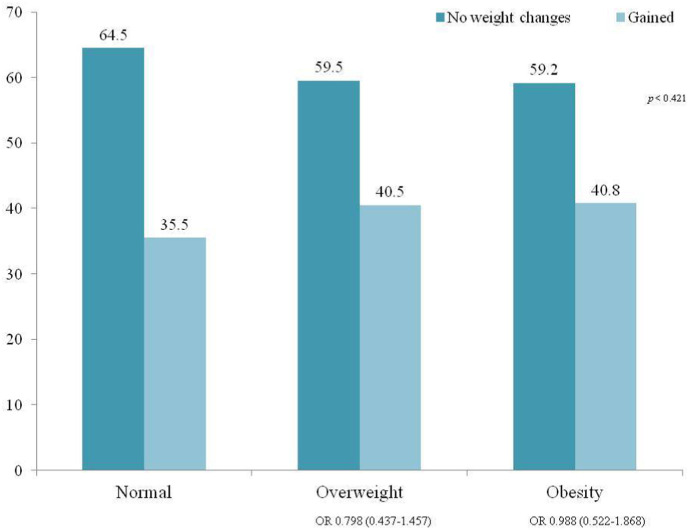
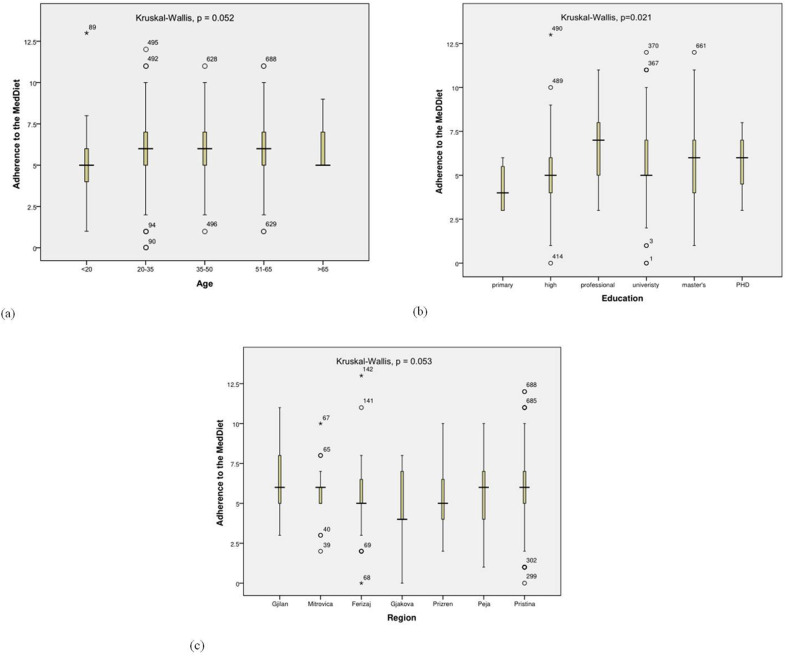
Changes in dietary habits and association with lifestyle during the coronavirus disease 2019 (COVID-19) lockdown in the Kosovo population have not been studied yet. Therefore, the intent of the present study was to determine whether if COVID-19 lockdown had any impact in lifestyle, including dietary habits and physical activity (PA) patterns of people from different areas of Kosovo. Dietary habits, PA, body weight and sociodemographic variables were measured through validated online survey started one week after lockdown decision and lasted for next two month (May and June 2020). Six hundred eighty-nine participants (women 79% and men 21%) aged between 20 and 65 years from the Kosovo territory participated in the research. Multivariate models showed that participants in family home residence, participants from Gjilan, participants female and participants with professional educations reported a higher likelihood of turning into a higher adherence to the Mediterranean diet (MedDiet) (OR: 6.09, 5.25, 5.17, 4.19, respectively). The weight gained during the lockdown was positively associated with a higher cooking frequency (OR; 2.90, p < 0.01), lower meat and fish consumption (OR; 1.15, p = 0.02; OR; 1.04, p = 0.04, respectively), higher fast-food consumption (OR; 0.49, p = 0.02) and no physical activity performance (OR; 0.43, p = 0.02) during the COVID-19 lockdown. The dietary habits during COVID-19 lockdown could be related to the improvements in adherence to the MedDiet and physical activities that may minimize related health complications.
在科索沃人口中,COVID-19 封锁期间饮食习惯的变化及其与生活方式的关联尚未得到研究。因此,本研究旨在确定 COVID-19 封锁是否对不同地区科索沃人的生活方式,包括饮食习惯和体力活动(PA)模式产生任何影响。通过在封锁决定后一周开始并持续两个月(2020 年 5 月和 6 月)的在线调查,测量了饮食习惯、PA、体重和社会人口统计学变量。来自科索沃领土的 689 名参与者(女性占 79%,男性占 21%),年龄在 20 至 65 岁之间,参加了这项研究。多变量模型显示,居住在家庭住宅中的参与者、来自格里拉的参与者、女性参与者和具有专业教育背景的参与者更有可能转变为更高程度的地中海饮食(MedDiet)依从性(OR:6.09、5.25、5.17、4.19)。封锁期间体重增加与更高的烹饪频率(OR;2.90,p < 0.01)、更低的肉类和鱼类消费(OR;1.15,p = 0.02;OR;1.04,p = 0.04,分别)、更高的快餐消费(OR;0.49,p = 0.02)和无体力活动表现(OR;0.43,p = 0.02)相关。COVID-19 封锁期间的饮食习惯可能与对 MedDiet 的依从性提高和体力活动的增加有关,这些活动可能会最大程度地减少相关健康并发症。