Department of Cell Biology, Emory University School of Medicine, Atlanta, GA 30322, USA; Laboratory for Translational Cell Biology, Department of Cell Biology, Emory University School of Medicine, Atlanta, GA 30322, USA.
Department of Cell Biology, Emory University School of Medicine, Atlanta, GA 30322, USA; Laboratory for Translational Cell Biology, Department of Cell Biology, Emory University School of Medicine, Atlanta, GA 30322, USA.
Cell Rep. 2021 Apr 13;35(2):108991. doi: 10.1016/j.celrep.2021.108991.
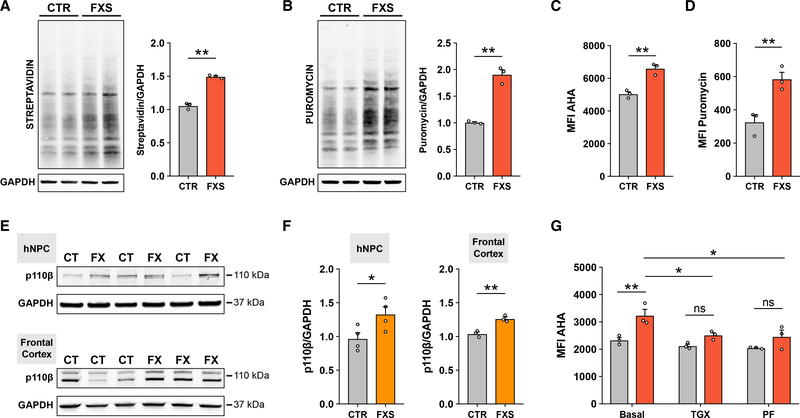
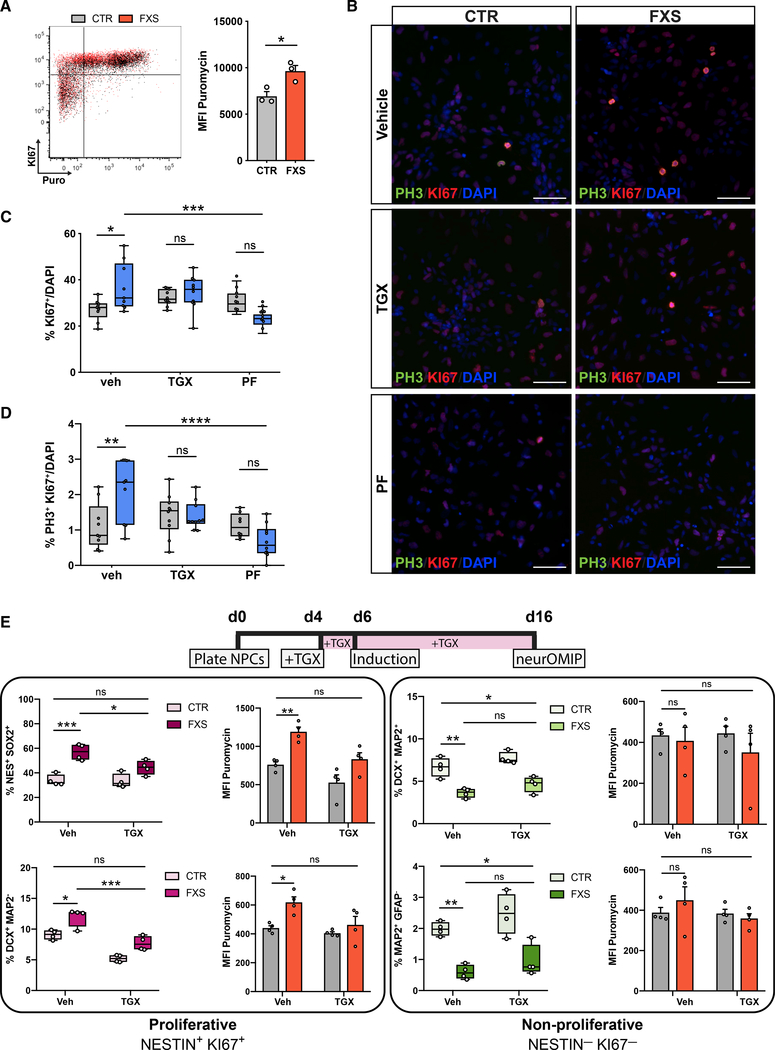
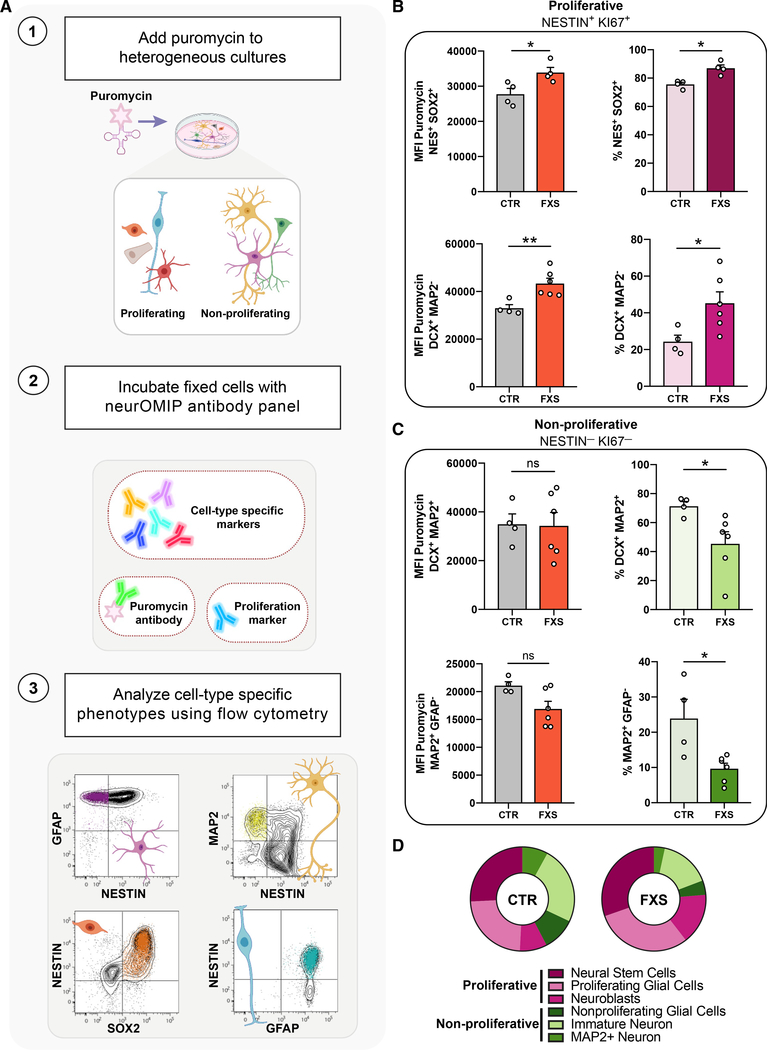
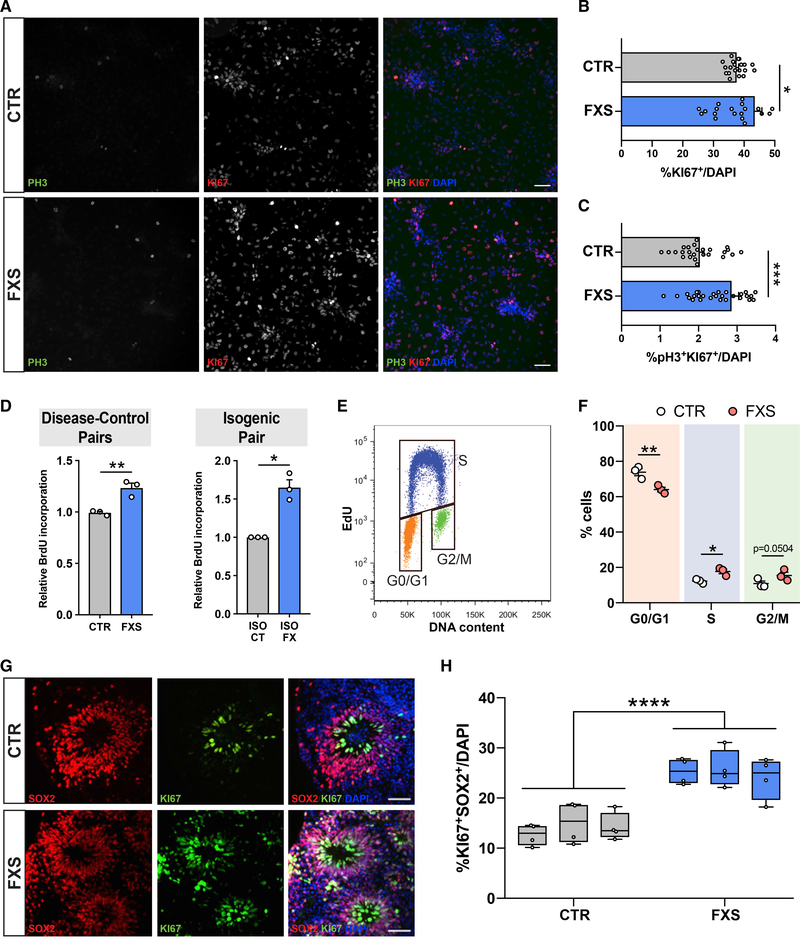
Transcriptional silencing of the FMR1 gene in fragile X syndrome (FXS) leads to the loss of the RNA-binding protein FMRP. In addition to regulating mRNA translation and protein synthesis, emerging evidence suggests that FMRP acts to coordinate proliferation and differentiation during early neural development. However, whether loss of FMRP-mediated translational control is related to impaired cell fate specification in the developing human brain remains unknown. Here, we use human patient induced pluripotent stem cell (iPSC)-derived neural progenitor cells and organoids to model neurogenesis in FXS. We developed a high-throughput, in vitro assay that allows for the simultaneous quantification of protein synthesis and proliferation within defined neural subpopulations. We demonstrate that abnormal protein synthesis in FXS is coupled to altered cellular decisions to favor proliferative over neurogenic cell fates during early development. Furthermore, pharmacologic inhibition of elevated phosphoinositide 3-kinase (PI3K) signaling corrects both excess protein synthesis and cell proliferation in a subset of patient neural cells.
脆性 X 综合征(FXS)中 FMR1 基因的转录沉默导致 RNA 结合蛋白 FMRP 的丢失。除了调节 mRNA 翻译和蛋白质合成外,新出现的证据表明 FMRP 作用于协调早期神经发育过程中的增殖和分化。然而,FMRP 介导的翻译控制的丧失是否与发育中人类大脑中的细胞命运特化受损有关仍不清楚。在这里,我们使用人类患者诱导多能干细胞(iPSC)衍生的神经祖细胞和类器官来模拟 FXS 中的神经发生。我们开发了一种高通量的体外测定法,可同时定量特定神经亚群中的蛋白质合成和增殖。我们证明,FXS 中的异常蛋白质合成与改变的细胞决策有关,即在早期发育过程中,有利于增殖而不是神经发生的细胞命运。此外,升高的磷酸肌醇 3-激酶(PI3K)信号的药理学抑制可纠正一部分患者神经细胞中的过度蛋白质合成和细胞增殖。