Augustine Robin, Aqel Ahmad H, Kalva Sumama Nuthana, Joshy K S, Nayeem Ajisha, Hasan Anwarul
Department of Mechanical and Industrial Engineering, College of Engineering, Qatar University, 2713 Doha, Qatar; Biomedical Research Center (BRC), Qatar University, PO Box 2713 Doha, Qatar.
Department of Mechanical and Industrial Engineering, College of Engineering, Qatar University, 2713 Doha, Qatar; Biomedical Research Center (BRC), Qatar University, PO Box 2713 Doha, Qatar.
Transl Oncol. 2021 Jul;14(7):101087. doi: 10.1016/j.tranon.2021.101087. Epub 2021 Apr 14.
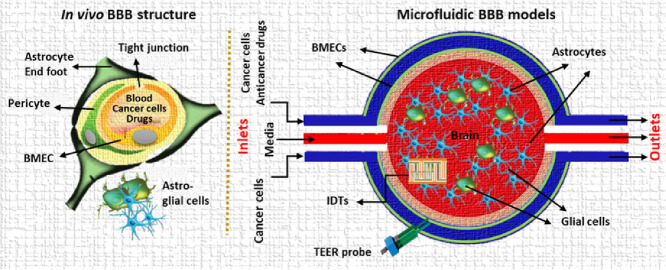
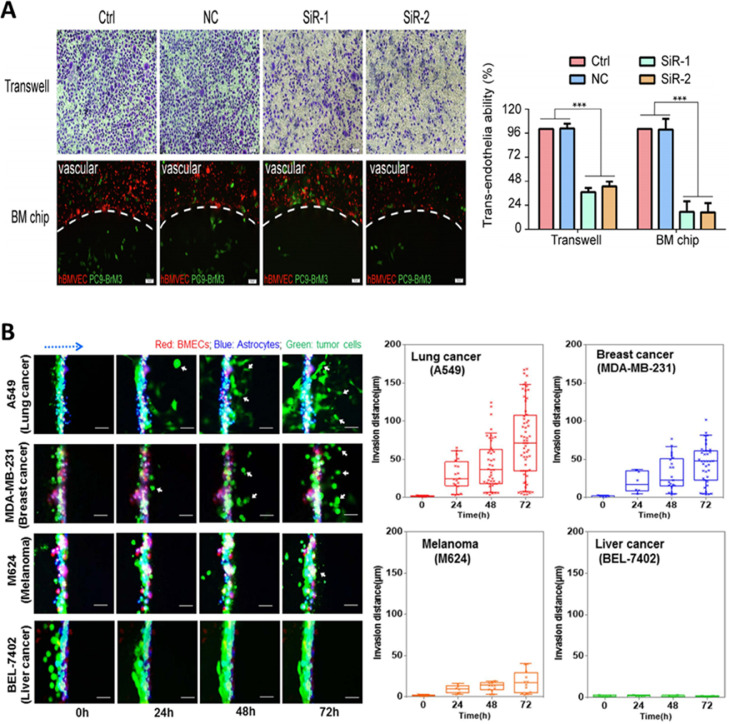
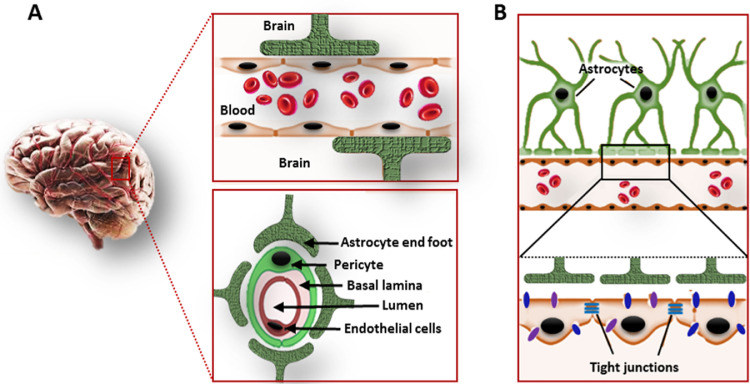
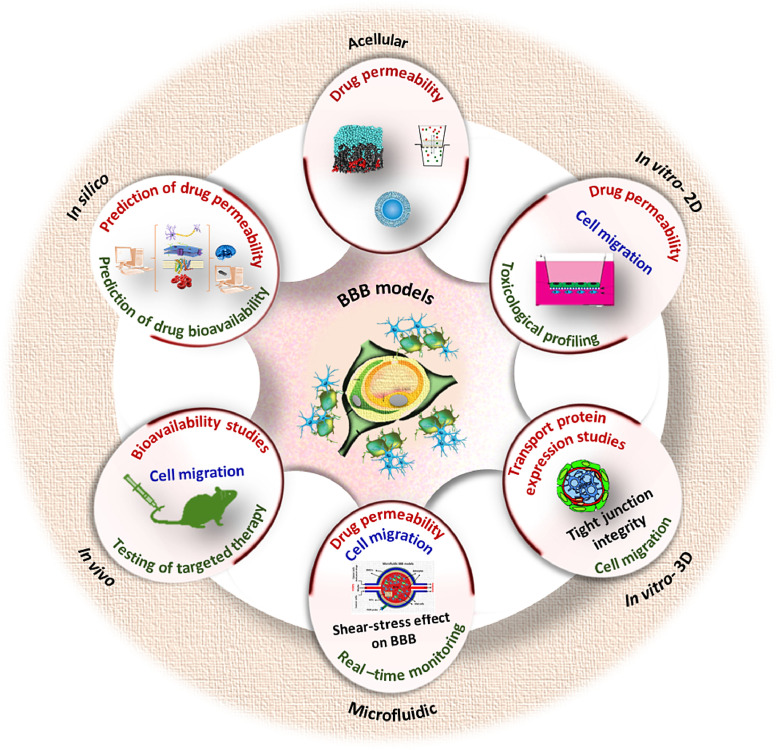
Metastasis is the major reason for most brain tumors with up to a 50% chance of occurrence in patients with other types of malignancies. Brain metastasis occurs if cancer cells succeed to cross the 'blood-brain barrier' (BBB). Moreover, changes in the structure and function of BBB can lead to the onset and progression of diseases including neurological disorders and brain-metastases. Generating BBB models with structural and functional features of intact BBB is highly important to better understand the molecular mechanism of such ailments and finding novel therapeutic agents targeting them. Hence, researchers are developing novel in vitro BBB platforms that can recapitulate the structural and functional characteristics of BBB. Brain endothelial cells-based in vitro BBB models have thus been developed to investigate the mechanism of brain metastasis through BBB and facilitate the testing of brain targeted anticancer drugs. Bioengineered constructs integrated with microfluidic platforms are vital tools for recapitulating the features of BBB in vitro closely as possible. In this review, we outline the fundamentals of BBB biology, recent developments in the microfluidic BBB platforms, and provide a concise discussion of diverse types of bioengineered BBB models with an emphasis on the application of them in brain metastasis and cancer research in general. We also provide insights into the challenges and prospects of the current bioengineered microfluidic platforms in cancer research.
转移是大多数脑肿瘤的主要原因,在患有其他类型恶性肿瘤的患者中,发生转移的几率高达50%。如果癌细胞成功穿过“血脑屏障”(BBB),就会发生脑转移。此外,血脑屏障结构和功能的改变会导致包括神经疾病和脑转移在内的疾病的发生和进展。构建具有完整血脑屏障结构和功能特征的血脑屏障模型,对于更好地理解此类疾病的分子机制以及寻找针对它们的新型治疗药物至关重要。因此,研究人员正在开发能够重现血脑屏障结构和功能特征的新型体外血脑屏障平台。基于脑内皮细胞的体外血脑屏障模型因此得以开发,以研究通过血脑屏障的脑转移机制,并促进脑靶向抗癌药物的测试。与微流控平台集成的生物工程构建体是尽可能在体外重现血脑屏障特征的重要工具。在这篇综述中,我们概述了血脑屏障生物学的基本原理、微流控血脑屏障平台的最新进展,并简要讨论了不同类型的生物工程血脑屏障模型,重点是它们在脑转移和一般癌症研究中的应用。我们还深入探讨了当前生物工程微流控平台在癌症研究中的挑战和前景。