Wang Zhenghao, Zhang Yu, Wei Wuran
Department of Urology, Institute of Urology, West China Hospital, Sichuan University, Chengdu, China.
PLoS One. 2021 Apr 19;16(4):e0250257. doi: 10.1371/journal.pone.0250257. eCollection 2021.
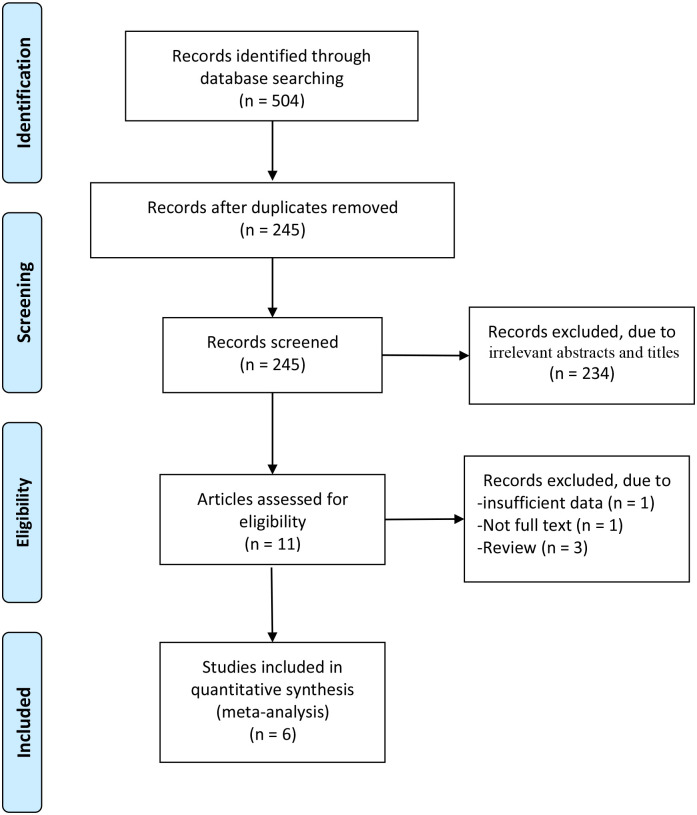
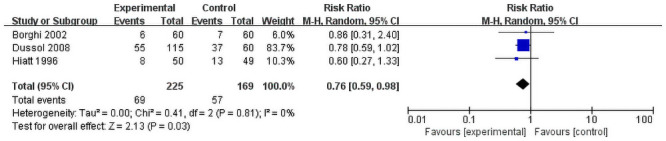
To perform a systematic review and meta-analysis of randomized controlled trials (RCTs) for investigating the effect of dietary treatment and fluid intake on the prevention of recurrent calcium stones and changes in urine composition. PubMed, Web of Science, Embase, EBSCO, and Cochrane Library databases (updated November 2020) were searched for studies with the following keywords: diet, fluid, recurrent, prevention, randomized controlled trials, and nephrolithiasis. The search strategy and study selection process was conducted by following the PRISMA statement. Six RCTs were identified for satisfying the inclusion criteria and enrolled in this meta-analysis. Our result showed that low protein with or without high fiber diet intervention does not decrease the recurrence of stone upon comparing with control groups (RR = 2.32, 95% CI = 0.42-12.85; P = 0.34) with significant heterogeneity among the studies (I2 = 81%, P = 0.02). But normal-calcium, low protein, low-salt diet had recurrences did reduced the recurrence compared to normal-calcium diet. And the fluid intake has a positive effect on prevention of recurrent stone formation (RR = 0.39, 95% CI = 0.19-0.80; P = 0.01) with insignificant heterogeneity among the studies (I2 = 9%, P = 0.30). The different components of urine at baseline were reported in four studies. Upon reviewing the low protein with or without high fiber dietary therapy groups, it was found that there were no obvious changes in the 24-hour urine sodium, calcium, citrate, urea, and sulfate. In conclusion, our study shows that the only low protein with or without fiber does not affect recurrence, but low Na, normal Ca diet has a marked effect on reducing recurrence of calcium stone. And fluid intake shows a significant reduction in the recurrence of calcium stone.
为了对随机对照试验(RCT)进行系统评价和荟萃分析,以研究饮食治疗和液体摄入量对预防复发性钙结石及尿液成分变化的影响。在PubMed、科学网、Embase、EBSCO和Cochrane图书馆数据库(2020年11月更新)中检索了以下关键词的研究:饮食、液体、复发、预防、随机对照试验和肾结石。检索策略和研究选择过程遵循PRISMA声明进行。确定了6项符合纳入标准的RCT并纳入本荟萃分析。我们的结果显示,与对照组相比,低蛋白饮食(无论是否有高纤维饮食干预)均未降低结石复发率(RR = 2.32,95%CI = 0.42 - 12.85;P = 0.34),研究间存在显著异质性(I2 = 81%,P = 0.02)。但与正常钙饮食相比,正常钙、低蛋白、低盐饮食确实降低了复发率。并且液体摄入对预防复发性结石形成有积极作用(RR = 0.39,95%CI = 0.19 - 0.80;P = 0.01),研究间异质性不显著(I2 = 9%,P = 0.30)。四项研究报告了基线时尿液的不同成分。在回顾低蛋白饮食(无论是否有高纤维饮食治疗)组时,发现24小时尿钠、钙、柠檬酸盐、尿素和硫酸盐没有明显变化。总之,我们的研究表明,仅低蛋白饮食(无论是否有纤维)不影响复发,但低钠、正常钙饮食对降低钙结石复发有显著作用。并且液体摄入显著降低了钙结石的复发率。