Garain Avishek, Basu Arpan, Giampaolo Fabio, Velasquez Juan D, Sarkar Ram
Department of Computer Science and Engineering, Jadavpur University, Kolkata, 700032 India.
Department of Mathematics and Applications "R. Caccioppoli", University of Naples Federico II, Naples, NA Italy.
Neural Comput Appl. 2021;33(19):12591-12604. doi: 10.1007/s00521-021-05910-1. Epub 2021 Apr 16.
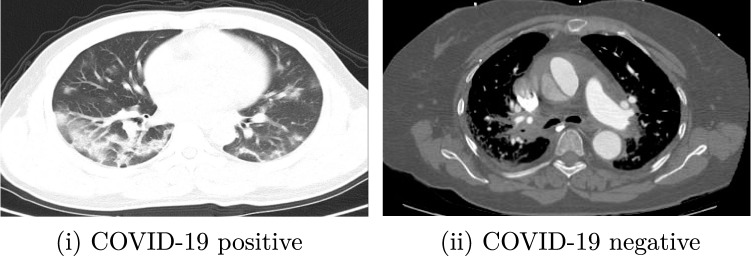
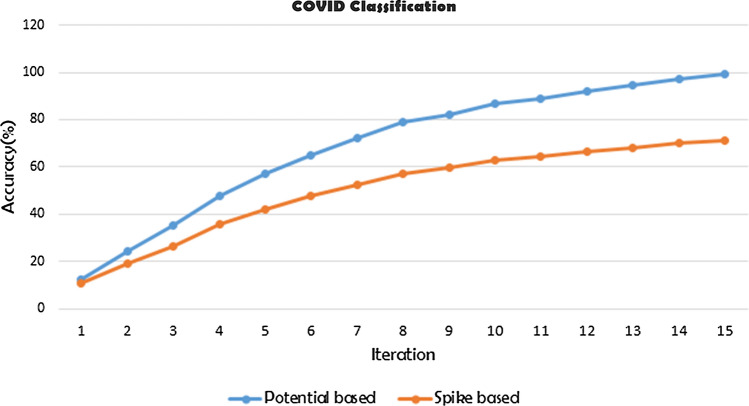
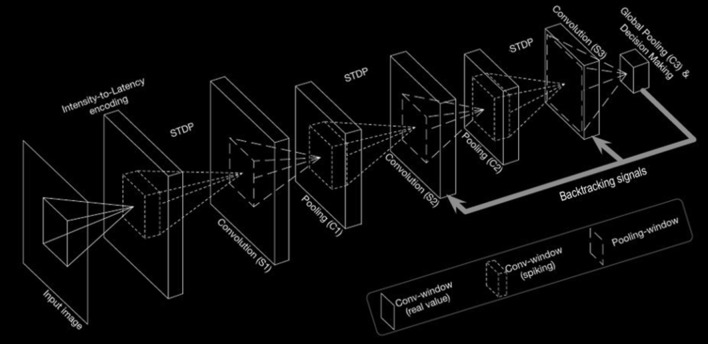
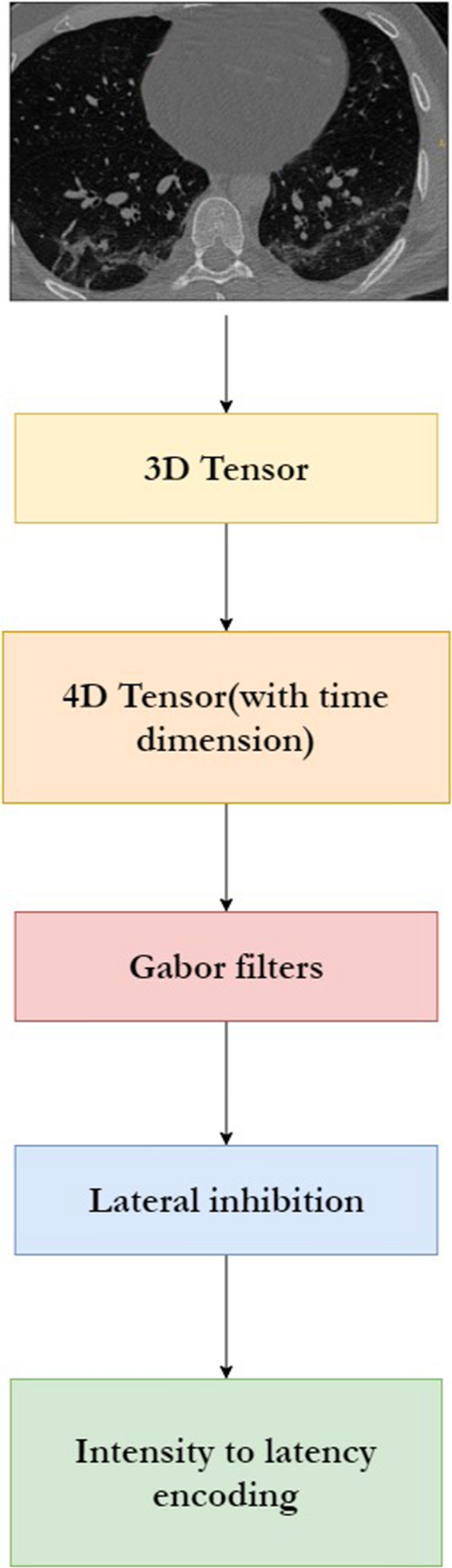
The outbreak of a global pandemic called coronavirus has created unprecedented circumstances resulting into a large number of deaths and risk of community spreading throughout the world. Desperate times have called for desperate measures to detect the disease at an early stage via various medically proven methods like chest computed tomography (CT) scan, chest X-Ray, etc., in order to prevent the virus from spreading across the community. Developing deep learning models for analysing these kinds of radiological images is a well-known methodology in the domain of computer based medical image analysis. However, doing the same by mimicking the biological models and leveraging the newly developed neuromorphic computing chips might be more economical. These chips have been shown to be more powerful and are more efficient than conventional central and graphics processing units. Additionally, these chips facilitate the implementation of spiking neural networks (SNNs) in real-world scenarios. To this end, in this work, we have tried to simulate the SNNs using various deep learning libraries. We have applied them for the classification of chest CT scan images into COVID and non-COVID classes. Our approach has achieved very high F1 score of 0.99 for the potential-based model and outperforms many state-of-the-art models. The working code associated with our present work can be found here.
一种名为冠状病毒的全球大流行疫情造成了前所未有的局面,导致大量死亡,并在全球范围内存在社区传播风险。在这个危急时刻,需要采取紧急措施,通过胸部计算机断层扫描(CT)、胸部X光等各种医学验证方法在早期阶段检测该疾病,以防止病毒在社区传播。在基于计算机的医学图像分析领域,开发深度学习模型来分析这类放射图像是一种广为人知的方法。然而,通过模仿生物模型并利用新开发的神经形态计算芯片来做同样的事情可能更经济。这些芯片已被证明比传统的中央处理器和图形处理器更强大、更高效。此外,这些芯片有助于在实际场景中实现脉冲神经网络(SNN)。为此,在这项工作中,我们尝试使用各种深度学习库来模拟SNN。我们将它们应用于将胸部CT扫描图像分类为新冠和非新冠类别。我们的方法在基于电位的模型上取得了非常高的F1分数,达到0.99,并且优于许多先进模型。与我们当前工作相关的工作代码可在此处找到。