Posgrado en Ciencias Biológicas, Universidad Nacional Autónoma de México, Apartado Postal 70-153, C.P. 04510, CDMX, México.
Instituto de Biología, Universidad Nacional Autónoma de México, Apartado Postal 70-153, C.P. 04510, CDMX, México.
J Ethnobiol Ethnomed. 2021 Apr 21;17(1):28. doi: 10.1186/s13002-021-00450-3.
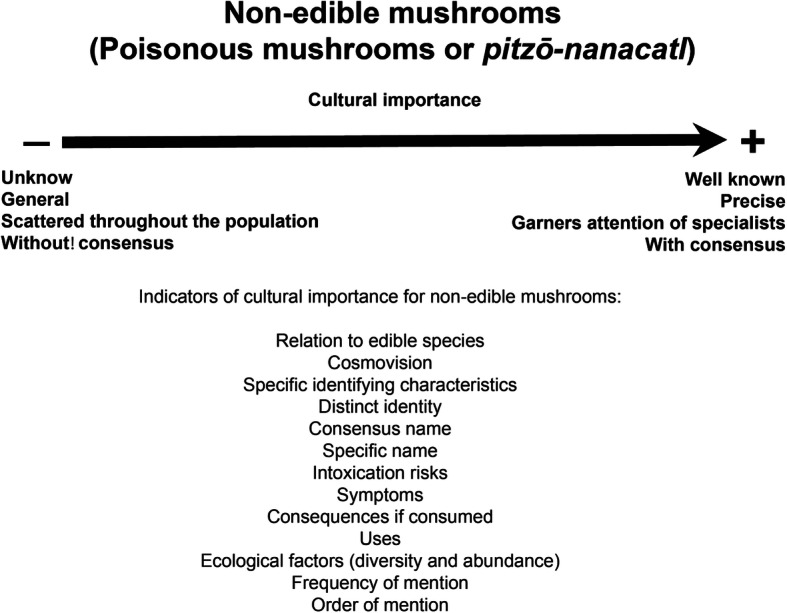
One of the main goals of ethnomycological studies has been understanding the role of wild edible mushrooms (WEM) in diverse cultures. To accomplish such a purpose, the local knowledge of WEM and their cultural importance have been evaluated and compared using qualitative and quantitative methods. However, few studies have documented these aspects in non-edible mushrooms, because they are considered to be in a category of residual cultural importance. To make up for this lack of investigation, this paper analyzes the traditional knowledge of non-edible mushrooms to understand their cultural role and break it down to its components. The analysis of this topic shows how this knowledge represents a good strategy to prevent mushroom intoxications in humans.
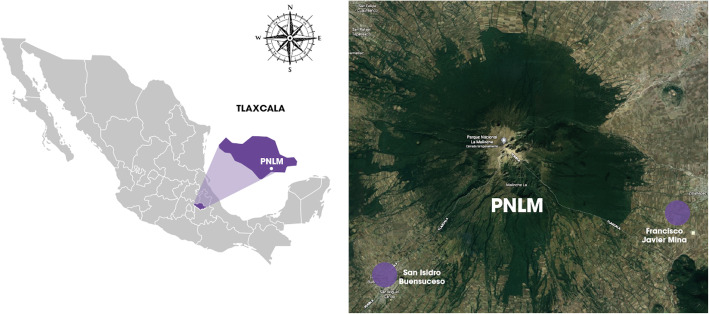
This study was carried out in two communities residing in La Malintzi National Park, Tlaxcala, Mexico. Mushroom species indicated as non-edible were collected during 13 ethnomycological expeditions and seven requests. To get an insight into the local knowledge about these mushrooms, we used ethnographic techniques, 91 free listings and 81 semi-structured interviews.
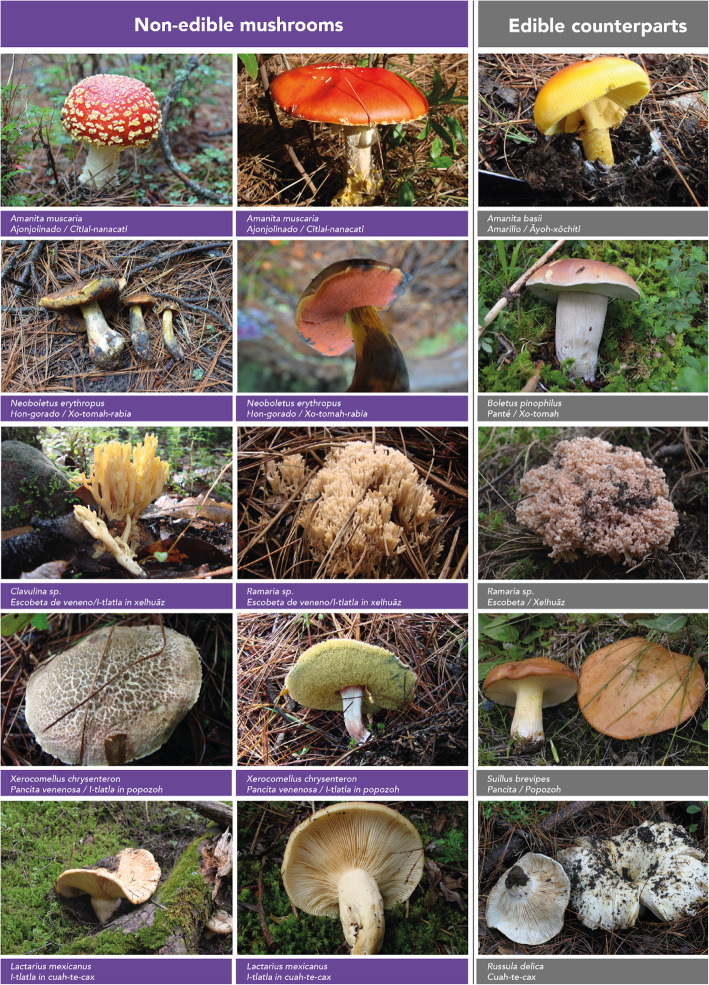
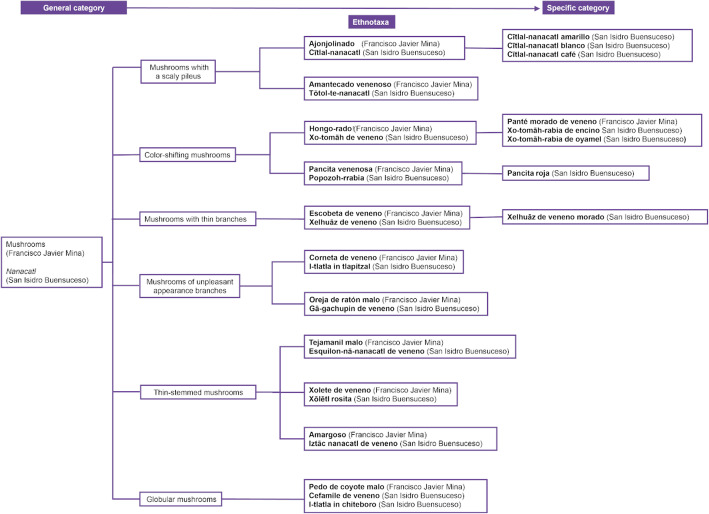
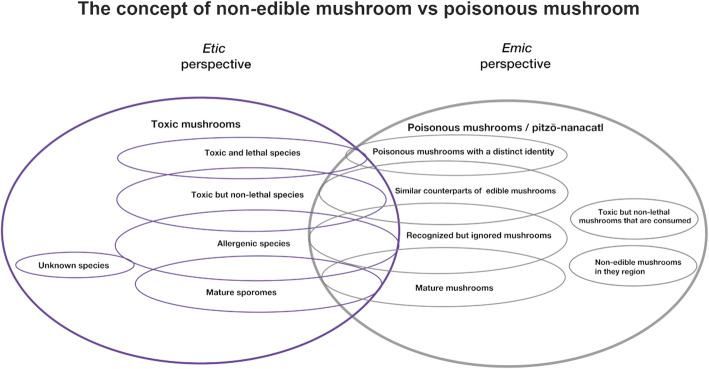
In total, we collected 178 specimens of wild mushrooms recognized as non-edible by locals, which corresponded to 103 species belonging to 45 genera. People who participated in the study had a vast and deep understanding of non-edible mushrooms. For them, the most important species were Amanita muscaria, Neoboletus aff. erythropus, Xerocomellus chrysenteron, and Suillus tomentosus. Two uses were the most mentioned by respondents: as an insecticide and for medicinal purposes. Of note, however, is that A. muscaria was reported as edible years ago. To avoid possible intoxication, all non-edible mushrooms were included in the general category of "poisonous mushrooms." Non-edible species are seen as a cosmogonic counterpart ("twins") of the edible species that they resemble. We obtained 101 specific recognition criteria, useful only when comparing paired species: edible vs non-edible. The most culturally important non-edible groups were differentiated by clear and precise characteristics, which were reflected in the nomenclature and allowed their classification into specific ethnotaxa.
We found that non-used resources can be the object of a deep traditional knowledge and have a vast cultural importance. In the case of wild non-edible mushrooms in particular: the species are named; they are the subject of vast traditional knowledge which is based on their edible/non-edible duality; this knowledge is widespread but has limited consensus, there is little lexical retention; and this knowledge is vital to avoid fatal intoxications. In consequence, both deadly species and species that share similarities with the most important edible mushrooms have a high cultural importance.
民族真菌学研究的主要目标之一是了解野生食用蘑菇(WEM)在不同文化中的作用。为了实现这一目标,使用定性和定量方法评估和比较了 WEM 的本地知识及其文化重要性。然而,很少有研究记录非食用蘑菇的这些方面,因为它们被认为属于剩余文化重要性类别。为了弥补这一调查的不足,本文分析了非食用蘑菇的传统知识,以了解其文化作用,并将其分解为组成部分。对这一主题的分析表明,这种知识是防止人类蘑菇中毒的一个很好的策略。
本研究在墨西哥特拉斯卡拉州拉马林齐国家公园的两个社区进行。在 13 次民族真菌学考察和 7 次请求中收集了被标记为非食用的蘑菇物种。为了深入了解当地人对这些蘑菇的本地知识,我们使用了民族志技术、91 个自由列表和 81 个半结构化访谈。
总共收集了 178 种被当地人认为是不可食用的野生蘑菇标本,这些标本对应于 45 个属的 103 种。参与研究的人对不可食用的蘑菇有广泛而深刻的了解。对他们来说,最重要的物种是鹅膏菌、Neoboletus aff. erythropus、 Xerocomellus chrysenteron 和 Suillus tomentosus。受访者提到的两种用途最多:杀虫剂和药用。然而,值得注意的是,Amanita muscaria 多年前曾被报道为可食用。为了避免可能的中毒,所有不可食用的蘑菇都被归入“毒蘑菇”的一般类别。不可食用的物种被视为与它们相似的可食用物种的宇宙对应物(“双胞胎”)。我们获得了 101 种特定的识别标准,这些标准仅在比较配对物种时有用:可食用与不可食用。文化上最重要的不可食用群体通过清晰而精确的特征来区分,这些特征反映在命名法中,并允许对其进行分类为特定的民族分类群。
我们发现,未被使用的资源可以成为深厚传统知识的对象,并且具有广泛的文化重要性。特别是在野生非食用蘑菇的情况下:物种被命名;它们是基于可食用/不可食用二元性的广泛传统知识的主题;这种知识广泛存在,但共识有限,词汇保留很少;这种知识对于避免致命中毒至关重要。因此,具有致命性的物种和与最重要的食用蘑菇相似的物种具有很高的文化重要性。