Hernández Antonio F, Calina Daniela, Poulas Konstantinos, Docea Anca Oana, Tsatsakis Aristidis M
Department of Legal Medicine and Toxicology, University of Granada School of Medicine, Granada, Spain.
Instituto de Investigación Biosanitaria, Granada (ibs.GRANADA), Spain.
Toxicol Rep. 2021;8:871-879. doi: 10.1016/j.toxrep.2021.04.003. Epub 2021 Apr 20.
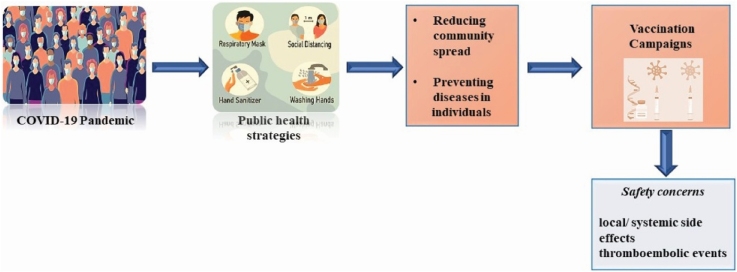
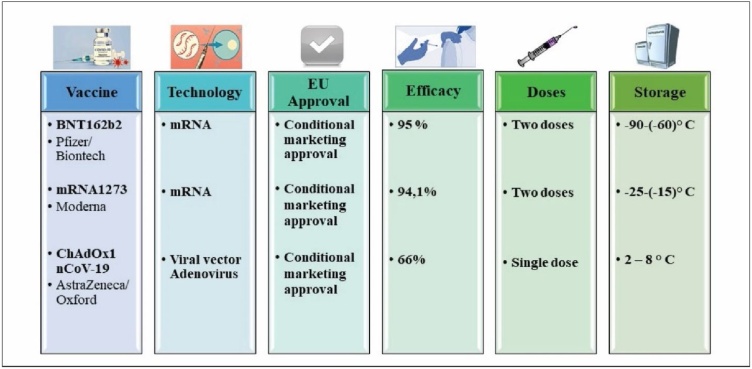
The COVID-19 pandemic has had an unprecedented and devastating impact on public health, society and economics around the world. As a result, the development of vaccines to protect individuals from symptomatic COVID-19 infections has represented the only feasible health tool to combat the spread of the disease. However, at the same time the development and regulatory assessment of different vaccines has challenged pharmaceutical industries and regulatory agencies as this process has occurred in the shorter time ever though. So far, two mRNA and two adenovirus-vectored vaccines have received a conditional marketing authorisation in the EU and other countries. This review summarized and discusses the assessment reports of the European Medicine Agency (EMA) concerning the safety of the 3 vaccines currently used in the EU (Pfizer, Moderna and Astra-Zeneca). A particular focus has been paid to safety information from pre-clinical (animal) and clinical (phase 3 trials) studies. Overall, the most frequent adverse effects reported after the administration of these vaccines consisted of local reactions at the injection site (sore arm and erythema) followed by non-specific systemic effects (myalgia, chills, fatigue, headache, and fever), which occurred soon after vaccination and resolved shortly. Rare cases of vaccine-induced immune thrombotic thrombocytopenia have been reported for Vaxzevria. Data on long-term studies, interaction with other vaccines, use in pregnancy/breast-feeding, use in immunocompromised subjects, and in subjects with comorbidities, autoimmune or inflammatory disorders are still missing for these vaccines. Therefore, careful follow-up and surveillance studies for continued vaccine safety monitoring will be needed to ascertain the potential risks of such adverse events or diseases. In conclusion, the benefits and risks of current COVID-19 vaccines must be weighed against the real possibility of contract the disease and develop complications and long-term sequels; all this on the basis of the available scientific evidence and in the absence of unmotivated biases.
新冠疫情对全球公共卫生、社会和经济产生了前所未有的毁灭性影响。因此,研发疫苗以保护个体免受有症状的新冠病毒感染,成为抗击该疾病传播的唯一可行的健康工具。然而,与此同时,不同疫苗的研发和监管评估给制药行业和监管机构带来了挑战,因为这一过程是在前所未有的短时间内完成的。到目前为止,两种信使核糖核酸(mRNA)疫苗和两种腺病毒载体疫苗已在欧盟及其他国家获得有条件上市许可。本综述总结并讨论了欧洲药品管理局(EMA)关于欧盟目前使用的三种疫苗(辉瑞、莫德纳和阿斯利康)安全性的评估报告。特别关注了临床前(动物)和临床(3期试验)研究中的安全信息。总体而言,接种这些疫苗后报告的最常见不良反应包括注射部位的局部反应(手臂酸痛和红斑),随后是非特异性全身反应(肌痛、寒战、疲劳、头痛和发热),这些反应在接种后不久出现并很快消退。已报告接种阿斯利康疫苗后出现罕见的疫苗诱导免疫性血栓性血小板减少症病例。关于这些疫苗的长期研究数据、与其他疫苗的相互作用、在妊娠/哺乳期的使用、在免疫功能低下受试者中的使用以及在患有合并症、自身免疫或炎症性疾病的受试者中的使用情况仍然缺失。因此,需要进行仔细的随访和监测研究,以持续监测疫苗安全性,确定此类不良事件或疾病的潜在风险。总之,必须根据现有科学证据,在没有无端偏见的情况下,权衡当前新冠疫苗的益处和风险与感染该疾病、出现并发症和长期后遗症的实际可能性。