Department of Biosystems Science and Engineering, Bioanalytics Group, ETH Zürich, Mattenstrasse 26, 4058 Basel, Switzerland.
Department of Biosystems Science and Engineering, Bioprocess Laboratory, ETH Zürich, Mattenstrasse 26, 4058 Basel, Switzerland.
ACS Sens. 2021 Jun 25;6(6):2202-2210. doi: 10.1021/acssensors.1c00020. Epub 2021 Apr 26.
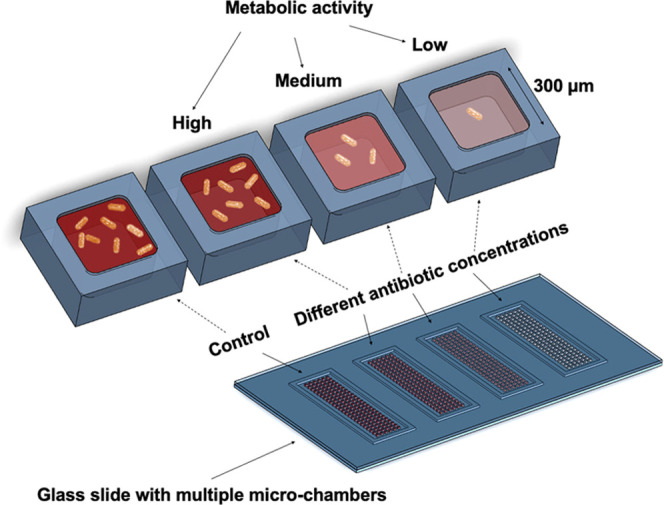
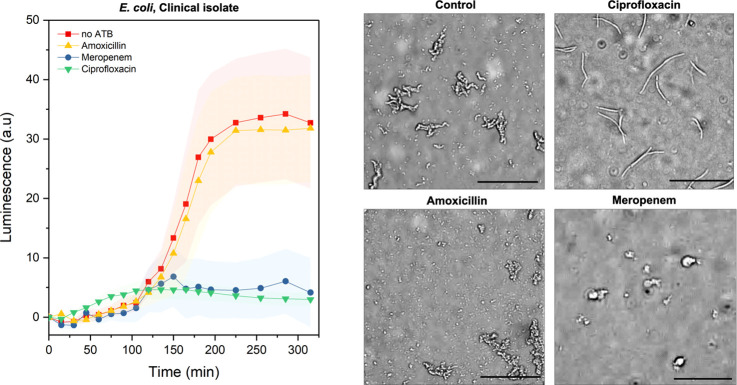
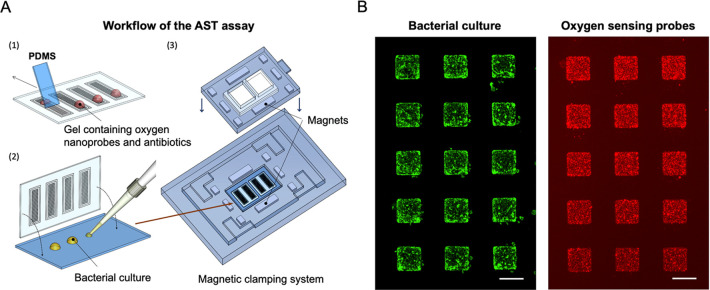
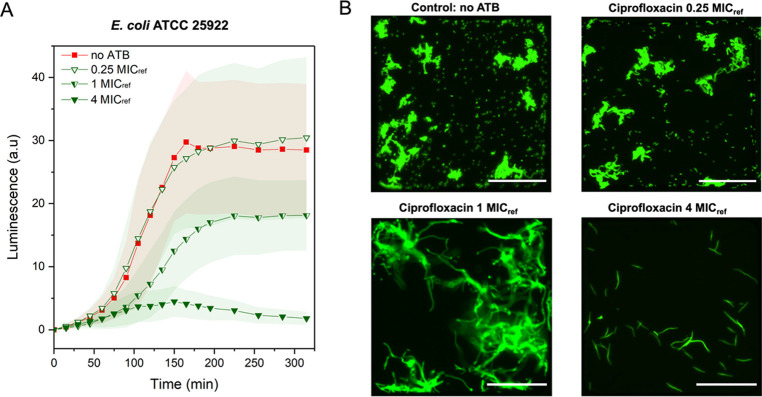
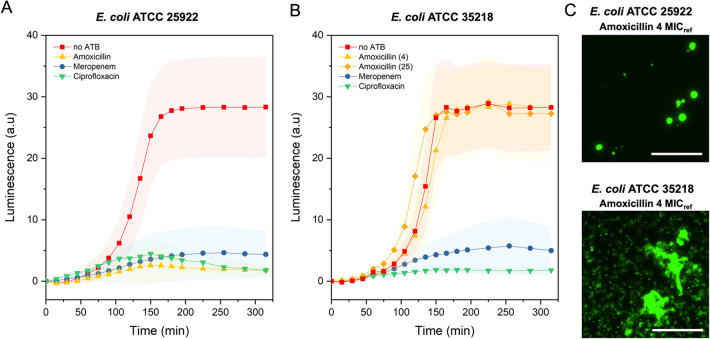
Rapid identification of a pathogen and the measurement of its antibiotic susceptibility are key elements in the diagnostic process of bacterial infections. Microfluidic technologies offer great control over handling and manipulation of low sample volumes with the possibility to study microbial cultures on the single-cell level. Downscaling the dimensions of cultivation systems directly results in a lower number of bacteria required for antibiotic susceptibility testing (AST) and thus in a reduction of the time to result. The developed platform presented in this work allows the reading of pathogen resistance profiles within 2-3 h based on the changes of dissolved oxygen levels during bacterial cultivation. The platform contains hundreds of individual growth chambers prefilled with a hydrogel containing oxygen-sensing nanoprobes and different concentrations of antibiotic compounds. The performance of the developed platform is tested using quality control strains (ATCC 25922 and ATCC 35218) in response to clinically relevant antibiotics. The results are in agreement with values given in reference guidelines and independent measurements using a clinical AST protocol. Finally, the platform is successfully used for the AST of an clinical isolate obtained from a patient blood culture.
快速鉴定病原体并测量其抗生素敏感性是细菌感染诊断过程中的关键要素。微流控技术可实现对小体积样本的处理和操控进行精确控制,并且有可能在单细胞水平上研究微生物培养物。培养系统的尺寸缩小直接导致抗生素药敏试验(AST)所需的细菌数量减少,从而缩短了结果获得的时间。本工作中所开发的平台基于细菌培养过程中溶解氧水平的变化,可在 2-3 小时内读取病原体的耐药谱。该平台包含数百个预先填充有水凝胶的单个生长室,其中水凝胶含有氧敏纳米探针和不同浓度的抗生素化合物。使用针对临床相关抗生素的质控菌株(ATCC 25922 和 ATCC 35218)对所开发平台的性能进行了测试。结果与参考指南中给出的值以及使用临床 AST 方案进行的独立测量值一致。最后,该平台成功用于从患者血液培养物中获得的临床分离株的 AST。