Department of Psychology, Simon Fraser University, Burnaby, Canada.
Department of Psychiatry, Now at the BRAIN Lab, Institute of Mental Health, University of British Columbia, Vancouver, Canada.
PLoS One. 2021 Apr 26;16(4):e0250793. doi: 10.1371/journal.pone.0250793. eCollection 2021.
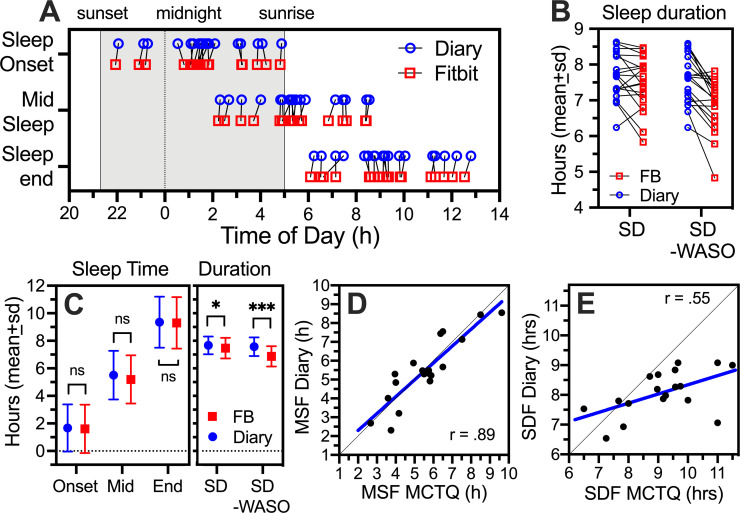
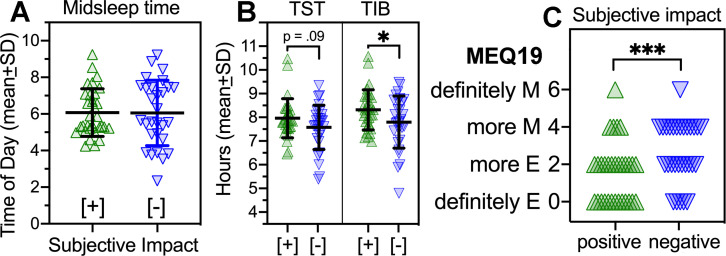
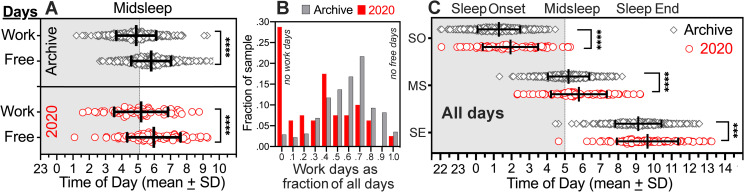
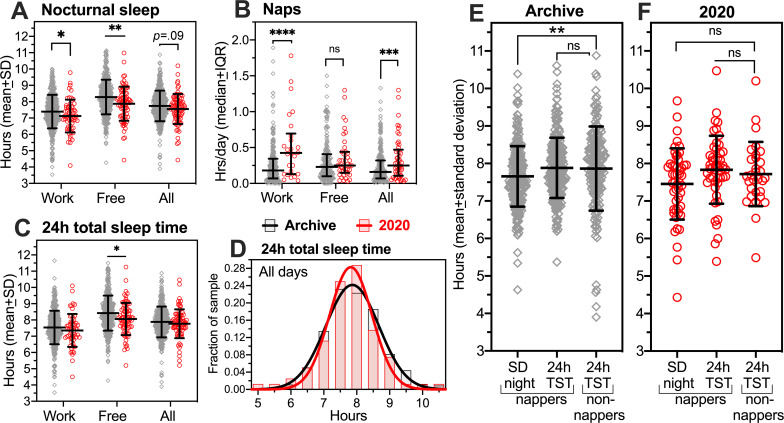
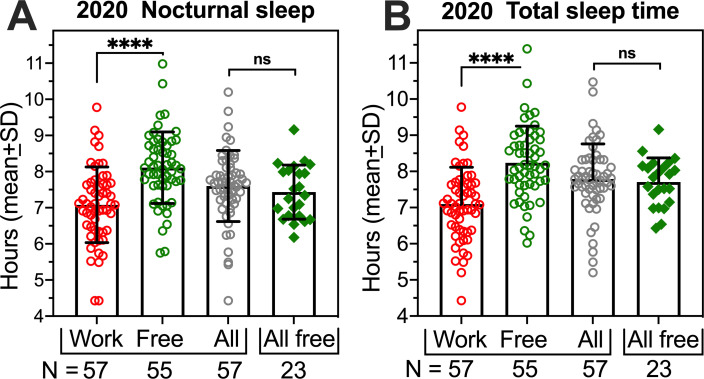
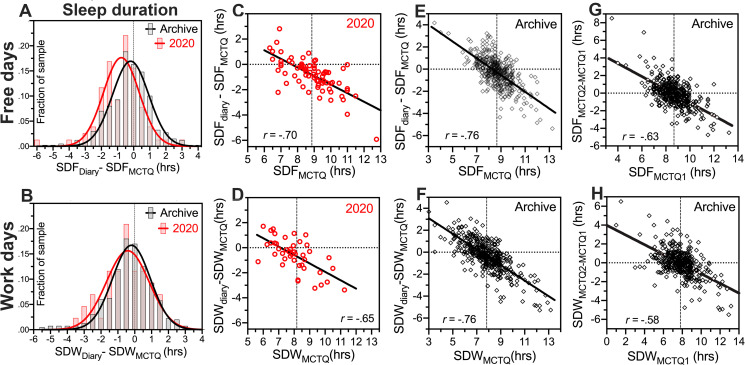
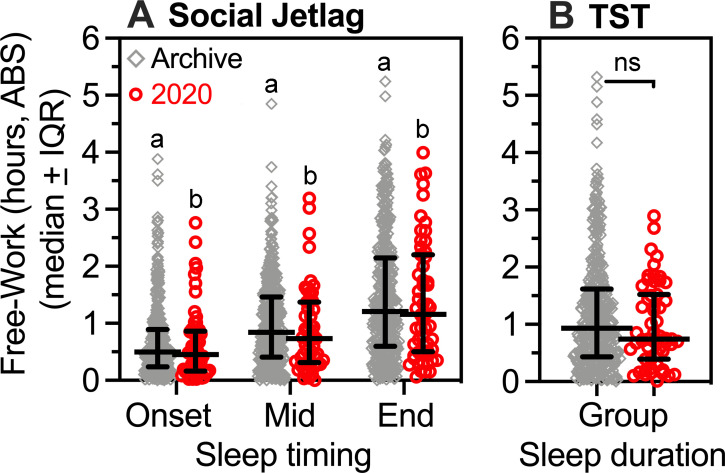
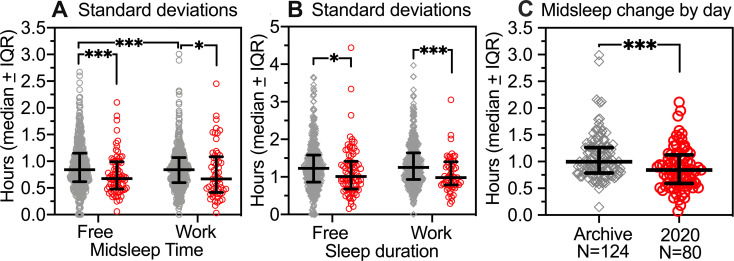
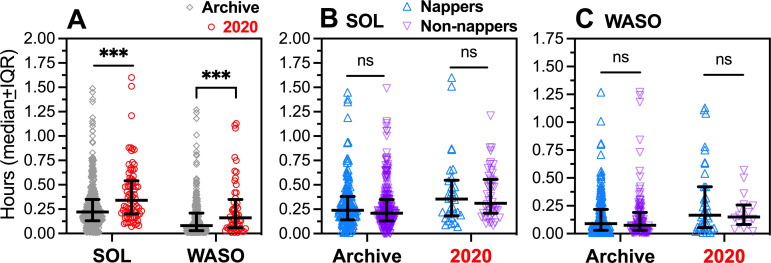
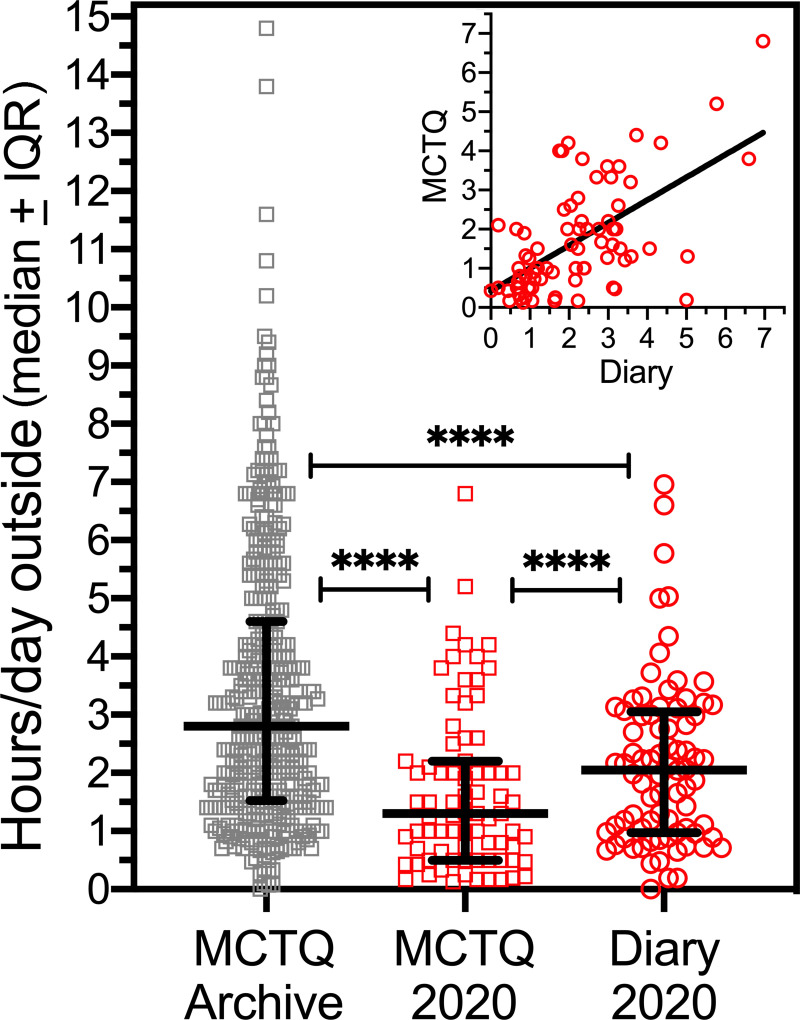
Social-distancing directives to contain community transmission of the COVID-19 virus can be expected to affect sleep timing, duration or quality. Remote work or school may increase time available for sleep, with benefits for immune function and mental health, particularly in those individuals who obtain less sleep than age-adjusted recommendations. Young adults are thought to regularly carry significant sleep debt related in part to misalignment between endogenous circadian clock time and social time. We examined the impact of social-distancing measures on sleep in young adults by comparing sleep self-studies submitted by students enrolled in a university course during the 2020 summer session (entirely remote instruction, N = 80) with self-studies submitted by students enrolled in the same course during previous summer semesters (on-campus instruction, N = 452; cross-sectional study design). Self-studies included 2-8 week sleep diaries, two chronotype questionnaires, written reports, and sleep tracker (Fitbit) data from a subsample. Students in the 2020 remote instruction semester slept later, less efficiently, less at night and more in the day, but did not sleep more overall despite online, asynchronous classes and ~44% fewer work days compared to students in previous summers. Subjectively, the net impact on sleep was judged as positive or negative in equal numbers of students, with students identifying as evening types significantly more likely to report a positive impact, and morning types a negative impact. Several features of the data suggest that the average amount of sleep reported by students in this summer course, historically and during the 2020 remote school semester, represents a homeostatic balance, rather than a chronic deficit. Regardless of the interpretation, the results provide additional evidence that social-distancing measures affect sleep in heterogeneous ways.
社交距离指令可以控制 COVID-19 病毒在社区中的传播,预计会影响睡眠的时间、时长或质量。远程工作或学习可能会增加睡眠时间,这对免疫功能和心理健康有益,尤其是对那些睡眠时间少于年龄调整建议的人。年轻人通常会有很大的睡眠债务,这部分是由于内源性生物钟时间和社会时间之间的不匹配。我们通过比较 2020 年夏季学期(完全远程教学,N = 80)和之前夏季学期(校园教学,N = 452)同一门课程的学生提交的睡眠自我研究,来研究社交距离措施对年轻人睡眠的影响,该自我研究包括 2-8 周的睡眠日记、两份昼夜类型问卷、书面报告和睡眠追踪器(Fitbit)数据。2020 年远程教学学期的学生入睡时间更晚、睡眠效率更低、夜间睡眠时间更少、白天睡眠时间更多,但睡眠时间并没有增加,尽管有在线异步课程和与前几个夏季相比,工作日减少了约 44%。主观上,学生们认为对睡眠的影响好坏参半,夜型的学生更有可能报告积极的影响,而晨型的学生则报告消极的影响。数据的几个特征表明,本夏季课程学生报告的平均睡眠时间,从历史上和 2020 年远程学校学期来看,代表了一种稳态平衡,而不是慢性不足。无论如何解释,这些结果都提供了更多证据表明,社交距离措施以不同的方式影响睡眠。