Gürsoy Nurbanu, Yilmaz Öztürk Betül, Dağ İlknur
Eskişehir Osmangazi University, Institute of Science, Biotechnology and Biosafety Department, Eskişehir Turkey.
Eskişehir Osmangazi University, Central Research Laboratory Application and Research Center, Eskişehir Turkey.
Turk J Biol. 2021 Apr 20;45(2):196-213. doi: 10.3906/biy-2010-64. eCollection 2021.
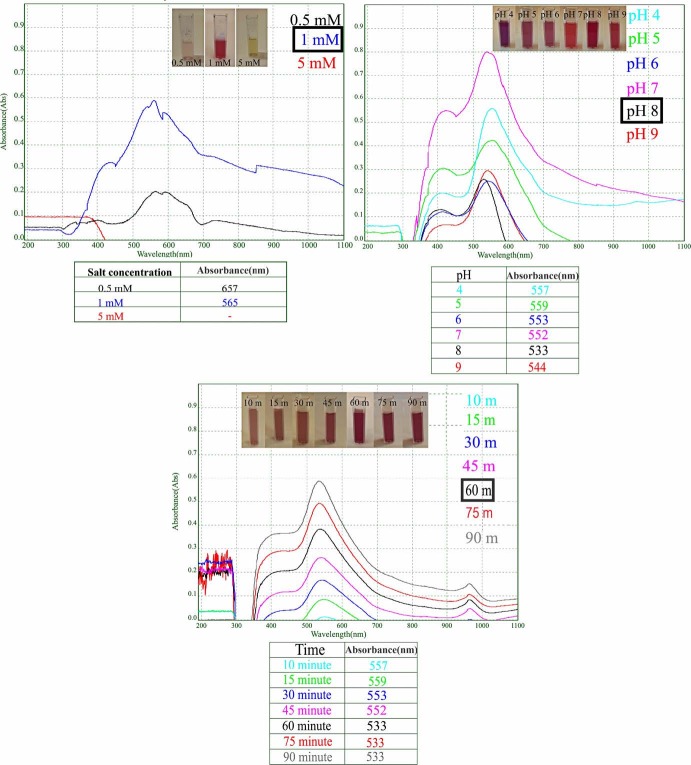
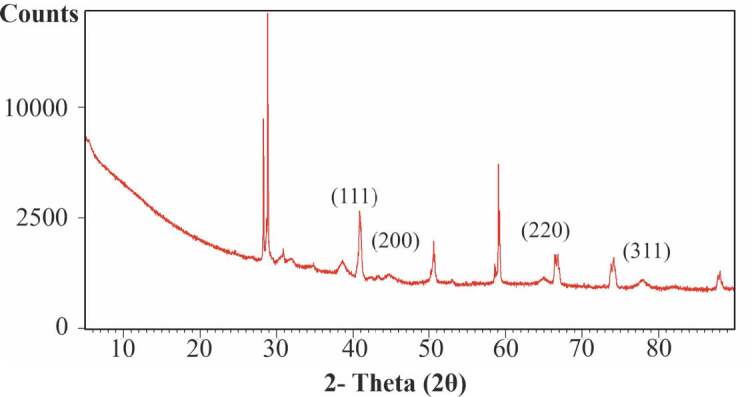
Green synthesis method is being increasingly used in the development of safe, stable, and eco-friendly nanostructures with biological resources. In this study, extracellular and intracellular synthesis of gold nanoparticles (AuNPs) was carried out using green algae Shihira & R.W. Fresh algae were isolated and identified from Musaözü Pond located in the province of Eskişehir and then extraction process were performed. Optimization studies were studied using pH value, metal salt concentration, and time parameters for extracellular synthesis and using only time parameter for intrasellular synthesis. Since more controlled and optimum conditions can be achieved in the production of AuNPs by extracellular synthesis, these nanoparticles (NPs) were used for characterization and antifungal activity studies. Optical, physical, and chemical properties of synthesized NPs were characterized by UV visible spectrophotometer (UV-Vis), dynamic light scattering (DLS), Zetasizer, X-Ray diffraction (XRD), Fourier transform ınfrared spectroscopy (FTIR), field emission scanning electron microscope (FE-SEM), ınductively coupled plasma mass spectrometer (ICP-MS) and transmission electron microscope (TEM) analysis. The optimum conditions for AuNPs synthesis were determined as 1 mM for HauCl concentration, 6 for pH value, and 60th min for time. AuNPs obtained from extracellular synthesis from extract are 5-15 nm in size and spherical shape. TEM images of extracellular synthesis show noticeable cell wall and membrane damages, cytoplasma dissolutions, and irregularities. AuNPs obtained by intracellular synthesis are in 20-40 nm size and localized in the cell wall and cytoplasm. These NPs exhibited significant antifungal activity against , and isolates. AuNPs obtained by algae-mediated green synthesis have a significant potential for medical and industrial use, and this eco-friendly synthesis method can be easily scaled for future studies.
绿色合成方法在利用生物资源开发安全、稳定且环保的纳米结构方面正越来越多地被使用。在本研究中,使用绿藻Shihira & R.W.进行了金纳米颗粒(AuNPs)的胞外和胞内合成。从位于埃斯基谢希尔省的穆萨奥祖池塘分离并鉴定了新鲜藻类,然后进行了提取过程。胞外合成使用pH值、金属盐浓度和时间参数进行优化研究,胞内合成仅使用时间参数进行优化研究。由于通过胞外合成生产AuNPs时可以实现更可控和最佳的条件,这些纳米颗粒(NPs)被用于表征和抗真菌活性研究。通过紫外可见分光光度计(UV-Vis)、动态光散射(DLS)、Zetasizer、X射线衍射(XRD)、傅里叶变换红外光谱(FTIR)、场发射扫描电子显微镜(FE-SEM)、电感耦合等离子体质谱仪(ICP-MS)和透射电子显微镜(TEM)分析对合成的NPs的光学、物理和化学性质进行了表征。确定AuNPs合成的最佳条件为HauCl浓度为1 mM、pH值为6、时间为第60分钟。从提取物胞外合成获得的AuNPs尺寸为5 - 15 nm,呈球形。胞外合成的TEM图像显示出明显的细胞壁和膜损伤、细胞质溶解以及不规则性。通过胞内合成获得的AuNPs尺寸为20 - 40 nm,位于细胞壁和细胞质中。这些NPs对、和分离株表现出显著的抗真菌活性。通过藻类介导的绿色合成获得的AuNPs在医学和工业应用方面具有巨大潜力,并且这种环保的合成方法可以很容易地扩大规模用于未来的研究。