Department of East Asian Languages and Literatures, University of Oregon, Eugene, Oregon, United States of America.
Department of Physics, University of Oregon, Eugene, Oregon, United States of America.
PLoS One. 2021 Apr 28;16(4):e0250817. doi: 10.1371/journal.pone.0250817. eCollection 2021.
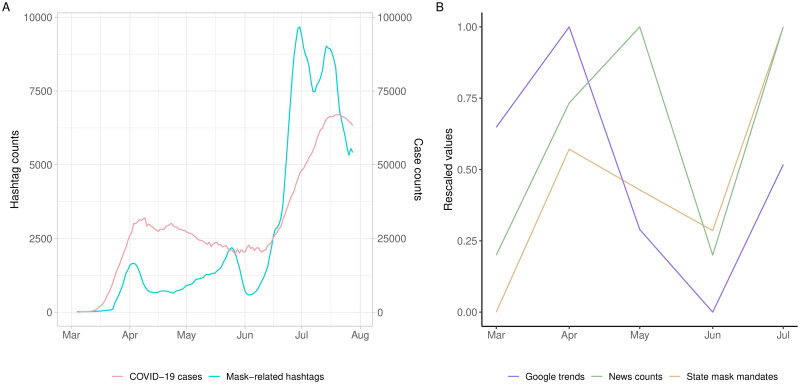
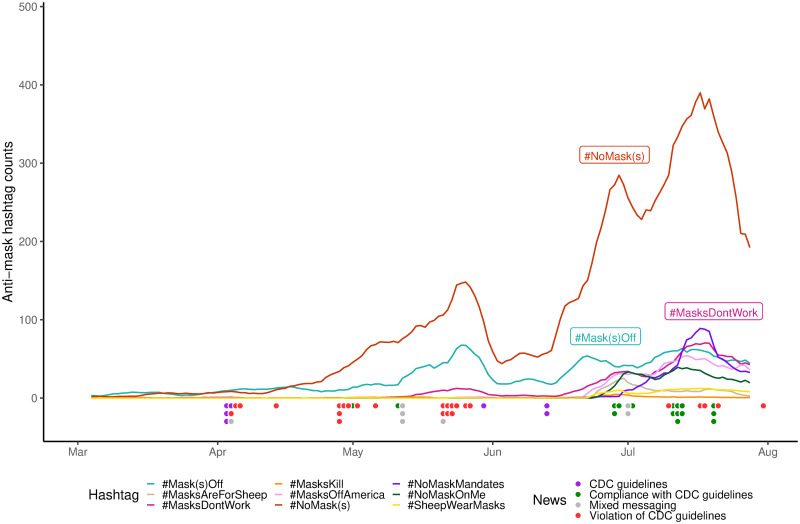
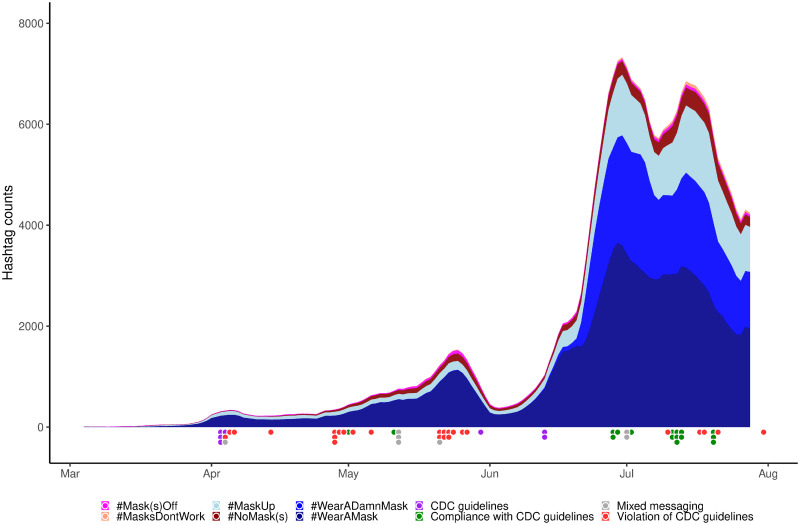
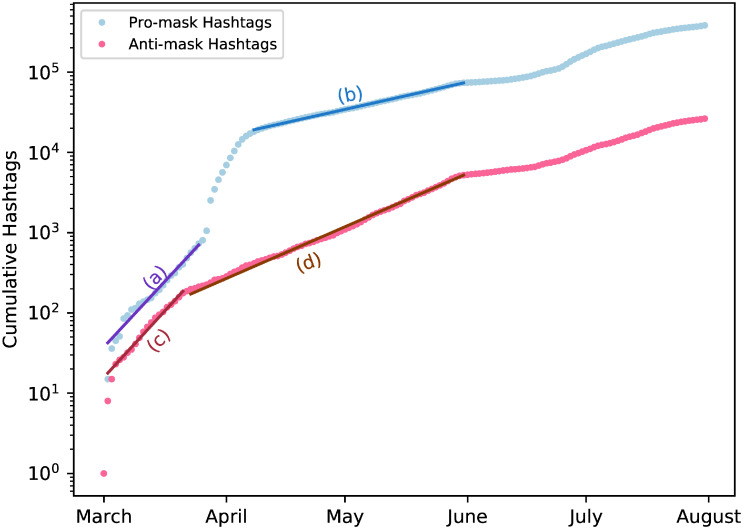
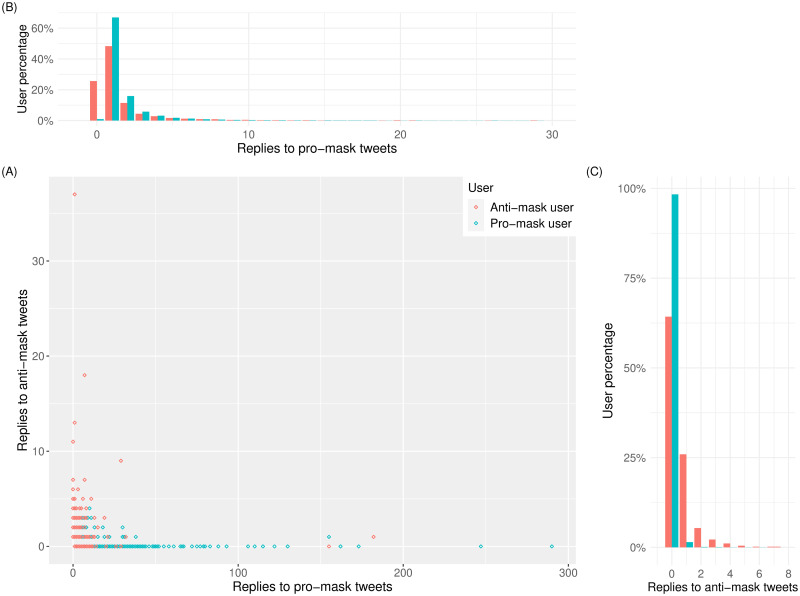
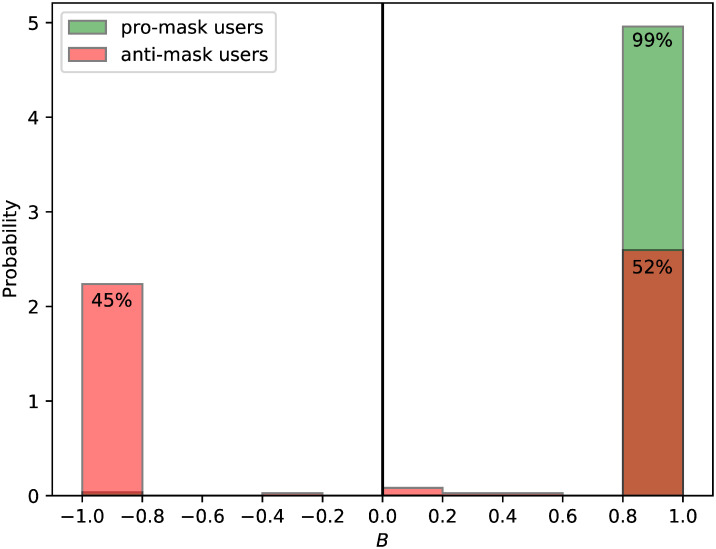
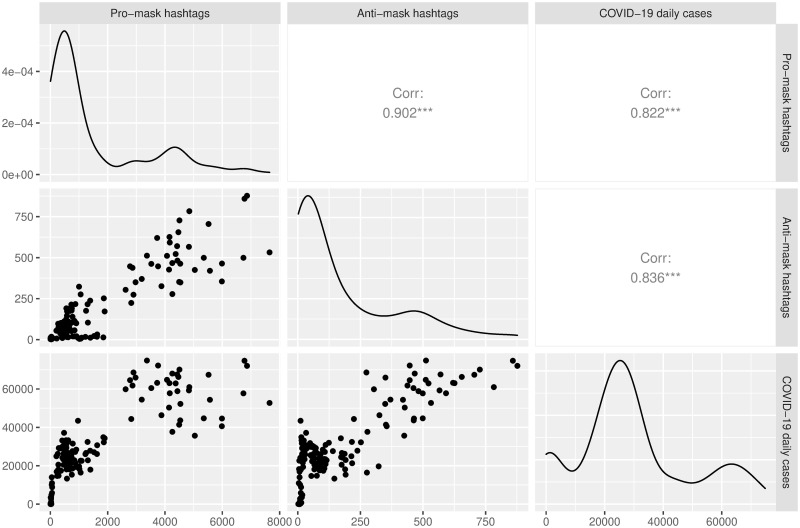
The coronavirus disease 2019 (COVID-19) has caused an unprecedented public health crisis worldwide. Its intense politicization constantly made headlines, especially regarding the use of face masks as a safety precaution. However, the extent to which public opinion is polarized on wearing masks has remained anecdotal and the verbal representation of this polarization has not been explored. This study examined the types, themes, temporal trends, and exchange patterns of hashtags about mask wearing posted from March 1 to August 1, 2020 by Twitter users based in the United States. On the one hand, we found a stark rhetorical polarization in terms of semantic antagonism between pro- and anti-mask hashtags, exponential frequency increases of both types of hashtags during the period under study, in parallel to growing COVID-19 case counts, state mask mandates, and media coverage. On the other hand, the results showed an asymmetric participatory polarization in terms of a predominance of pro-mask hashtags along with an "echo chamber" effect in the dominant pro-mask group, which ignored the subversive rhetoric of the anti-mask minority. Notwithstanding the limitations of the research, this study provides a nuanced account of the digital polarization of public opinion on mask wearing. It draws attention to political polarization both as a rhetorical phenomenon and as a participatory process.
新型冠状病毒病 2019(COVID-19)在全球范围内造成了前所未有的公共卫生危机。其强烈的政治化问题不断成为头条新闻,尤其是在使用口罩作为安全预防措施方面。然而,公众对戴口罩的看法两极分化的程度仍然只是传闻,这种两极分化的口头表达也尚未得到探讨。本研究分析了 2020 年 3 月 1 日至 8 月 1 日期间,居住在美国的 Twitter 用户发布的与戴口罩相关的标签的类型、主题、时间趋势和交流模式。一方面,我们发现,支持和反对戴口罩的标签在语义上存在明显的对立,这表明在研究期间,这两种类型的标签的频率都呈指数级增长,与此同时,COVID-19 病例数、州口罩强制令和媒体报道也在不断增加。另一方面,研究结果表明,在参与方面存在不对称的极化现象,即支持戴口罩的标签占主导地位,而在占主导地位的支持戴口罩的群体中存在“回音室”效应,忽视了反口罩少数派的颠覆性言论。尽管研究存在局限性,但本研究提供了对口罩佩戴问题公众意见数字化极化的细致描述。它既关注了修辞层面的政治极化,也关注了参与过程中的政治极化。