Nişantaşı University, Hisar Intercontinental Hospital, Cardiology, Istanbul, Turkey.
Hacettepe University, Medical School, Department of Cardiology, Ankara, Turkey.
Atherosclerosis. 2021 May;325:83-88. doi: 10.1016/j.atherosclerosis.2021.04.006. Epub 2021 Apr 17.
Myocardial injury defined by elevation of cardiac troponins (cTn) in the course of coronavirus disease 2019 (COVID-19) pandemic has been reported, though not fully characterized yet. Using the Turkish nationwide centralized COVID-19 database, we sought to determine whether cTn measured within 24 h of admission may help identify 30-day all-cause mortality in hospitalized patients.
This retrospective cohort study was conducted at all hospitals in Turkey between March 11, 2020, and June 22, 2020. All hospitalized COVID-19 patients (≥18 years) who had cTn measurements within 24 h of admission were included. The primary outcome was 30-day all-cause mortality.
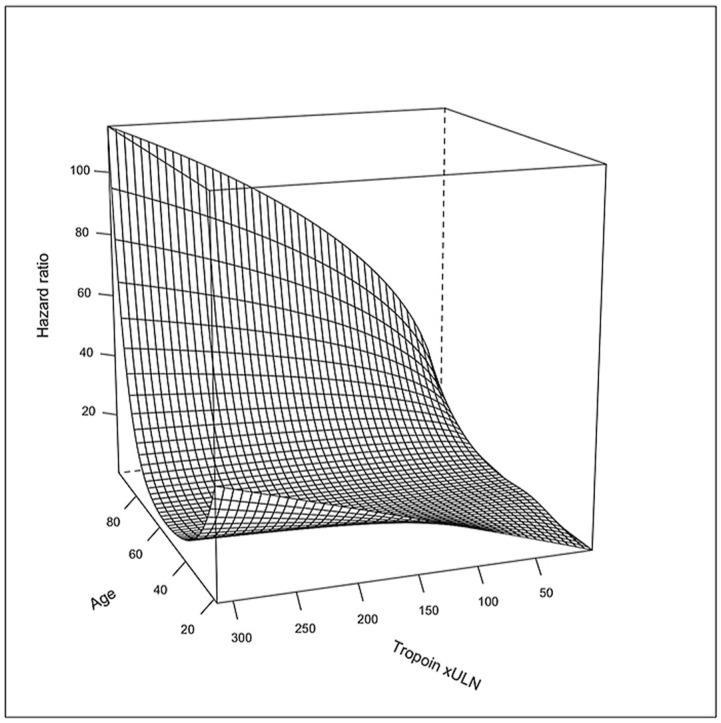
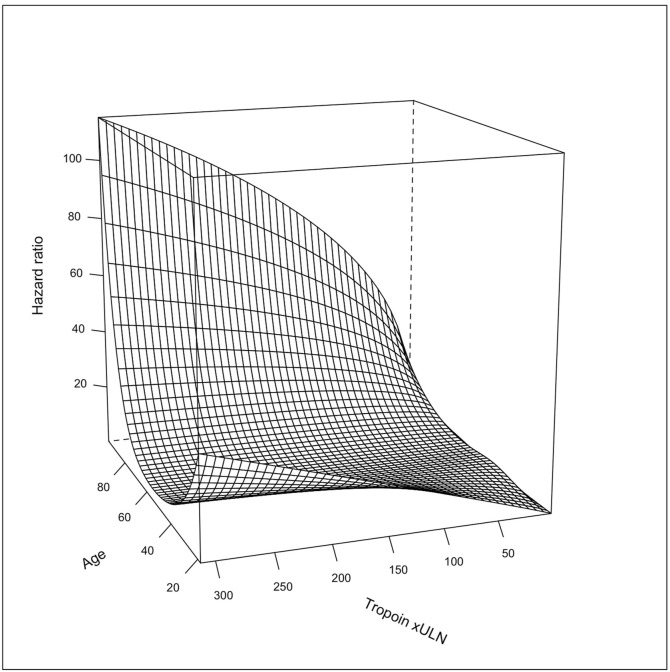
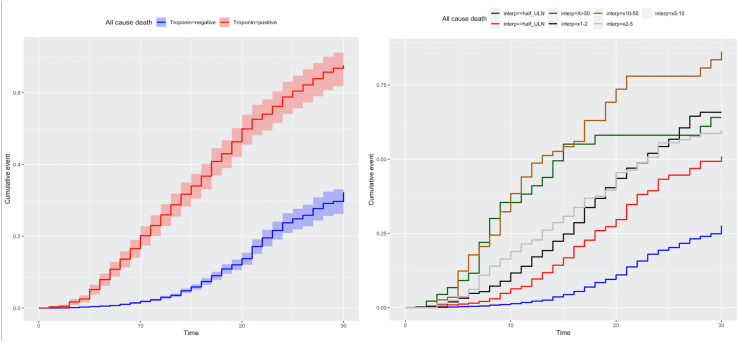
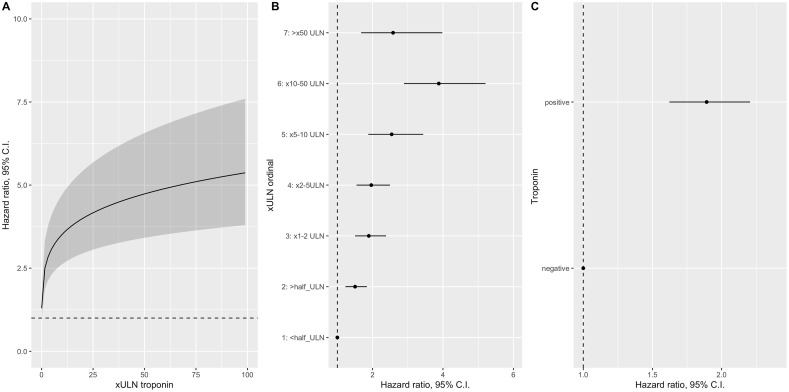
A total of 14,855 COVID-19 patients (median age 49 years and 54% male) from 81 provinces of Turkey were included. Of these, 2020 patients (13.6%) were transferred to intensive care unit, 1165 patients (7.8%) needed mechanical ventilation, and 882 patients (5.9%) died during hospitalization. The prevalence of cTn positivity was 6.9% (n = 1027) in the hospitalized patients. cTn positivity was 5% in those patients alive at 30-day, and 44% in those who died. In multivariable Cox proportional hazard regression model, age, lactate dehydrogenase, and cTn were the strongest predictors of 30-day mortality, irrespective of cTn definition as a continuous, ordinal variable, or dichotomic variables.
A single measurement of cTn at admission in patients with COVID-19 is associated with 30-day all-cause mortality and may have an important prognostic role for optimizing risk stratification.
已有报道称,在 2019 年冠状病毒病(COVID-19)大流行过程中,心肌损伤可通过升高心脏肌钙蛋白(cTn)来定义,但尚未充分描述。我们利用土耳其全国集中的 COVID-19 数据库,旨在确定入院 24 小时内测量的 cTn 是否有助于识别住院患者的 30 天全因死亡率。
这是一项回顾性队列研究,在 2020 年 3 月 11 日至 2020 年 6 月 22 日期间在土耳其的所有医院进行。所有入院的 COVID-19 患者(≥18 岁)入院 24 小时内进行了 cTn 测量。主要结局为 30 天全因死亡率。
共纳入了来自土耳其 81 个省的 14855 名 COVID-19 患者(中位年龄 49 岁,54%为男性)。其中,2020 名患者(13.6%)转入重症监护病房,1165 名患者(7.8%)需要机械通气,882 名患者(5.9%)在住院期间死亡。住院患者中 cTn 阳性率为 6.9%(n=1027)。在 30 天存活的患者中,cTn 阳性率为 5%,而在死亡的患者中,cTn 阳性率为 44%。在多变量 Cox 比例风险回归模型中,年龄、乳酸脱氢酶和 cTn 是 30 天死亡率的最强预测因素,无论 cTn 是作为连续变量、有序变量还是二分类变量来定义。
在 COVID-19 患者入院时单次测量 cTn 与 30 天全因死亡率相关,并且可能对优化风险分层具有重要的预后作用。