Means A Kristen, Grunlan Melissa A
Department of Materials Science & Engineering, Texas A&M University, College Station, Texas 77843-3003, United States.
Department of Biomedical Engineering, Texas A&M University, College Station, Texas 77843-3120, United States.
ACS Macro Lett. 2019 Jun 18;8(6):705-713. doi: 10.1021/acsmacrolett.9b00276. Epub 2019 May 24.
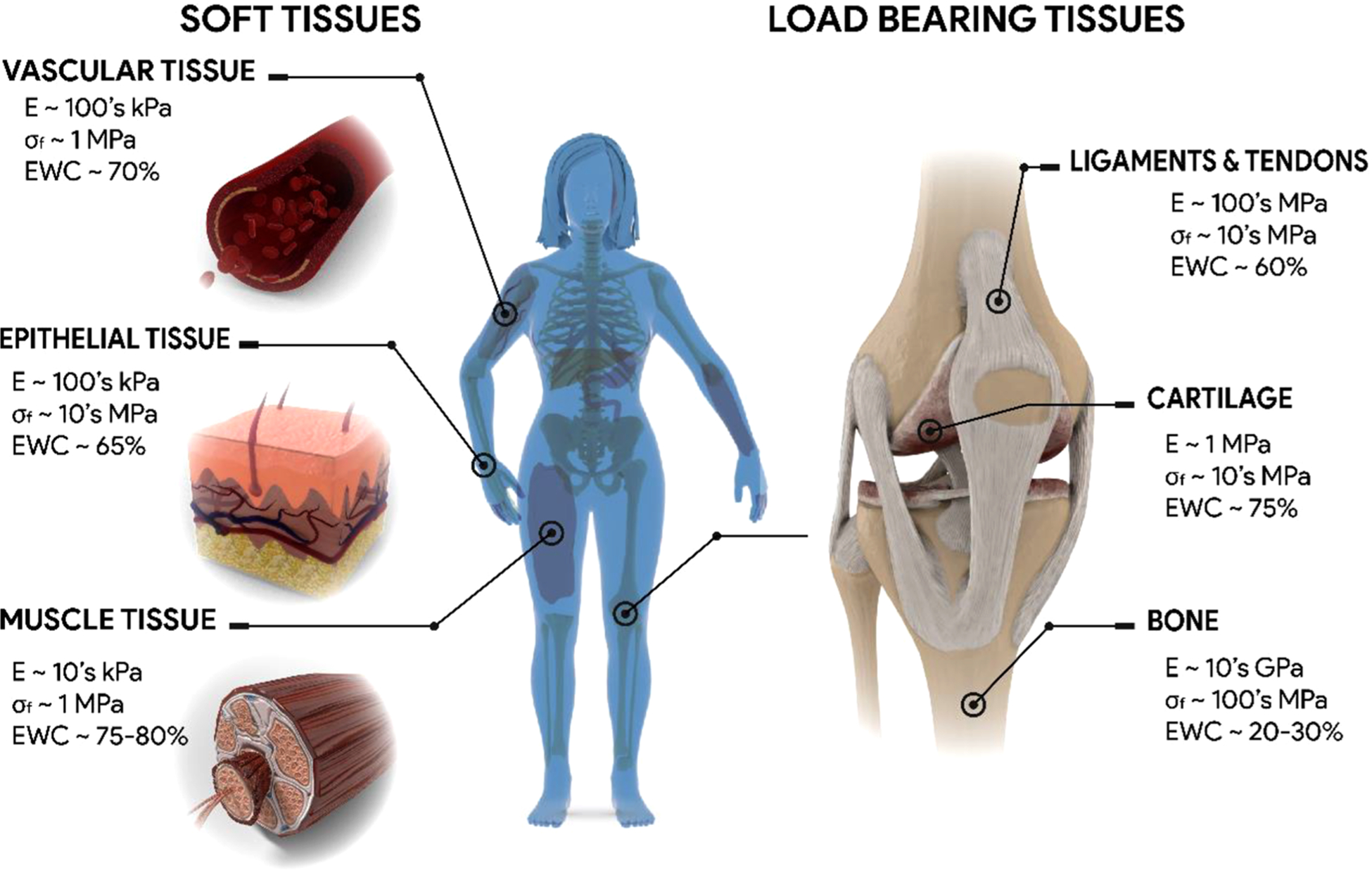
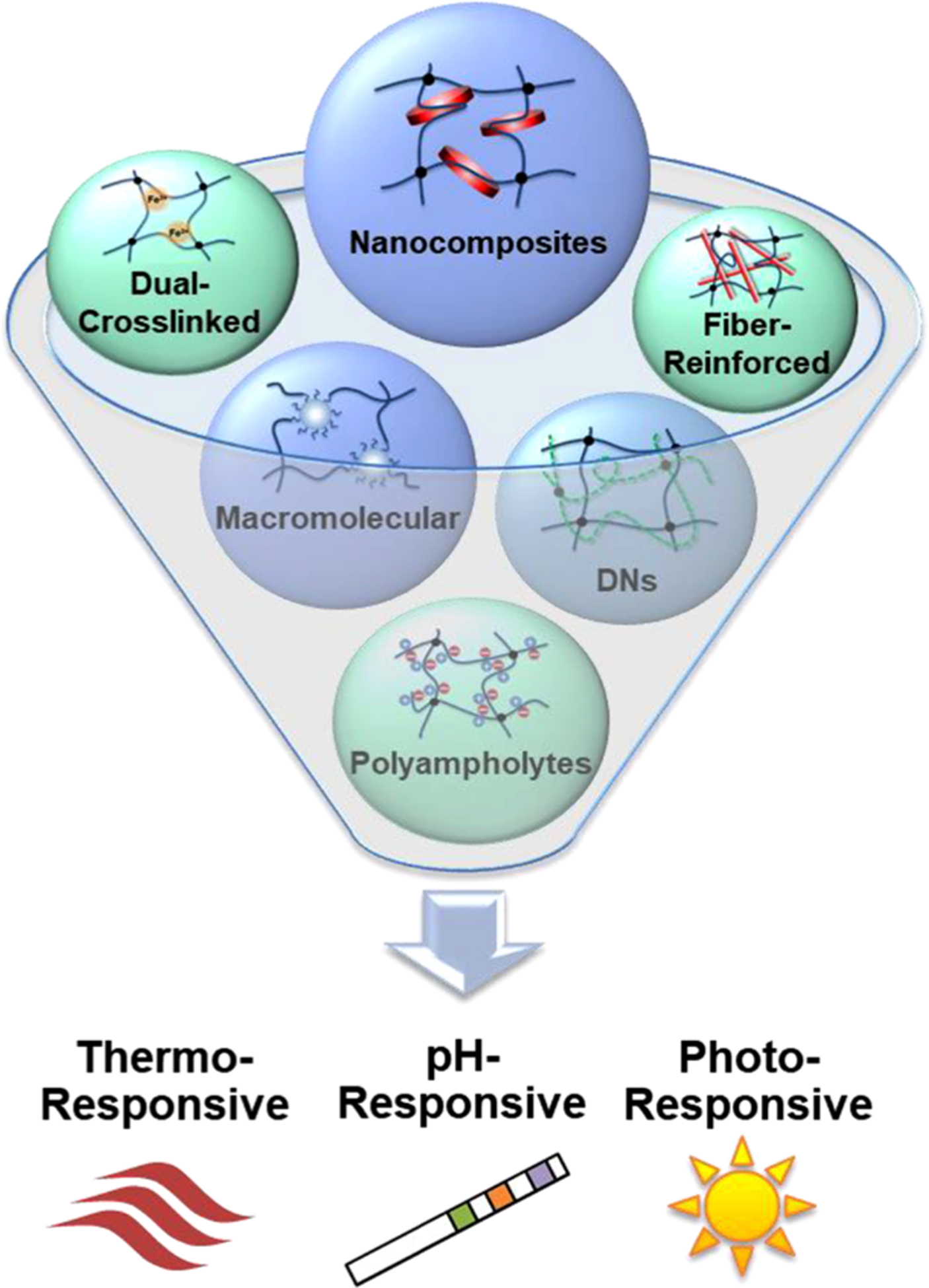
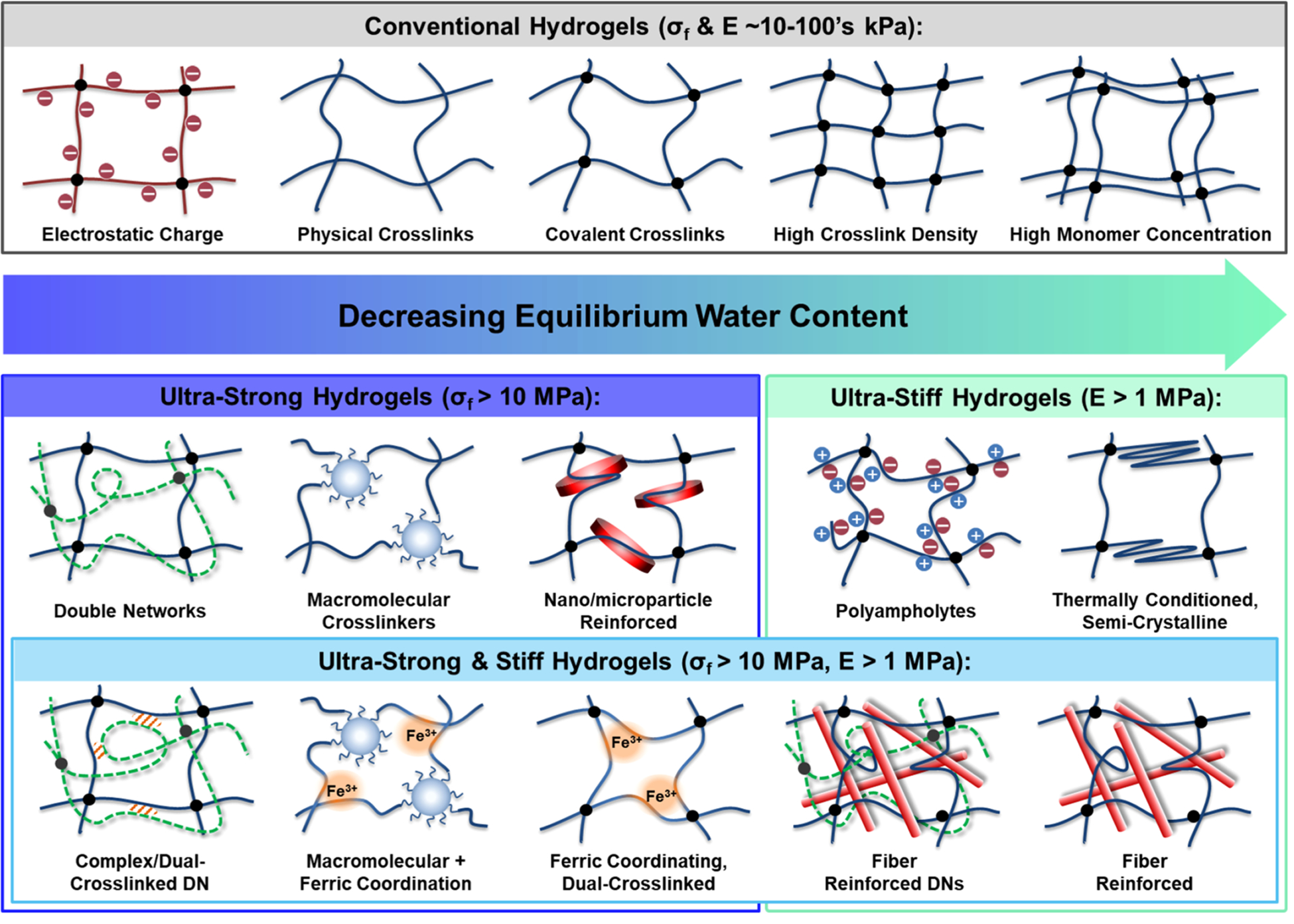
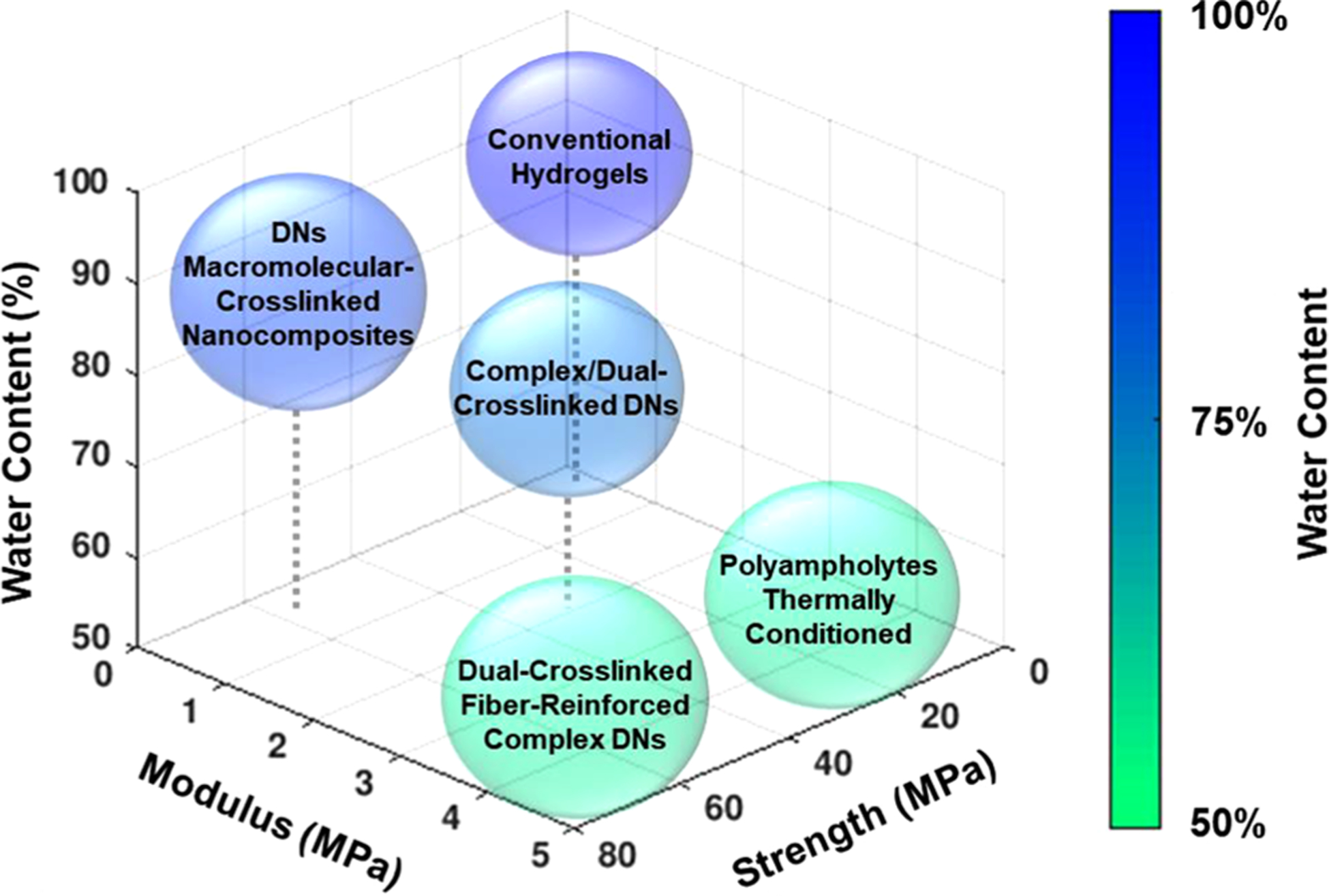
Hydrogels are frequently used biomaterials due to their similarity in hydration and structure to biological tissues. However, their utility is limited by poor mechanical properties, namely, a lack of strength and stiffness that mimic that of tissues, particularly load-bearing tissues. Thus, numerous recent strategies have sought to enhance and tune these properties in hydrogels, including interpenetrating networks (IPNs), macromolecular cross-linking, composites, thermal conditioning, polyampholytes, and dual cross-linking. Individually, these approaches have achieved hydrogels with either high strength ( > 10 MPa), high stiffness ( > 1 MPa), or, less commonly, both high strength and stiffness ( > 10 MPa and > 1 MPa). However, only certain unique combinations of these approaches have been able to synergistically achieve retention of a high, tissuelike water content as well as high strength and stiffness. Applying such methods to stimuli-responsive hydrogels has also produced robust, smart biomaterials. Overall, methods to achieve hydrogels that simultaneously mimic the hydration, strength, and stiffness of soft and load-bearing tissues have the potential to be used in a much broader range of biomedical applications.
水凝胶因其在水合作用和结构上与生物组织相似,而成为常用的生物材料。然而,它们的实用性受到较差机械性能的限制,即缺乏模仿组织(特别是承重组织)的强度和刚度。因此,最近有许多策略试图增强和调节水凝胶的这些性能,包括互穿网络(IPN)、大分子交联、复合材料、热调节、聚两性电解质和双重交联。单独来看,这些方法已经制备出了具有高强度(>10 MPa)、高刚度(>1 MPa)的水凝胶,或者较少见的同时具有高强度和高刚度(>10 MPa且>1 MPa)的水凝胶。然而,只有这些方法的某些独特组合能够协同实现保持高的、类似组织的含水量以及高强度和刚度。将这些方法应用于刺激响应性水凝胶也产生了坚固的智能生物材料。总体而言,实现同时模仿软组织和承重组织的水合作用、强度和刚度的水凝胶的方法,有可能用于更广泛的生物医学应用。