Ma Shi-Xun, Lim Su Bin
Institute for Cell Engineering, Johns Hopkins University School of Medicine, Baltimore, MD 21205, USA.
Department of Biochemistry and Molecular Biology, Ajou University School of Medicine, Suwon 16499, Korea.
Biomedicines. 2021 Apr 1;9(4):368. doi: 10.3390/biomedicines9040368.
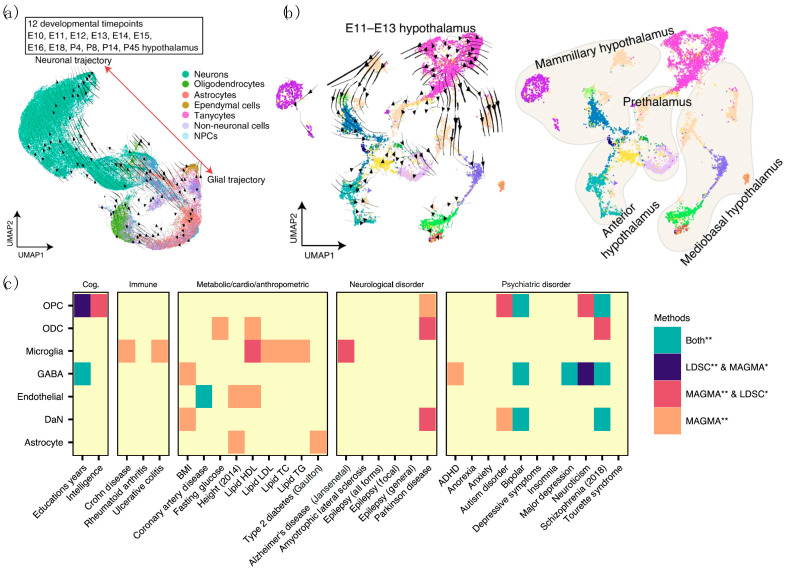
Single-cell and single-nucleus RNA sequencing (sc/snRNA-seq) technologies have enhanced the understanding of the molecular pathogenesis of neurodegenerative disorders, including Parkinson's disease (PD). Nonetheless, their application in PD has been limited due mainly to the technical challenges resulting from the scarcity of postmortem brain tissue and low quality associated with RNA degradation. Despite such challenges, recent advances in animals and human in vitro models that recapitulate features of PD along with sequencing assays have fueled studies aiming to obtain an unbiased and global view of cellular composition and phenotype of PD at the single-cell resolution. Here, we reviewed recent sc/snRNA-seq efforts that have successfully characterized diverse cell-type populations and identified cell type-specific disease associations in PD. We also examined how these studies have employed computational and analytical tools to analyze and interpret the rich information derived from sc/snRNA-seq. Finally, we highlighted important limitations and emerging technologies for addressing key technical challenges currently limiting the integration of new findings into clinical practice.
单细胞和单细胞核RNA测序(sc/snRNA-seq)技术增进了我们对包括帕金森病(PD)在内的神经退行性疾病分子发病机制的理解。尽管如此,它们在PD中的应用一直受到限制,主要是由于死后脑组织稀缺以及与RNA降解相关的低质量所带来的技术挑战。尽管存在这些挑战,但在能够重现PD特征的动物和人类体外模型以及测序分析方面的最新进展推动了旨在以单细胞分辨率获得PD细胞组成和表型的无偏倚全局视图的研究。在这里,我们回顾了最近的sc/snRNA-seq研究成果,这些研究成功地对不同细胞类型群体进行了表征,并在PD中确定了细胞类型特异性疾病关联。我们还研究了这些研究如何利用计算和分析工具来分析和解释从sc/snRNA-seq获得的丰富信息。最后,我们强调了重要的局限性以及用于应对当前限制新发现转化为临床实践的关键技术挑战的新兴技术。