Bohmwald Karen, Andrade Catalina A, Kalergis Alexis M
Departamento de Genética Molecular y Microbiología, Millennium Institute on Immunology and Immunotherapy, Facultad de Ciencias Biológicas, Pontificia Universidad Católica de Chile, Santiago 8331010, Chile.
Departamento de Endocrinología, Facultad de Medicina, Pontificia Universidad Católica de Chile, Santiago 8331010, Chile.
Pharmaceuticals (Basel). 2021 Apr 8;14(4):340. doi: 10.3390/ph14040340.
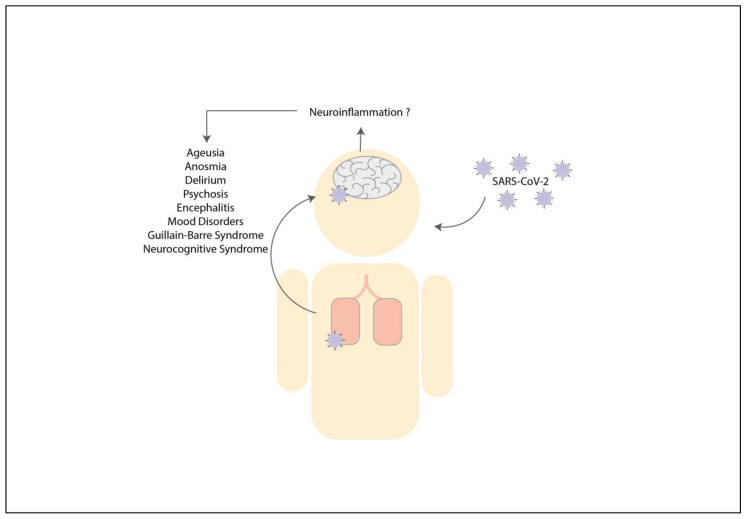
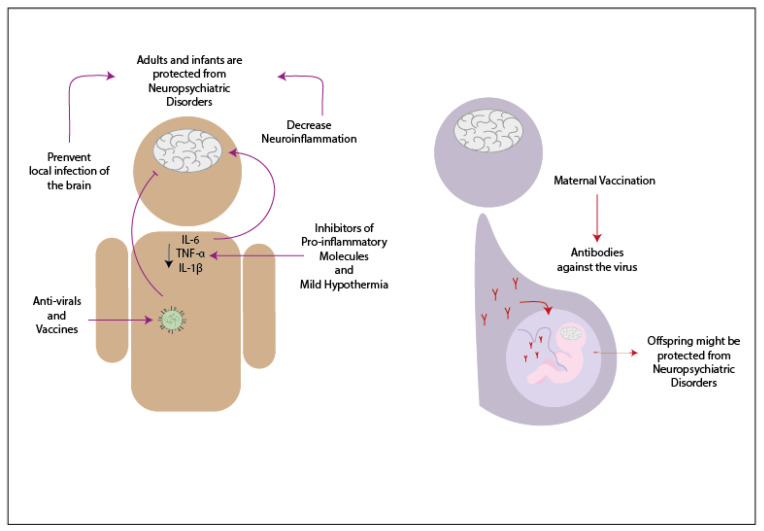
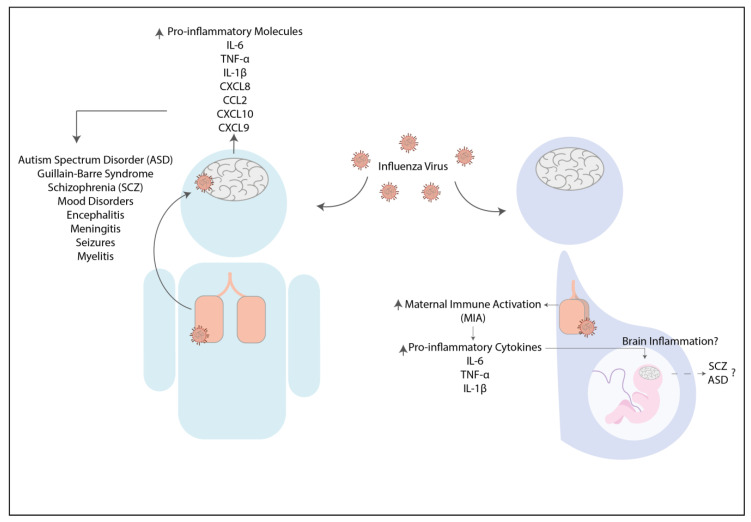
Neurobehavioral alterations and cognitive impairment are common phenomena that represent neuropsychiatric disorders and can be triggered by an exacerbated immune response against pathogens, brain injury, or autoimmune diseases. Pro-inflammatory molecules, such as cytokines and chemokines, are produced in the brain by resident cells, mainly by microglia and astrocytes. Brain infiltrating immune cells constitutes another source of these molecules, contributing to an impaired neurological synapse function, affecting typical neurobehavioral and cognitive performance. Currently, there is increasing evidence supporting the notion that behavioral alterations and cognitive impairment can be associated with respiratory viral infections, such as human respiratory syncytial virus, influenza, and SARS-COV-2, which are responsible for endemic, epidemic, or pandemic outbreak mainly in the winter season. This article will review the brain's pro-inflammatory response due to infection by three highly contagious respiratory viruses that are the leading cause of acute respiratory illness, morbidity, and mobility in infants, immunocompromised and elderly population. How these respiratory viral pathogens induce increased secretion of pro-inflammatory molecules and their relationship with the alterations at a behavioral and cognitive level will be discussed.
神经行为改变和认知障碍是常见现象,代表着神经精神疾病,可由针对病原体的免疫反应加剧、脑损伤或自身免疫性疾病引发。促炎分子,如细胞因子和趋化因子,主要由脑内驻留细胞,即小胶质细胞和星形胶质细胞产生。脑内浸润的免疫细胞是这些分子的另一个来源,会导致神经突触功能受损,影响典型的神经行为和认知表现。目前,越来越多的证据支持这样一种观点,即行为改变和认知障碍可能与呼吸道病毒感染有关,如人类呼吸道合胞病毒、流感病毒和SARS-CoV-2,这些病毒主要在冬季引发地方性、流行性或大流行性疫情。本文将综述由三种高度传染性呼吸道病毒感染引起的脑促炎反应,这三种病毒是婴儿、免疫功能低下者和老年人群急性呼吸道疾病、发病率和死亡率的主要原因。将讨论这些呼吸道病毒病原体如何诱导促炎分子分泌增加,以及它们与行为和认知水平改变之间的关系。