Sohn Jangjay, Jung Il-Young, Ku Yunseo, Kim Yeongwook
Interdisciplinary Program in Bioengineering, Graduate School, Seoul National University, Seoul 03080, Korea.
Department of Rehabilitation Medicine, Chungnam National University College of Medicine, Daejeon 35015, Korea.
Diagnostics (Basel). 2021 Apr 8;11(4):673. doi: 10.3390/diagnostics11040673.
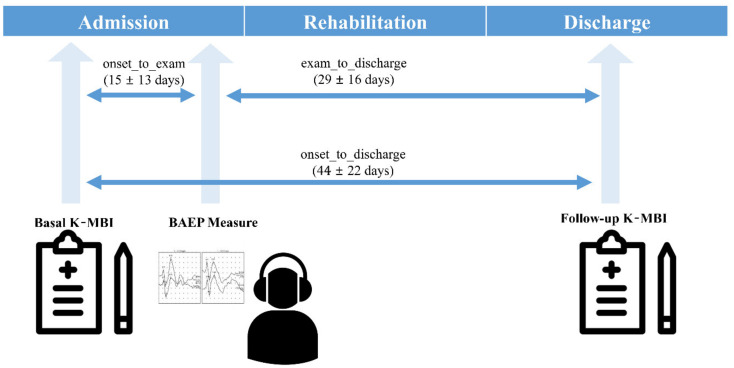
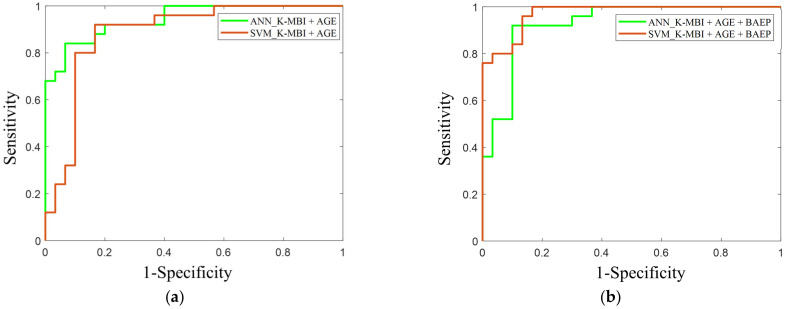
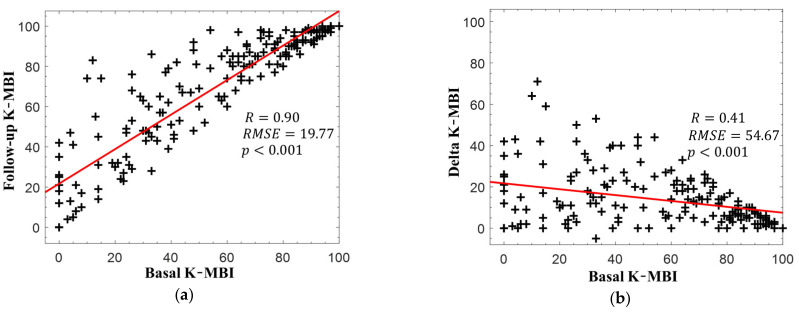
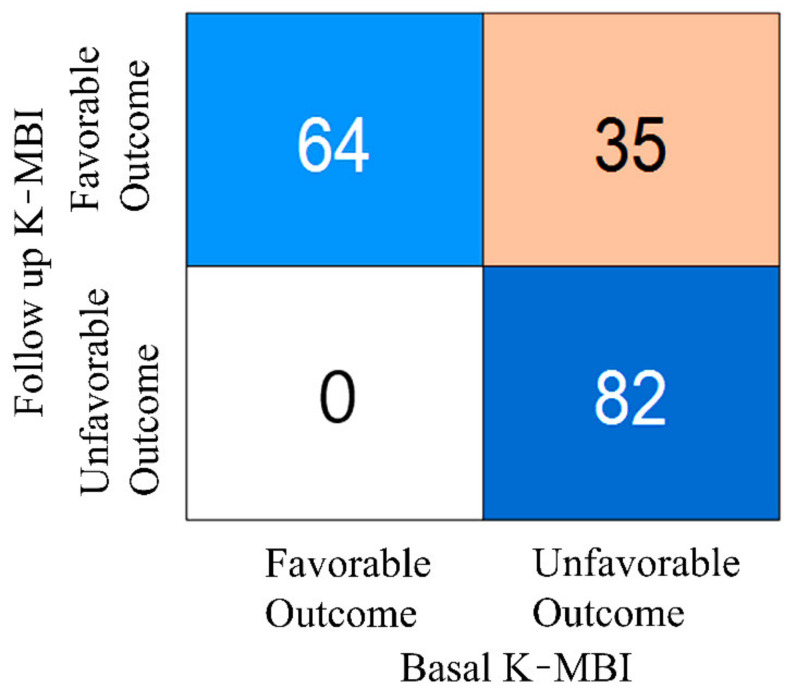
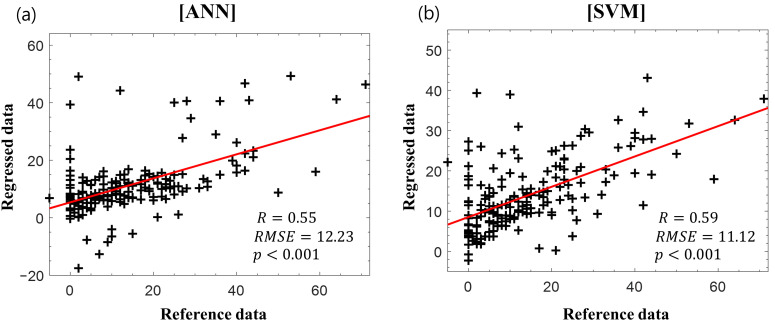
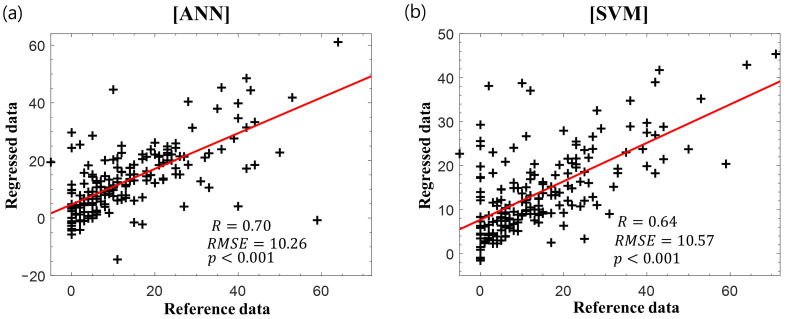
To evaluate the feasibility of brainstem auditory evoked potential (BAEP) for rehabilitation prognosis prediction in patients with ischemic stroke, 181 patients were tested using the Korean version of the modified Barthel index (K-MBI) at admission (basal K-MBI) and discharge (follow-up K-MBI). The BAEP measurements were performed within two weeks of admission on average. The criterion between favorable and unfavorable outcomes was defined as a K-MBI score of 75 at discharge, which was the boundary between moderate and mild dependence in daily living activities. The changes in the K-MBI scores (discharge-admission) were analyzed by nonlinear regression models, including the artificial neural network (ANN) and support vector machine (SVM), with the basal K-MBI score, age, and interpeak latencies (IPLs) of the BAEP (waves I, I-III, and III-V). When including the BAEP features, the correlations of the ANN and SVM regression models increased to 0.70 and 0.64, respectively. In the outcome prediction, the ANN model with the basal K-MBI score, age, and BAEP IPLs exhibited a sensitivity of 92% and specificity of 90%. Our results suggest that the BAEP IPLs used with the basal K-MBI score and age can play an adjunctive role in the prediction of patient rehabilitation prognoses.
为评估脑干听觉诱发电位(BAEP)对缺血性中风患者康复预后预测的可行性,181例患者在入院时(基础韩国版改良巴氏指数,即K-MBI)及出院时(随访K-MBI)使用韩国版改良巴氏指数进行测试。BAEP测量平均在入院后两周内进行。良好与不良预后的标准定义为出院时K-MBI评分为75分,这是日常生活活动中中度依赖与轻度依赖的界限。采用非线性回归模型,包括人工神经网络(ANN)和支持向量机(SVM),结合基础K-MBI评分、年龄和BAEP的峰间潜伏期(IPL,即波I、I-III和III-V),分析K-MBI评分的变化(出院-入院)。纳入BAEP特征时,ANN和SVM回归模型的相关性分别增至0.70和0.64。在预后预测中,包含基础K-MBI评分、年龄和BAEP IPL的ANN模型灵敏度为92%,特异度为90%。我们的结果表明,结合基础K-MBI评分和年龄使用的BAEP IPL在预测患者康复预后方面可发挥辅助作用。