• 文献检索
  • 文档翻译
  • 深度研究
  • 学术资讯
  • Suppr Zotero 插件Zotero 插件
  • 邀请有礼
  • 套餐&价格
  • 历史记录
应用&插件
Suppr Zotero 插件Zotero 插件浏览器插件Mac 客户端Windows 客户端微信小程序
定价
高级版会员购买积分包购买API积分包
服务
文献检索文档翻译深度研究API 文档MCP 服务
关于我们
关于 Suppr公司介绍联系我们用户协议隐私条款
关注我们

Suppr 超能文献

核心技术专利:CN118964589B侵权必究
粤ICP备2023148730 号-1Suppr @ 2026

文献检索

告别复杂PubMed语法,用中文像聊天一样搜索,搜遍4000万医学文献。AI智能推荐,让科研检索更轻松。

立即免费搜索

文件翻译

保留排版,准确专业,支持PDF/Word/PPT等文件格式,支持 12+语言互译。

免费翻译文档

深度研究

AI帮你快速写综述,25分钟生成高质量综述,智能提取关键信息,辅助科研写作。

立即免费体验

通过机器学习衍生的三维放射组学同时鉴定非小细胞肺癌患者中的 和 突变

Simultaneous Identification of and Mutations in Patients with Non-Small Cell Lung Cancer by Machine Learning-Derived Three-Dimensional Radiomics.

作者信息

Zhang Tiening, Xu Zhihan, Liu Guixue, Jiang Beibei, de Bock Geertruida H, Groen Harry J M, Vliegenthart Rozemarijn, Xie Xueqian

机构信息

Department of Radiation Oncology, Shanghai General Hospital, Shanghai Jiao Tong University School of Medicine, Haining Rd.100, Shanghai 200080, China.

Siemens Healthineers Ltd., Zhouzhu Rd.278, Shanghai 200120, China.

出版信息

Cancers (Basel). 2021 Apr 10;13(8):1814. doi: 10.3390/cancers13081814.

DOI:10.3390/cancers13081814
PMID:33920322
原文链接:https://pmc.ncbi.nlm.nih.gov/articles/PMC8070114/
Abstract

PURPOSE

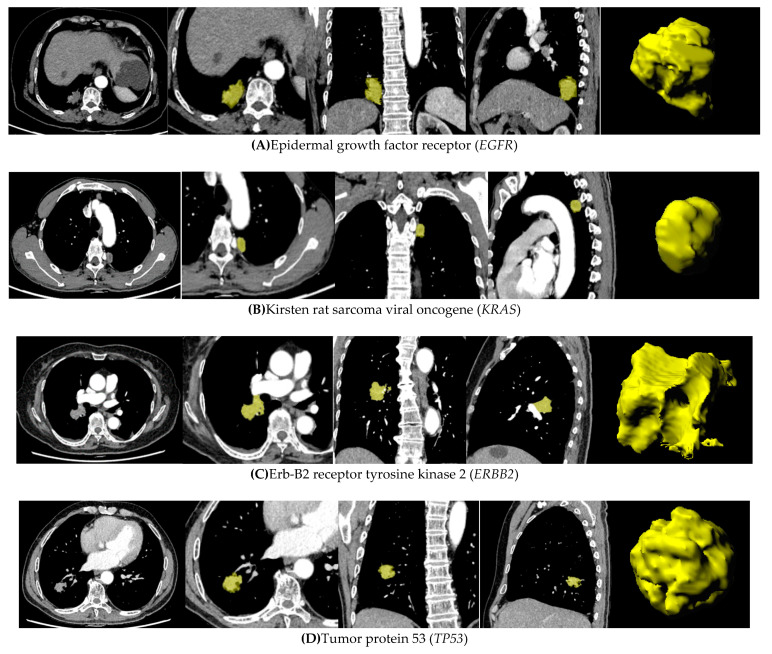
To develop a machine learning-derived radiomics approach to simultaneously discriminate epidermal growth factor receptor (), Kirsten rat sarcoma viral oncogene (), Erb-B2 receptor tyrosine kinase 2 (), and tumor protein 53 () genetic mutations in patients with non-small cell lung cancer (NSCLC).

METHODS

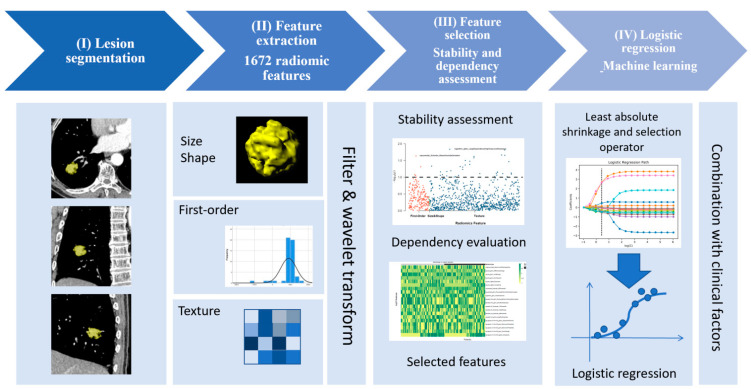
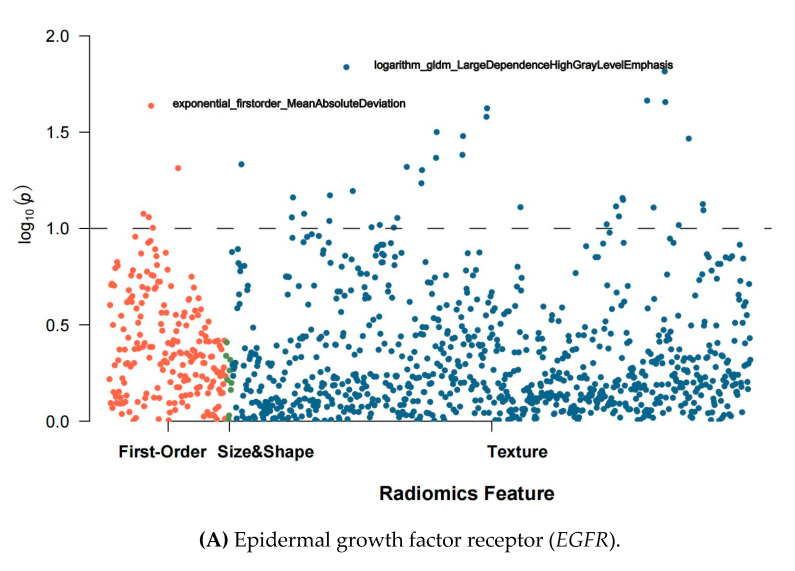
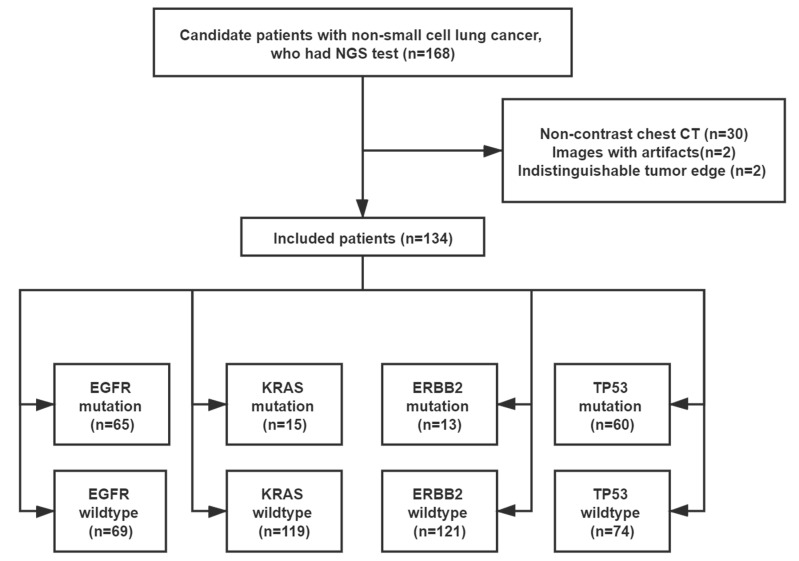
This study included consecutive patients from April 2018 to June 2020 who had histologically confirmed NSCLC, and underwent pre-surgical contrast-enhanced CT and post-surgical next-generation sequencing (NGS) tests to determine the presence of , , , and mutations. A dedicated radiomics analysis package extracted 1672 radiomic features in three dimensions. Discriminative models were established using the least absolute shrinkage and selection operator to determine the presence of , , , and mutations, based on radiomic features and relevant clinical factors.

RESULTS

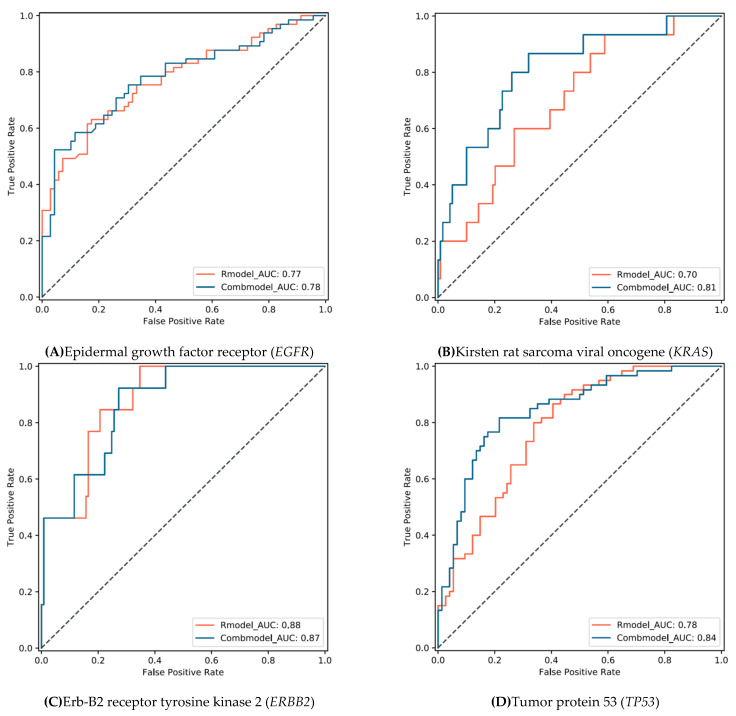
In 134 patients (63.6 ± 8.9 years), the 20 most relevant radiomic features (13 for ) to mutations were selected to construct models. The areas under the curve (AUCs) of the combined model (radiomic features and relevant clinical factors) for discriminating and mutations were 0.78 (95% CI: 0.70-0.86), 0.81 (0.69-0.93), 0.87 (0.78-0.95), and 0.84 (0.78-0.91), respectively. In particular, the specificity to exclude mutations was 0.96 (0.87-0.99). The sensitivity to determine , , and mutations ranged from 0.82 (0.69-90) to 0.92 (0.62-0.99).

CONCLUSIONS

Machine learning-derived 3D radiomics can simultaneously discriminate the presence of , , , and mutations in patients with NSCLC. This noninvasive and low-cost approach may be helpful in screening patients before invasive sampling and NGS testing.

摘要

目的

开发一种基于机器学习的放射组学方法,以同时鉴别非小细胞肺癌(NSCLC)患者的表皮生长因子受体(EGFR)、 Kirsten大鼠肉瘤病毒癌基因(KRAS)、 Erb-B2受体酪氨酸激酶2(HER2)和肿瘤蛋白53(TP53)基因突变。

方法

本研究纳入了2018年4月至2020年6月期间组织学确诊为NSCLC的连续患者,这些患者在手术前接受了对比增强CT检查,并在手术后进行了下一代测序(NGS)检测,以确定EGFR、KRAS、HER2和TP53突变的存在情况。一个专门的放射组学分析软件包在三个维度上提取了1672个放射组学特征。基于放射组学特征和相关临床因素,使用最小绝对收缩和选择算子建立判别模型,以确定EGFR、KRAS、HER2和TP53突变的存在情况。

结果

在134例患者(63.6±8.9岁)中,选择了与突变最相关的20个放射组学特征(EGFR为13个)来构建模型。鉴别EGFR、KRAS、HER2和TP53突变的联合模型(放射组学特征和相关临床因素)的曲线下面积(AUC)分别为0.78(95%CI:0.70-0.86)、0.81(0.69-0.93)、0.87(0.78-0.95)和0.84(0.78-0.91)。特别是,排除EGFR突变的特异性为0.96(0.87-0.99)。确定KRAS、HER2和TP53突变的敏感性范围为0.82(0.69-0.90)至0.92(0.62-0.99)。

结论

基于机器学习的三维放射组学可以同时鉴别NSCLC患者中EGFR、KRAS、HER2和TP53突变的存在情况。这种非侵入性且低成本的方法可能有助于在进行侵入性采样和NGS检测之前对患者进行筛查。
https://cdn.ncbi.nlm.nih.gov/pmc/blobs/25f3/8070114/54aa3d0886fa/cancers-13-01814-g005.jpg
https://cdn.ncbi.nlm.nih.gov/pmc/blobs/25f3/8070114/04dcfc3c3151/cancers-13-01814-g001.jpg
https://cdn.ncbi.nlm.nih.gov/pmc/blobs/25f3/8070114/439663348fe6/cancers-13-01814-g002.jpg
https://cdn.ncbi.nlm.nih.gov/pmc/blobs/25f3/8070114/1db3eb56f06c/cancers-13-01814-g003a.jpg
https://cdn.ncbi.nlm.nih.gov/pmc/blobs/25f3/8070114/48244846de06/cancers-13-01814-g004.jpg
https://cdn.ncbi.nlm.nih.gov/pmc/blobs/25f3/8070114/54aa3d0886fa/cancers-13-01814-g005.jpg
https://cdn.ncbi.nlm.nih.gov/pmc/blobs/25f3/8070114/04dcfc3c3151/cancers-13-01814-g001.jpg
https://cdn.ncbi.nlm.nih.gov/pmc/blobs/25f3/8070114/439663348fe6/cancers-13-01814-g002.jpg
https://cdn.ncbi.nlm.nih.gov/pmc/blobs/25f3/8070114/1db3eb56f06c/cancers-13-01814-g003a.jpg
https://cdn.ncbi.nlm.nih.gov/pmc/blobs/25f3/8070114/48244846de06/cancers-13-01814-g004.jpg
https://cdn.ncbi.nlm.nih.gov/pmc/blobs/25f3/8070114/54aa3d0886fa/cancers-13-01814-g005.jpg

相似文献

1
Simultaneous Identification of and Mutations in Patients with Non-Small Cell Lung Cancer by Machine Learning-Derived Three-Dimensional Radiomics.通过机器学习衍生的三维放射组学同时鉴定非小细胞肺癌患者中的 和 突变
Cancers (Basel). 2021 Apr 10;13(8):1814. doi: 10.3390/cancers13081814.
2
Next-Generation Radiogenomics Sequencing for Prediction of EGFR and KRAS Mutation Status in NSCLC Patients Using Multimodal Imaging and Machine Learning Algorithms.使用多模态成像和机器学习算法的下一代放射基因组学测序预测非小细胞肺癌患者的EGFR和KRAS突变状态
Mol Imaging Biol. 2020 Aug;22(4):1132-1148. doi: 10.1007/s11307-020-01487-8.
3
Machine Learning-Based Radiomics Signatures for EGFR and KRAS Mutations Prediction in Non-Small-Cell Lung Cancer.基于机器学习的放射组学特征预测非小细胞肺癌中 EGFR 和 KRAS 突变。
Int J Mol Sci. 2021 Aug 26;22(17):9254. doi: 10.3390/ijms22179254.
4
CT-based non-invasive identification of the most common gene mutation status in patients with non-small cell lung cancer.基于CT的非小细胞肺癌患者最常见基因突变状态的无创识别
Med Phys. 2024 Mar;51(3):1872-1882. doi: 10.1002/mp.16744. Epub 2023 Sep 14.
5
Impact of feature harmonization on radiogenomics analysis: Prediction of EGFR and KRAS mutations from non-small cell lung cancer PET/CT images.特征归一化对放射基因组学分析的影响:从非小细胞肺癌PET/CT图像预测EGFR和KRAS突变
Comput Biol Med. 2022 Mar;142:105230. doi: 10.1016/j.compbiomed.2022.105230. Epub 2022 Jan 11.
6
Contrast Enhanced CT Radiogenomics in a Retrospective NSCLC Cohort: Models, Attempted Validation of a Published Model and the Relevance of the Clinical Context.回顾性 NSCLC 队列中的对比增强 CT 放射基因组学:模型、尝试验证已发表模型,以及临床背景的相关性。
Acad Radiol. 2024 Jul;31(7):2953-2961. doi: 10.1016/j.acra.2024.01.031. Epub 2024 Feb 20.
7
Multisequence MRI-based radiomics signature as potential biomarkers for differentiating KRAS mutations in non-small cell lung cancer with brain metastases.基于多序列MRI的影像组学特征作为鉴别伴有脑转移的非小细胞肺癌KRAS突变的潜在生物标志物。
Eur J Radiol Open. 2024 Jan 16;12:100548. doi: 10.1016/j.ejro.2024.100548. eCollection 2024 Jun.
8
PTEN mutations and relationship to EGFR, ERBB2, KRAS, and TP53 mutations in non-small cell lung cancers.PTEN 基因突变与非小细胞肺癌中 EGFR、ERBB2、KRAS 和 TP53 基因突变的关系。
Lung Cancer. 2010 Sep;69(3):279-83. doi: 10.1016/j.lungcan.2009.11.012. Epub 2009 Dec 16.
9
Associations Between Somatic Mutations and Metabolic Imaging Phenotypes in Non-Small Cell Lung Cancer.非小细胞肺癌中体细胞突变与代谢成像表型之间的关联
J Nucl Med. 2017 Apr;58(4):569-576. doi: 10.2967/jnumed.116.181826. Epub 2016 Sep 29.
10
CT-based radiomic phenotypes of lung adenocarcinoma: a preliminary comparative analysis with targeted next-generation sequencing.基于CT的肺腺癌放射组学特征:与靶向二代测序的初步对比分析
Front Med (Lausanne). 2023 Aug 17;10:1191019. doi: 10.3389/fmed.2023.1191019. eCollection 2023.

引用本文的文献

1
Solid Lipid Nanoparticles and Nanostructured Lipid Carriers for Anticancer Phytochemical Delivery: Advances, Challenges, and Future Prospects.用于抗癌植物化学物质递送的固体脂质纳米粒和纳米结构脂质载体:进展、挑战与未来展望
Pharmaceutics. 2025 Aug 21;17(8):1079. doi: 10.3390/pharmaceutics17081079.
2
RadiomiX for Radiomics Analysis: Automated Approaches to Overcome Challenges in Replicability.用于放射组学分析的RadiomiX:克服可重复性挑战的自动化方法。
Diagnostics (Basel). 2025 Aug 5;15(15):1968. doi: 10.3390/diagnostics15151968.
3
Machine learning approaches for EGFR mutation status prediction in NSCLC: an updated systematic review.

本文引用的文献

1
KRAS Inhibition with Sotorasib in Advanced Solid Tumors.索托拉西布治疗晚期实体瘤的 KRAS 抑制作用。
N Engl J Med. 2020 Sep 24;383(13):1207-1217. doi: 10.1056/NEJMoa1917239. Epub 2020 Sep 20.
2
3D radiomics predicts EGFR mutation, exon-19 deletion and exon-21 L858R mutation in lung adenocarcinoma.三维放射组学可预测肺腺癌中的表皮生长因子受体(EGFR)突变、19外显子缺失及21外显子L858R突变。
Transl Lung Cancer Res. 2020 Aug;9(4):1212-1224. doi: 10.21037/tlcr-20-122.
3
Radiomics nomogram for prediction disease-free survival and adjuvant chemotherapy benefits in patients with resected stage I lung adenocarcinoma.
用于非小细胞肺癌中表皮生长因子受体突变状态预测的机器学习方法:一项更新的系统评价
Front Oncol. 2025 Jul 10;15:1576461. doi: 10.3389/fonc.2025.1576461. eCollection 2025.
4
Non-invasive identification of TKI-resistant NSCLC: a multi-model AI approach for predicting EGFR/TP53 co-mutations.非侵入性鉴定对酪氨酸激酶抑制剂(TKI)耐药的非小细胞肺癌(NSCLC):一种用于预测EGFR/TP53共突变的多模型人工智能方法。
BMC Pulm Med. 2025 Jul 10;25(1):336. doi: 10.1186/s12890-025-03805-8.
5
AI models for the identification of prognostic and predictive biomarkers in lung cancer: a systematic review and meta-analysis.用于识别肺癌预后和预测生物标志物的人工智能模型:系统评价与荟萃分析
Front Oncol. 2025 Feb 26;15:1424647. doi: 10.3389/fonc.2025.1424647. eCollection 2025.
6
Non-invasive, fast, and high-performance EGFR gene mutation prediction method based on deep transfer learning and model stacking for patients with Non-Small Cell Lung Cancer.基于深度迁移学习和模型堆叠的非小细胞肺癌患者无创、快速、高性能EGFR基因突变预测方法
Eur J Radiol Open. 2024 Sep 21;13:100601. doi: 10.1016/j.ejro.2024.100601. eCollection 2024 Dec.
7
Predicting Gene Comutation of EGFR and TP53 by Radiomics and Deep Learning in Patients With Lung Adenocarcinomas.通过放射组学和深度学习预测肺腺癌患者的EGFR和TP53基因变异
J Thorac Imaging. 2025 May 1;40(3):e0817. doi: 10.1097/RTI.0000000000000817.
8
Novel tools for early diagnosis and precision treatment based on artificial intelligence.基于人工智能的早期诊断和精准治疗的新型工具。
Chin Med J Pulm Crit Care Med. 2023 Sep 9;1(3):148-160. doi: 10.1016/j.pccm.2023.05.001. eCollection 2023 Sep.
9
p53 Genetics and Biology in Lung Carcinomas: Insights, Implications and Clinical Applications.肺癌中的p53基因学与生物学:见解、影响及临床应用
Biomedicines. 2024 Jun 29;12(7):1453. doi: 10.3390/biomedicines12071453.
10
New developments in the imaging of lung cancer.肺癌成像的新进展。
Breathe (Sheff). 2024 Mar;20(1):230176. doi: 10.1183/20734735.0176-2023. Epub 2024 Apr 9.
用于预测I期肺腺癌切除患者无病生存期及辅助化疗获益的影像组学列线图
Transl Lung Cancer Res. 2020 Aug;9(4):1112-1123. doi: 10.21037/tlcr-19-577.
4
Precision medicine in non-small cell lung cancer: Current applications and future directions.精准医学在非小细胞肺癌中的应用:现状与未来方向。
Semin Cancer Biol. 2022 Sep;84:184-198. doi: 10.1016/j.semcancer.2020.07.009. Epub 2020 Jul 27.
5
The Image Biomarker Standardization Initiative: Standardized Quantitative Radiomics for High-Throughput Image-based Phenotyping.影像生物标志物标准化倡议:高通量基于影像表型的标准化定量放射组学。
Radiology. 2020 May;295(2):328-338. doi: 10.1148/radiol.2020191145. Epub 2020 Mar 10.
6
Identifying relationships between imaging phenotypes and lung cancer-related mutation status: EGFR and KRAS.鉴定影像表型与肺癌相关突变状态(EGFR 和 KRAS)之间的关系。
Sci Rep. 2020 Feb 27;10(1):3625. doi: 10.1038/s41598-020-60202-3.
7
Genomic landscape of lung adenocarcinoma in East Asians.东亚肺腺癌的基因组景观。
Nat Genet. 2020 Feb;52(2):177-186. doi: 10.1038/s41588-019-0569-6. Epub 2020 Feb 3.
8
Detection of Dominant Intra-prostatic Lesions in Patients With Prostate Cancer Using an Artificial Neural Network and MR Multi-modal Radiomics Analysis.使用人工神经网络和磁共振多模态放射组学分析检测前列腺癌患者的主要前列腺内病变
Front Oncol. 2019 Nov 26;9:1313. doi: 10.3389/fonc.2019.01313. eCollection 2019.
9
Targeted Gene Next-Generation Sequencing Panel in Patients with Advanced Lung Adenocarcinoma: Paving the Way for Clinical Implementation.晚期肺腺癌患者的靶向基因新一代测序 panel:为临床应用铺平道路。
Cancers (Basel). 2019 Aug 22;11(9):1229. doi: 10.3390/cancers11091229.
10
Decoding tumor mutation burden and driver mutations in early stage lung adenocarcinoma using CT-based radiomics signature.基于 CT 影像组学特征解码早期肺腺癌的肿瘤突变负荷和驱动突变。
Thorac Cancer. 2019 Oct;10(10):1904-1912. doi: 10.1111/1759-7714.13163. Epub 2019 Aug 14.